


Palestinian President Yasser Arafat on Wednesday made an unusually frank admission that he had made mistakes and that there had been "unacceptable practices by me and many others" within the Palestinian Authority.
Arafat did not specify what the errors had been, but he said there were "wrong practices in some institutions," and promised a "comprehensive workshop of reforms."
He did not, however, explain what these would be or when they would be implemented.
The Palestinian leader's confession came in a long speech to the Palestinian legislative council after more than a month of discontent at the corruption in the authority.
The demonstrations started in Gaza with a series of kidnappings and protests against Arafat's appointees, and spread to the West Bank. The protesters ranged from gunmen to the Palestinian political elite.
At a hall next to his compound in Ramallah, Arafat told the council: "We have to be brave enough to admit mistakes. There were wrong practices in some institutions, and some misused their positions.
"There were not enough efforts to strengthen the rule of law, the independence of the judicial institutions ... But we have begun measures to solve this. There is nobody immune from mistakes, starting from me on down. Even prophets committed mistakes," he said.
He added: "We must open the doors wide for our young generation to seize the opportunity to serve our people."
References to Arafat's past and the days when he travelled the world to sign treaties dominated the speech. His main reference to current events was an appeal to Palestinians to support prisoners on hunger strike in a campaign for improved rights in Israeli jails.
Though the speech was short on detail, Khalil Shiqaqi, a Ramallah-based political scientist, said Arafat would have to institute reforms: "Arafat has survived by being in touch with the Palestinian street. He realizes that there is a unanimous consensus for reform and he cannot be outside that for long.
"He will therefore throw them a bone soon," Shiqaqi said.
But Arafat's statements appeared to irritate many members of his audience, some of whom have clamored for reform of the Palestinian Authority since it was formed 10 years ago.
Abdul Sawad Salah, a member of the PLC for Ramallah, interrupted Arafat, shouting: "You are protecting the corrupt."
Arafat replied he was protecting all Palestinians, including the corrupt.
After the meeting Salah said Arafat had not said anything new to address the concerns of the Palestinian people: "He just spoke about general things and the past and mouthed slogans. He thinks he can continue with this and cheat the people.
"I planned to tell him that there is a new intifada approaching, directed at the Palestinian Authority unless it is mended and renewed with new elections," Salah said.
Ziad Abu Amr, a PLC member from Gaza, said he had heard Arafat's expressions of remorse and failure before but he not seen him do anything to rectify his mistakes.
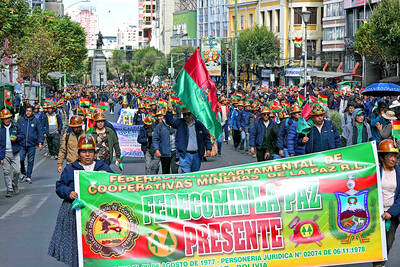
The Bolivian government on Friday struck a deal with protesting miners, but was still grappling with blockades and demonstrations by other workers across La Paz. Other groups are still blocking access roads into the city, which is also the seat of the government. Police on Thursday prevented the miners from entering the main square by using tear gas, while the demonstrators hurled stones and explosives with slingshots. Protests against the policies of Bolivian President Rodrigo Paz have convulsed the Andean nation since early this month, and roadblocks were choking routes into La Paz throughout Friday, the national road authority said. Miners demanded that Paz
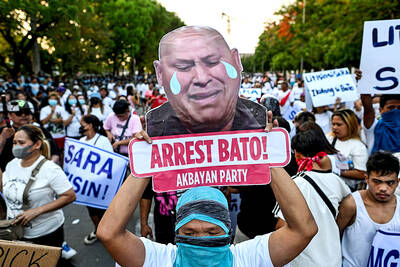
The Philippines said it has asked the country’s Supreme Court to allow it to arrest former Philippine president Rodrigo Duterte’s chief drug war enforcer to stand trial in an international tribunal. The International Criminal Court (ICC) last week unsealed an arrest warrant against Philippine Senator Ronald dela Rosa, accusing him along with Duterte and other “coperpetrators” of the “crime against humanity of murder.” Dela Rosa briefly sought refuge in the Philippine Senate last week while asking the Philippine Supreme Court to stop an ongoing attempt by government agents to arrest him. “By his own conduct, he has placed himself outside the protection of

A ship anchored off the United Arab Emirates (UAE) was seized and taken toward Iran and another — a cargo ship near Oman — sank after being attacked, authorities said on Thursday, as tensions escalated near the Strait of Hormuz. It was not immediately clear who was behind these incidents, but they happened as a senior Iranian official reiterated his country’s claim of control over the waterway and another said it had a right to seize oil tankers connected to the US. The turmoil in the strait has been a sticking point for weeks in talks between the US and Iran to

Crowds in Bangladesh are flocking to snap photographs with an unlikely social media star — an albino buffalo with flowing blond hair nicknamed “Donald Trump” that is due to be sacrificed within days. Owner Zia Uddin Mridha, 38, said his brother named the 700kg bull over its flowing helmet of hair resembling the signature look of the US president. “My younger brother picked this name because of the buffalo’s extraordinary hair,” he said at his farm in Narayanganj, just outside the capital, Dhaka. Mridha said that a constant stream of curious visitors — social media fans, onlookers and children — have come throughout


 RSS
RSS