


Israel has US backing for its deterrent weapons, Israeli Prime Minister Ariel Sharon said in an oblique reference to his country's secret nuclear arms.
He also claimed US support for key elements of Israel's policy toward the Palestinians.
In Gaza before daybreak yesterday, meanwhile, Israeli troops moved to the outskirts of Beit Lahiya, a town near the northern edge of the territory, residents said. Israeli forces have held neighboring Beit Hanoun for a month, trying to prevent militants from firing rockets at Israeli towns just outside Gaza.
Despite the ongoing operation, Palestinian militants yesterday fired two Qassam rockets from the northern Gaza Strip into Israel but caused no injuries, the army said.
Speaking at a political party gathering in Tel Aviv on Thursday, Sharon said the US backs Israel in keeping control of main West Bank settlements, drawing secure borders that include parts of the West Bank in Israel and banning Palestinian refugees from returning to their homes in Israel.
Hinting at nuclear weapons, Sharon said the US recognizes that "Israel faces an existential threat, and it must be able to defend itself by itself by preserving its deterrent capability."
iran
Sharon noted that Iran is under US pressure to stop its nuclear weapons program, and Libya took steps to halt its nuclear arms development, but "we have received here a clear American position that says in other words that Israel must not be touched when it comes to its deterrent capability."
Israel has never admitted possessing nuclear weapons, maintaining a policy of ambiguity. However, based on pictures and information given to the Sunday Times in 1987 by whistleblower Mordechai Vanunu, experts have concluded that Israel has perhaps hundreds of nuclear bombs.
Sharon said the US backs "Israel's right to defend itself by itself against threats at any place and to preserve Israel's deterrent power against all threats."
In Washington, a State Department official would say only that the US supports Israel's right of self-defense.
us reluctance
Critics of Israeli and US policy have questioned why the US has pressed Iraq, Iran, Libya and North Korea to stop developing nuclear weapons, when Israel faces no similar pressure. Most of the international community -- led by Arab states -- has pushed Israel to reveal its nuclear capabilities, despite the US reluctance to do push Israel on the issue.
In his address to party activists, Sharon defended his "unilateral disengagement" plan, including evacuation of Israeli settlers and soldiers from the Gaza Strip. The party voted overwhelmingly against the plan on April 2.
Sharon said the plan "is the most important for Israel at this time. It would be irresponsible for me to back away from it now."
He said that with the plan, he gained US support for the main elements of Israeli policy.
"The US position is that the large settlement blocs would remain under Israeli control, and the rest of the West Bank would be open to negotiations," he said.
no return
Also, he said, the US backs the Israeli position that "there will be no return of any [Palestinian] refugees to the state of Israel. We have never got that before in 56 years of Israel's existence."
Palestinians claim all of the West Bank and Gaza for a state, demanding that all 150 Jewish settlements there be dismantled.
Also, Palestinians insist on the "right of return" of refugees from the 1948-49 war and their descendants -- about 4 million people all together -- to their original homes in Israel. Israel rejects that claim as a ploy to undermine the Jewish character of their state.
missile strike
In violence in Gaza on Thursday, an Israeli missile strike on a Palestinian car killed two militants and sparked calls for revenge.
One of the dead was Amr Abu Suta, a militant leader whom Israel accused of involvement in the 1992 killing of three Israeli soldiers in a Jewish settlement in Gaza.
The two were commanders of the Ahmed Abu Reish Brigade -- a breakaway from Yasser Arafat's Fatah movement. The group took responsibility for a wave of kidnappings in Gaza last week.
Israel's strike was part of a long-standing policy of "targeted killings" of militants. Israel says the practice is necessary to fight terrorism, but Palestinians and human rights groups say it amounts to extra-judicial executions.
A funeral for the two slain militants drew 5,000 people in Gaza, among them a masked man with a Kalashnikov rifle and four hand grenades around his belt.
"God willing, Sharon and his soldiers will pay a heavy price for this crime. Our retaliation is coming soon," he declared.
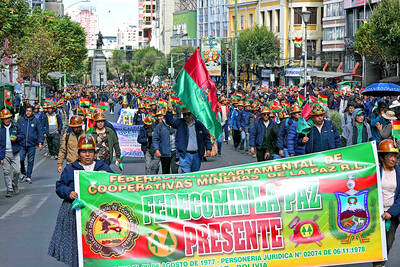
The Bolivian government on Friday struck a deal with protesting miners, but was still grappling with blockades and demonstrations by other workers across La Paz. Other groups are still blocking access roads into the city, which is also the seat of the government. Police on Thursday prevented the miners from entering the main square by using tear gas, while the demonstrators hurled stones and explosives with slingshots. Protests against the policies of Bolivian President Rodrigo Paz have convulsed the Andean nation since early this month, and roadblocks were choking routes into La Paz throughout Friday, the national road authority said. Miners demanded that Paz
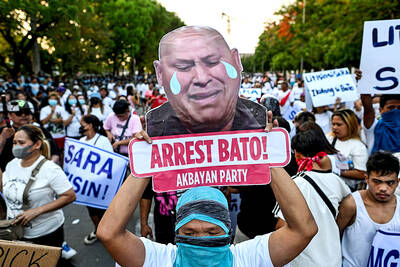
The Philippines said it has asked the country’s Supreme Court to allow it to arrest former Philippine president Rodrigo Duterte’s chief drug war enforcer to stand trial in an international tribunal. The International Criminal Court (ICC) last week unsealed an arrest warrant against Philippine Senator Ronald dela Rosa, accusing him along with Duterte and other “coperpetrators” of the “crime against humanity of murder.” Dela Rosa briefly sought refuge in the Philippine Senate last week while asking the Philippine Supreme Court to stop an ongoing attempt by government agents to arrest him. “By his own conduct, he has placed himself outside the protection of
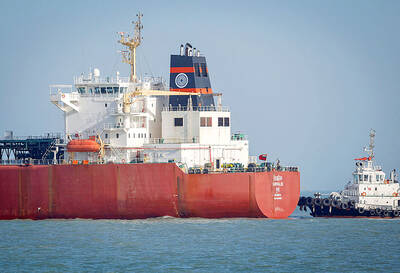
A ship anchored off the United Arab Emirates (UAE) was seized and taken toward Iran and another — a cargo ship near Oman — sank after being attacked, authorities said on Thursday, as tensions escalated near the Strait of Hormuz. It was not immediately clear who was behind these incidents, but they happened as a senior Iranian official reiterated his country’s claim of control over the waterway and another said it had a right to seize oil tankers connected to the US. The turmoil in the strait has been a sticking point for weeks in talks between the US and Iran to

Crowds in Bangladesh are flocking to snap photographs with an unlikely social media star — an albino buffalo with flowing blond hair nicknamed “Donald Trump” that is due to be sacrificed within days. Owner Zia Uddin Mridha, 38, said his brother named the 700kg bull over its flowing helmet of hair resembling the signature look of the US president. “My younger brother picked this name because of the buffalo’s extraordinary hair,” he said at his farm in Narayanganj, just outside the capital, Dhaka. Mridha said that a constant stream of curious visitors — social media fans, onlookers and children — have come throughout


 RSS
RSS