


Philippine President Gloria Arroyo yesterday pledged to cut the country's unwieldy bureaucracy and devote her new term to raising millions out of poverty, but gave few policy details.
In her first state of the nation speech since winning elections in May, Arroyo linked her anti-poverty fight with her decision to pull Manila's troops out of Iraq last week to save the life of a Filipino hostage at the cost of strained ties with Washington.
"I have shown that government does care even for a single Filipino life," Arroyo told a joint session of Congress. "Now we must show that we care for the rest of the Filipino people, even the weakest among us."
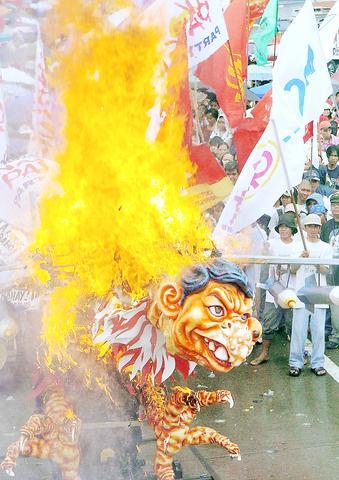
PHOTO: AFP
Analysts were looking to the speech for evidence she could cut a public-debt burden worth more than the economy, while also creating enough jobs and investment to staunch the flow of Filipinos leaving the country to seek work abroad.
Arroyo reiterated plans to introduce new tax steps to raise an extra 80 billion pesos (US$1.4 billion) a year while saving an extra 100 billion pesos a year, but gave no further details on tax.
Her energy secretary yesterday said that she had signed an order to raise tariffs on oil product imports to 5 percent from 3 percent to net an extra 4.4 billion pesos (US$78.6 million).
Arroyo asked Congress to approve a bill on the privatization of debt-laden state power firm NAPOCOR, promising that it would not be a "firesale," and to pass a bill making the country's anti-corruption ombudsman as strong as Hong Kong's.
She also promised to create a more efficient bureaucracy by cutting staffing and giving the private sector a greater role.
"We will simplify procedures to eliminate fixers," she said. "We will downsize the government, motivate excess employees to become entrepreneurs and increase the pay of a lean and mean bureaucracy."
With her first three years over-shadowed by doubts about her legitimacy, Arroyo pledged to use her mandate for a fresh six-year term and legislative majorities to wipe out the US$3.6 billion annual budget deficit, create 6 million jobs and put computers in all schools.
But it is still unclear whether politicians are ready to tackle the country's problems with renewed urgency and push aside the bickering and bad blood that has lingered since anti-graft protests turfed out former president Joseph Estrada and installed Arroyo in 2001.
The initial reaction to Arroyo's address by one senator suggested she had failed to win over doubters.
"It reads like a mediocre term paper," administration senator Joker Arroyo said in a statement. "Long in rhetoric, short in substance. The president's advisers have failed her."
Around 5,000 police were on alert as protesters gathered near the Congress building in central Manila.
Raising one of Asia's smallest revenue bases by cracking down on tax cheats and corrupt bureaucrats is a key test for the Philippines.
Although Arroyo supporters won a majority in the Congress and Senate, that does not guarantee an end to opposition to reforms by vested interests that has frustrated investors in the past.
Moves to raise "sin" taxes on tobacco and alcohol have been stymied for years by entrenched opposition, even though most analysts say that it would make economic sense.
Early proposals to abolish the value-added tax in favor of a new tax on gross income have been criticized as counter to a trend toward VAT-based tax systems in other countries.
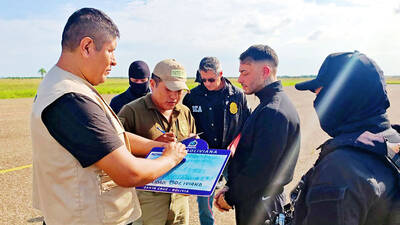
KINGPIN: Marset allegedly laundered the proceeds of his drug enterprise by purchasing and sponsoring professional soccer teams and even put himself in the starting lineups Notorious Latin American narco trafficker Sebastian Marset, who eluded police for years, was handed over to US authorities after his arrest on Friday in Bolivia. Marset, a Uruguayan national who was on the US most-wanted list, was passed to agents of the US Drug Enforcement Administration at Santa Cruz airport in Bolivia, then put on a US airplane, Bolivian state television showed. “The arrest and deportation were carried out pursuant to a court order issued by the US justice system,” Bolivian Minister of Government Marco Antonio Oviedo told reporters. The alleged kingpin was arrested in an upscale neighborhood of Santa
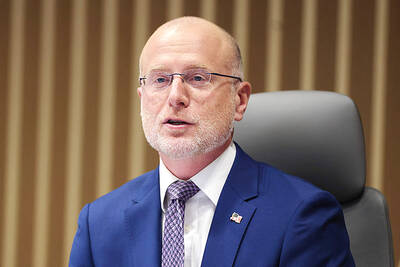
FAKE NEWS? ‘When the government demands the press become a state mouthpiece under the threat of punishment, something has gone very wrong,’ a civic group said The top US broadcast regulator on Saturday threatened media outlets over negative coverage of the Middle East war, after US President Donald Trump slammed critical headlines from the “Fake News Media.” The US president since his first term has derided mainstream media as “fake news” and has sued major outlets over what he sees as unfair coverage. Brendan Carr, head of the US Federal Communications Commission — which oversees the nation’s radio, television and Internet media — said broadcasters risked losing their licenses over news coverage. “The law is clear. Broadcasters must operate in the public interest, and they will
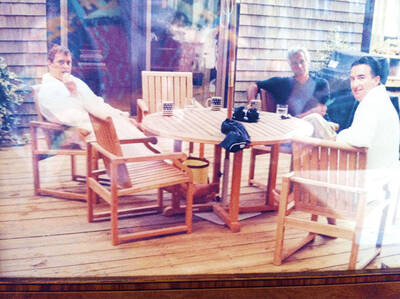
SCANDAL: Other images discovered earlier show Andrew bent over a female and lying across the laps of a number of women, while Mandelson is pictured in his underpants A photograph of former British prince Andrew and veteran politician Peter Mandelson sitting in bathrobes alongside late sex offender Jeffrey Epstein was unearthed on Friday in previously published documents. The image is believed to be the first known photograph of the two men with Epstein. They are currently engulfed in scandal in the UK over their ties to their mutual friend. The undated photograph, first reported by ITV News, shows King Charles III’s disgraced brother and former British ambassador to the US sitting barefoot outside on a wooden deck. They appear to have mugs with a US flag on them
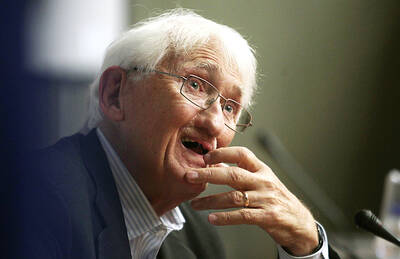
INFLUTENTIAL THEORIST: Habermas was particularly critical of the ‘limited interest’ shown by German politicians in ‘shaping a politically effective Europe Jurgen Habermas, whose work on communication, rationality and sociology made him one of the world’s most influential philosophers and a key intellectual figure in his native Germany, has died. He was 96. Habermas’ publisher, Suhrkamp, said he died on Saturday in Starnberg, near Munich. Habermas frequently weighed in on political matters over several decades. His extensive writing crossed the boundaries of academic and philosophical disciplines, providing a vision of modern society and social interaction. His best-known works included the two-volume Theory of Communicative Action. Habermas, who was 15 at the time of Nazi Germany’s defeat, later recalled the dawn of


 RSS
RSS