


A new high-speed passenger train derailed Thursday in northwestern Turkey, and officials said 36 people were killed.
The government crisis center and Health Ministry previously had reported between 128 and 139 people were killed, but lowered the death toll late Thursday without giving any official explanation. The Transportation Ministry also gave a death toll of 36.
"A mistake was made in the death and injury toll because of the contradictory information that reached us," said Ayhan Cevik, mayor of the nearby town of Bilecik. "According to the latest information we have, 36 people were killed in the accident and 60 were injured."

PHOTO: AFP
At least four train cars overturned near the small, rural village of Mekece in Sakarya province, with most of the damage in two cars that crashed into each other. Bodies lay near the tracks as people climbed on the overturned cars looking for survivors. Darkness was hampering rescue operations, with soldiers searching the wreckage and treating the injured by flashlight.
It was not immediately known what caused the derailment of the train, a fast connection from Istanbul to the capital, Ankara. There was controversy when the line started operating June 4, with critics saying the tracks were old and could not handle the new trains.
Still, authorities said they were not ruling out sabotage.
"We are assessing every possibility," said Muammer Turker, heading the crisis center in Sakarya. He said the train was carrying 234 passengers and nine personnel.
When it derailed, the train would have been traveling at a normal speed, because the tracks near Mekece were not geared to carry high-speed cars, state railway authority deputy head Ali Kemal Ergulec said. It was not immediately known how fast the train was going when it derailed 183km away from Istanbul, about midway to Ankara.
"The train was a little fast going around the curves," Namik Kemal Ozden, said lying in his hospital bed, his face bandaged. "There were vibrations. My cousin was sitting next to me, we hugged each other. The windows broke and we fell to one side. We could only understand what happened once we got out."
At the scene, rescue workers were combing through the debris, looking for survivors.
Paramilitary soldiers were carrying luggage from the debris and piling it on the side of the road.
Most of the white train cars with red trim were lying on their sides. Windows were shattered.
"There were bodies lying all over the place," said Hikmet Feridun Turan, the mayor of nearby Pamukova and one of the first people to reach the site.
"Body pieces. Heads lying on the ground. I don't want anyone to ever see anything like that," he said.
The crash occurred at 7:45pm and by midnight, most of the rescue efforts were winding down.
Prime Minister Recep Tayyip Erdogan canceled a trip to Bosnia scheduled for yesterday and traveled to the area by helicopter.
He said authorities would likely make an announcement on the cause of the crash yesterday.
Oguz Dizer, a journalist traveling in the area, told NTV television that soldiers were on the scene to help the injured. He said he saw several bodies lying near the tracks.
"The scene is one of carnage," Dizer said. "There are people lying all over the place."
Suleyman Karaman, the head of Turkey's railway authority, said a team had been sent to the area to try and determine the cause of the crash. He quoted the train's conductor as saying the train was traveling at normal speed and that he "could not understand what had gone wrong."
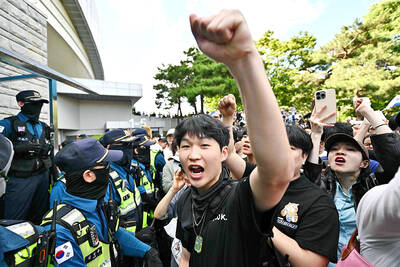
‘ABSURD MISTAKE’: The election commission said that there had been a failure to anticipate turnout after 14 polling stations ran short of ballot papers South Korean riot police yesterday cleared protesters from a Seoul polling station after a 35-hour blockade sparked by a shortage of ballot papers during local elections earlier this week. Wednesday’s election was the first nationwide vote since South Korean President Lee Jae-myung took office following the ouster of Yoon Suk-yeol over his short-lived martial law declaration. Lee’s ruling Democratic Party swept most races, but failed to flip the crucial Seoul mayoral seat. The South Korean National Election Commission apologized, blaming a failure to anticipate turnout after 14 polling stations in Seoul ran short of ballot papers. Some polling stations stayed open until 10pm to

France experienced its hottest spring on record, the French weather service said on Tuesday, after an exceptional early heat wave that also broke highs for the season in England and Wales. Meteo-France said the average nationwide temperature over March to May was 13.8°C — about 1.7°C above the norm, and surpassing records set in 2011 and 2020. “The warmest spring since records began in 1900,” it said in a bulletin. All three months were warmer than average, but the onset of an “unprecedented heatwave” late last month pushed the mercury to highs typically seen at the height of the summer. “Our country had never
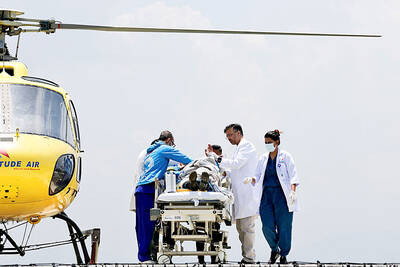
A Sherpa guide was found crawling to base camp on Mount Everest a week after he went missing and was reunited with his family, who had given up hope he would return. Dawa Sherpa was last seen on Friday last week descending the mountain, but he did not reach base camp even though his client did. The pair were among the last climbers on the mountain as the climbing season came to an end and the route was dismantled. Dawa was located by a cleaning crew on Thursday morning as he was crawling down the snowy slopes around the Khumbu Icefall, just above
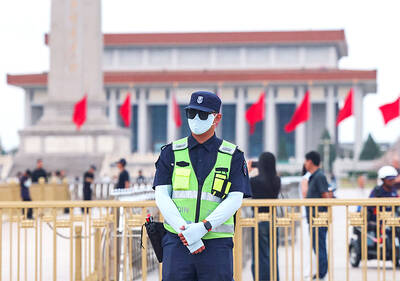
Chinese authorities are snuffing out any remembrance of the deadly 1989 military crackdown on student-led pro-democracy protests in Tiananmen Square, which happened 37 years ago yesterday, in a further tightening of a years-long campaign to erase what happened from public memory. Police told relatives of the victims they would not be allowed to visit a cemetery in Beijing on the anniversary of the crackdown, a person with knowledge of the matter said. Relatives of the victims visited the cemetery on the anniversary for more than 30 years to read memorial statements with police keeping watch, Amnesty International said. Hundreds of people,


 RSS
RSS