


Japan is processing former world chess champion Bobby Fischer, wanted in the US for defying a US ban on doing business with Yugoslavia, for deportation, a Japanese official said yesterday.
But the official declined to comment on a report that Fischer, 61, the only US citizen ever to become world chess champion and regarded as possibly the world's greatest player, was seeking political asylum in a third country.
"We are in the midst of the procedures for deportation," the official said, adding he could not estimate how long the process would take.
"In principle, a person is deported to the country of his nationality but in some cases it could be a third country," the official said.
The Web site ChessBase.com reported that Fischer was appealing for help in the form of an immediate offer of asylum from a friendly third country through his friend Miyoko Watai, head of the Japan Chess Association.
Watai could not immediately be reached for comment.
The chess grandmaster has eluded the US government since 1992, when he played in a match in the former Yugoslavia. That move brought him into conflict with the US authorities since economic sanctions against Yugoslavia were in force at the time.
If sent to the US, Fischer could face prison and a fine.
Fischer was detained at Tokyo airport last week. He was suspected of holding an invalid passport when he tried to leave for the Philippines, Kyodo news agency said.
A US embassy spokesman on Tuesday declined to comment on whether Washington would seek Fischer's extradition. But he denied that there was any link -- as some media have speculated -- between Fischer's detention and Japan's request for special treatment for former US army sergeant Charles Robert Jenkins, who Washington says deserted in 1965 to North Korea.
Jenkins, who married a Japanese woman abducted to the secretive communist state in 1978, was brought to Japan for medical treatment on Sunday. Tokyo is asking Washington not to seek to take him into custody to face court martial.
Mystery and controversy have surrounded one of the great eccentrics of the chess profession throughout his career.
Fischer took the world chess title in 1972 by beating Boris Spassky of the Soviet Union in a match considered something of a Cold War propaganda victory for the US, since chess had been dominated by Soviet players since World War II.
What was billed as the "Match of the Century" took place in Reykjavik, Iceland, and brought chess tremendous publicity in the US, making Fischer an instant celebrity.
In 1975, Fischer resigned his title after a number of his conditions for a match against Anatoly Karpov, also of the Soviet Union, were refused by chess officials.
Karpov became champion by default.
Fischer disappeared from sight until the 1992 match, again against Spassky. He won, taking US$3 million in prize money. He stirred controversy with numerous anti-Semitic remarks over the years. His mother was Jewish.
He then disappeared again, resurfacing after the Sept. 11, 2001 attacks on the US to give an interview on Philippine radio in which he praised the strikes and said he wanted to see the US "wiped out."
ChessBase.com said Fischer had avoided arrest by remaining abroad in Hungary, the Philippines and Japan, but that his US passport had been revoked in December of last year.
The Web site said he had last entered Japan on April 15.
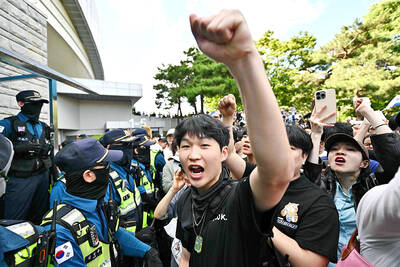
‘ABSURD MISTAKE’: The election commission said that there had been a failure to anticipate turnout after 14 polling stations ran short of ballot papers South Korean riot police yesterday cleared protesters from a Seoul polling station after a 35-hour blockade sparked by a shortage of ballot papers during local elections earlier this week. Wednesday’s election was the first nationwide vote since South Korean President Lee Jae-myung took office following the ouster of Yoon Suk-yeol over his short-lived martial law declaration. Lee’s ruling Democratic Party swept most races, but failed to flip the crucial Seoul mayoral seat. The South Korean National Election Commission apologized, blaming a failure to anticipate turnout after 14 polling stations in Seoul ran short of ballot papers. Some polling stations stayed open until 10pm to

France experienced its hottest spring on record, the French weather service said on Tuesday, after an exceptional early heat wave that also broke highs for the season in England and Wales. Meteo-France said the average nationwide temperature over March to May was 13.8°C — about 1.7°C above the norm, and surpassing records set in 2011 and 2020. “The warmest spring since records began in 1900,” it said in a bulletin. All three months were warmer than average, but the onset of an “unprecedented heatwave” late last month pushed the mercury to highs typically seen at the height of the summer. “Our country had never

A Sherpa guide was found crawling to base camp on Mount Everest a week after he went missing and was reunited with his family, who had given up hope he would return. Dawa Sherpa was last seen on Friday last week descending the mountain, but he did not reach base camp even though his client did. The pair were among the last climbers on the mountain as the climbing season came to an end and the route was dismantled. Dawa was located by a cleaning crew on Thursday morning as he was crawling down the snowy slopes around the Khumbu Icefall, just above
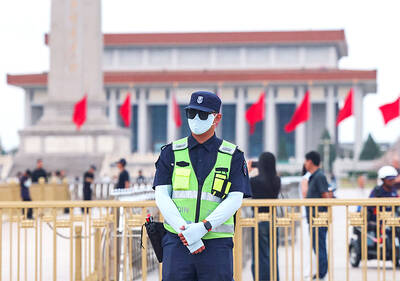
Chinese authorities are snuffing out any remembrance of the deadly 1989 military crackdown on student-led pro-democracy protests in Tiananmen Square, which happened 37 years ago yesterday, in a further tightening of a years-long campaign to erase what happened from public memory. Police told relatives of the victims they would not be allowed to visit a cemetery in Beijing on the anniversary of the crackdown, a person with knowledge of the matter said. Relatives of the victims visited the cemetery on the anniversary for more than 30 years to read memorial statements with police keeping watch, Amnesty International said. Hundreds of people,


 RSS
RSS