


Youngsters will be used in sting operations to catch shopkeepers and bar owners selling alcohol to under-age boozers as part of a vast operation to try to end Britain's violent binge-drinking culture.
"We're aiming to kick start a culture change where it will be less accepted by society for young men and women to go out and drink until they can't remember who they are," junior public security minister Hazel Blears said Thursday as the campaign was launched.
The operation comes amid concerns that many British city centers are turning into virtual no-go areas on weekend nights by gangs of drunken youths roaming the streets.
Alcohol-related violence accounts for 44 percent of all violent crime in Britain, officials say. And excessive drinking accounts for seven out 10 people admitted to hospital on weekend nights.
Binge-drinking is a hugely popular pastime for young Britons of all classes, consisting of downing large amounts of alcohol before being thrown out of pubs at the 11 pm standard closing time.
The new campaign will focus on those who sell alcohol to under-18s, bars and clubs which promote irresponsible and rowdy behavior, and drunken youths who cause violence on weekend nights.
Youngsters aged under 18 will be sent in to buy goods from premises and catch offending businesses, police said.
Drunkards will have to pay an on-the-spot penalty of ?40, while "rowdy" establishments will be "named and shamed" and shut down for 24 hours.
In more serious cases, the police will take away the alcohol licence of the establishment whose clients cause disturbances, even after they leave the pub.
Seventy-seven areas in England and Wales are being targeted in the eight-week crackdown, which is a joint initiative between the police and government.
After the initial period the government plans to assess the results before conducting more such operations in its bid to rein in Britain's youth.
Many commentators however believe the binge-drinking problem could get worse when opening hours are relaxed next year, a move that comes after decades of debate on the 11pm closing time that was imposed during World War I.
But a culture ministry spokeswoman said Thursday that staggered closing times will help "prevent the violence and disorder that can arise from large numbers of people pouring out of pubs and clubs on to the streets at the same time, competing for the same services."
The government may also impose minimum prices for alcohol in a bid to crack down on sales campaigns by drink companies that see booze prices slashed.
It could also tackle so-called "happy hours" in pubs that some say encourage young people to drink cheap booze more quickly during set hours.
Alcohol consumption is increasingly steadily among Britons, particularly among women. But Britain ranks only in 12th position in European booze consumption tables.
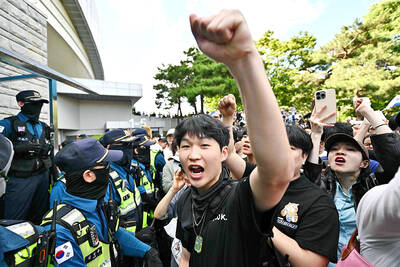
‘ABSURD MISTAKE’: The election commission said that there had been a failure to anticipate turnout after 14 polling stations ran short of ballot papers South Korean riot police yesterday cleared protesters from a Seoul polling station after a 35-hour blockade sparked by a shortage of ballot papers during local elections earlier this week. Wednesday’s election was the first nationwide vote since South Korean President Lee Jae-myung took office following the ouster of Yoon Suk-yeol over his short-lived martial law declaration. Lee’s ruling Democratic Party swept most races, but failed to flip the crucial Seoul mayoral seat. The South Korean National Election Commission apologized, blaming a failure to anticipate turnout after 14 polling stations in Seoul ran short of ballot papers. Some polling stations stayed open until 10pm to

France experienced its hottest spring on record, the French weather service said on Tuesday, after an exceptional early heat wave that also broke highs for the season in England and Wales. Meteo-France said the average nationwide temperature over March to May was 13.8°C — about 1.7°C above the norm, and surpassing records set in 2011 and 2020. “The warmest spring since records began in 1900,” it said in a bulletin. All three months were warmer than average, but the onset of an “unprecedented heatwave” late last month pushed the mercury to highs typically seen at the height of the summer. “Our country had never

A Sherpa guide was found crawling to base camp on Mount Everest a week after he went missing and was reunited with his family, who had given up hope he would return. Dawa Sherpa was last seen on Friday last week descending the mountain, but he did not reach base camp even though his client did. The pair were among the last climbers on the mountain as the climbing season came to an end and the route was dismantled. Dawa was located by a cleaning crew on Thursday morning as he was crawling down the snowy slopes around the Khumbu Icefall, just above
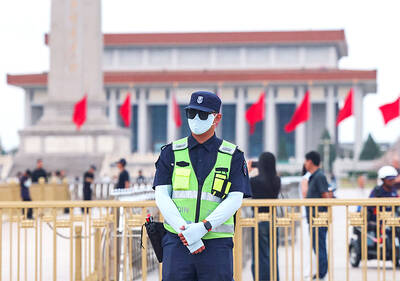
Chinese authorities are snuffing out any remembrance of the deadly 1989 military crackdown on student-led pro-democracy protests in Tiananmen Square, which happened 37 years ago yesterday, in a further tightening of a years-long campaign to erase what happened from public memory. Police told relatives of the victims they would not be allowed to visit a cemetery in Beijing on the anniversary of the crackdown, a person with knowledge of the matter said. Relatives of the victims visited the cemetery on the anniversary for more than 30 years to read memorial statements with police keeping watch, Amnesty International said. Hundreds of people,


 RSS
RSS