

Al-Qaeda-linked terrorist groups such as Jemaah Islamiyah could try to launch biological or chemical attacks against US allies and secular Muslim governments in Asia using widely available materials, security experts warned yesterday.
Jemaah Islamiyah is believed to be exploiting anti-Western sentiment over the situation in Iraq to recruit new members and raise funds that could be used obtain or develop such weapons, top Japanese security official Shinsuke Shimizu told a conference on terrorism in Kuala Lumpur.
"There are several warning signs" that terrorists could be planning biological or chemical attacks in Asia, said Shimizu, the director for international counterterrorism cooperation at Japan's Foreign Ministry. "The most realistic threat comes from al-Qaeda and its associate groups."
Warning signs include the discovery last October of manuals on bioterrorism at a Jemaah Islamiyah hideout in the southern Philippines, and the arrest in June last year of a man who tried to sell cesium 137 -- a radioactive material used in industry that could be used to make so-called "dirty bombs."
Zainal Abidin Zain, the director-general of the US-backed Southeast Asia Regional Center for Counterterrorism, said terrorists may try to adapt chemicals that are widely available commercially for use in weapons.
"Deadly chemical agents, including various insecticides, industrial chemicals and potent toxins are relatively easy to produce or acquire," he said. Also, "It is possible to harvest deadly pathogens from nature with unsophisticated equipment and limited expertise."
"The probability of chemical, biological, radiological and nuclear terrorist attacks cannot be overlooked," said Zain.
Jemmah Islamiyah shares a common ideology with al-Qaeda -- based on a hatred of Western influence and a strict version of Islam -- making US allies such as Japan and secular Muslim governments such as Indonesia's and Malaysia's the likely targets of attacks, Shimizu said.
The Southeast Asia-based group is blamed for a series of bombings in recent years, including the 2002 nightclub attacks in Indonesia's Bali island that killed 202 people, mostly Western tourists.
At least two Jemaah Islamiyah members played a key role in a fledgling al-Qaeda chemical weapons program in Afghanistan before invading US-led forces shut it down in 2002, officials say.
Japan and Malaysia are co-hosting the five-day conference, which gathers about 50 officials from Southeast Asia, China and South Korea, who have responsibility for control of chemicals, counterterrorism, health and national security.
Trainers from the US and Canada are taking part, and the Hague-based watchdog group Organization for the Prohibition of Chemical Weapons is also attending.
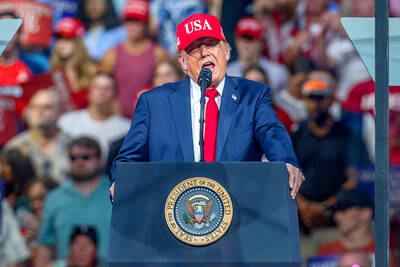
US President Donald Trump on Wednesday threatened to take action against the EU if it moves forward with European Commission President Ursula von der Leyen’s proposal to make Canada the bloc’s first associate member. “If they do that, if I think it’s at all a hostile act; I will put very serious tariffs or stop trading with Europe on many things,” Trump told reporters en route to an event in North Carolina, calling the proposal “laughable.” “If it’s a good intention, that’s fine. If it’s a bad intention, we’ll put very heavy tariffs on Europe,” he said. Von der Leyen made the proposal
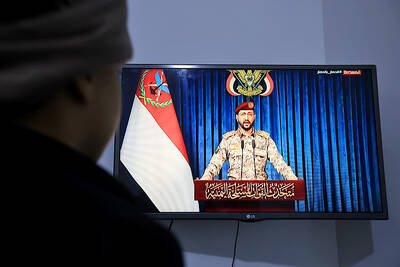
ON THE MOVE: Trump unexpectedly cut short a trip to return to the White House, while the State Department warned Americans to avoid travel to the Middle East The US on Saturday warned that hostilities between Saudi Arabia and Iran-backed Houthis could “escalate rapidly” after a missile attack targeted Riyadh for the first time since the Yemen conflict resumed. US President Donald Trump on Saturday cut short a weekend at Camp David, a secluded presidential complex in rural Maryland, to return unexpectedly to the White House. The White House gave no explanation for the early return, which comes as a new threshold was crossed in the conflict between Saudi Arabia and the Houthis, who control a large part of Yemen and are fighting government forces backed by a coalition led
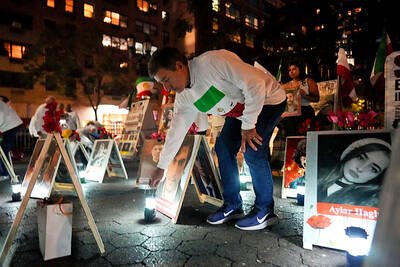
World leaders gather in New York this week for the UN General Assembly, bracing for US President Donald Trump’s return to the rostrum for a second year running, with talks centering on the widening conflicts in the Middle East and Ukraine and the risks of artificial intelligence (AI). Nearly 130 heads of state meet with the post-World War II order under strain and with the UN itself struggling to remain relevant and weathering attacks from Trump, who has slashed the US’ contributions and withdrawn from dozens of UN bodies. Chinese President Xi Jinping (習近平), who last addressed the diplomatic jamboree via video
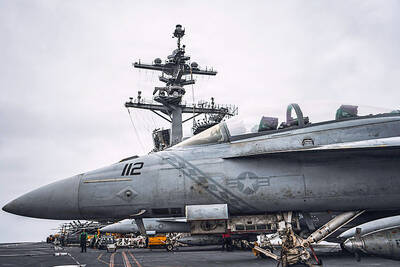
The US military came close to boarding a Chinese vessel in the Middle East earlier this year based on a flawed intelligence report prepared with the help of artificial intelligence (AI), CNN said on Friday. US intelligence indicated the ship was carrying nuclear weapons-related components, leading US forces to prepare to intercept it, the broadcaster reported, citing four anonymous sources familiar with the incident. However, the operation was called off after officials determined that an AI chatbot used by an analyst had misidentified the material the ship was carrying. The report was “entirely false,” but “almost started a war,” CNN quoted one source


 RSS
RSS