


US Secretary of State Colin Powell and North Korea's foreign minister discussed Pyongyang's nuclear ambitions yesterday, the highest-level bilateral meeting since a crisis over the North's atomic plans erupted almost two years ago.
Powell and Foreign Minister Paek Nam Sun held a 20-minute scheduled discussion over mineral water on the sidelines of the ASEAN Regional Forum security talks in Jakarta.
"The secretary said there was an opportunity for concrete progress," State Department spokesman Richard Boucher said, reflecting signs of new-found flexibility by the US to end an impasse that has cast a shadow over the security of north Asia.
While North Korea put a positive spin on the talks, it stressed after the meeting that the two sides did not trust each other and stuck to its position that Washington should guarantee it would not attack and would reward the impoverished communist state if it freezes its programs.
"If the United States is of the position to improve the bilateral relations, the DPRK also will not regard the US as a permanent enemy," Paek said in a statement. DPRK -- the Democratic People's Republic of Korea -- is North Korea's official name.
The two officials last met over a cup of coffee at the ASEAN forum two years ago in Brunei in a much less formal encounter. That took place shortly before the nuclear crisis erupted in October 2002 when Washington said Pyongyang admitted to illegally developing nuclear arms.
Yesterday's discussion followed a third round of six-party talks to resolve the standoff last week in Beijing that included the most detailed US proposal to date in a sign of a real start to negotiations.
The meeting and proposal represent the most conciliatory US overtures to North Korea since President George W. Bush bracketed the Stalinist state part of an "axis of evil" with Iran and pre-war Iraq.
"As I mentioned earlier, both sides agreed in principle to establish trust which we are lacking. We agreed to that in principle, so the atmosphere at the meeting was good," North Korean Foreign Ministry official Chung Song-il told reporters.
But the two sides remain far apart because of a fundamental dispute over the extent of the suspected programs and the North's desire to have a deterrent to ensure its communist system endures, political analysts have said.
"The secretary emphasized the administration's proposals to move forward on dismantlement of North Korean nuclear programs," Boucher said of yesterday's meeting. "The discussion was useful to help clarify each side's proposal."
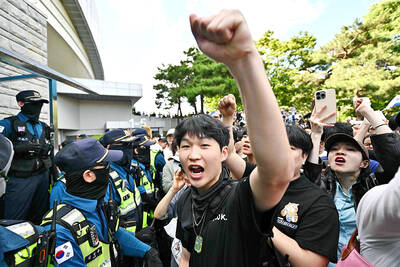
‘ABSURD MISTAKE’: The election commission said that there had been a failure to anticipate turnout after 14 polling stations ran short of ballot papers South Korean riot police yesterday cleared protesters from a Seoul polling station after a 35-hour blockade sparked by a shortage of ballot papers during local elections earlier this week. Wednesday’s election was the first nationwide vote since South Korean President Lee Jae-myung took office following the ouster of Yoon Suk-yeol over his short-lived martial law declaration. Lee’s ruling Democratic Party swept most races, but failed to flip the crucial Seoul mayoral seat. The South Korean National Election Commission apologized, blaming a failure to anticipate turnout after 14 polling stations in Seoul ran short of ballot papers. Some polling stations stayed open until 10pm to

France experienced its hottest spring on record, the French weather service said on Tuesday, after an exceptional early heat wave that also broke highs for the season in England and Wales. Meteo-France said the average nationwide temperature over March to May was 13.8°C — about 1.7°C above the norm, and surpassing records set in 2011 and 2020. “The warmest spring since records began in 1900,” it said in a bulletin. All three months were warmer than average, but the onset of an “unprecedented heatwave” late last month pushed the mercury to highs typically seen at the height of the summer. “Our country had never

A Sherpa guide was found crawling to base camp on Mount Everest a week after he went missing and was reunited with his family, who had given up hope he would return. Dawa Sherpa was last seen on Friday last week descending the mountain, but he did not reach base camp even though his client did. The pair were among the last climbers on the mountain as the climbing season came to an end and the route was dismantled. Dawa was located by a cleaning crew on Thursday morning as he was crawling down the snowy slopes around the Khumbu Icefall, just above
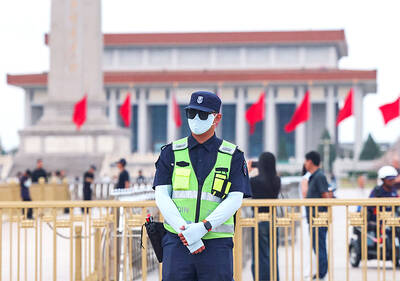
Chinese authorities are snuffing out any remembrance of the deadly 1989 military crackdown on student-led pro-democracy protests in Tiananmen Square, which happened 37 years ago yesterday, in a further tightening of a years-long campaign to erase what happened from public memory. Police told relatives of the victims they would not be allowed to visit a cemetery in Beijing on the anniversary of the crackdown, a person with knowledge of the matter said. Relatives of the victims visited the cemetery on the anniversary for more than 30 years to read memorial statements with police keeping watch, Amnesty International said. Hundreds of people,


 RSS
RSS