


Bosnia peace overseer Paddy Ashdown sacked 60 Bosnian Serb officials yesterday over their failure to arrest top war-crimes suspect Radovan Karadzic.
Those removed included Parliamentary Speaker Dragan Kalinic, leader of the Serbian Democratic Party (SDS) founded by Karadzic in 1990, and Interior Minister Zoran Djeric.
"I decided to remove these people from public and party positions," Ashdown told a news conference.
Ashdown has sweeping powers to remove officials seen as obstructing the peace process under the 1995 Dayton accord that ended Europe's worst conflict since World War II. More than 200,000 people died in the 1992-1995 war, most of them Muslims.
"It was Dragan Kalinic's responsibility as leader of the SDS to prevent fraud, abuse and criminality ... to ensure that the party founded by Radovan Karadzic was no longer financing him," Ashdown said.
Bosnia's Serb Republic has been under growing Western pressure to arrest Karadzic and other war crimes suspects still at large. Karadzic is said to be hiding in remote eastern Bosnia, protected by hardline loyalists.
Bosnian Serb officials insist they don't know the whereabouts of Karadzic, twice indicted by the Hague war crimes tribunal for genocide together with his military commander Ratko Mladic, who is believed to be in neighboring Serbia.
They are accused of involvement in the siege of Sarajevo and the 1995 massacre of up to 8,000 Muslim men and boys after the fall of the eastern town of Srebrenica.
Chief UN war-crimes prosecutor Carla Del Ponte said on Tuesday that Karadzic could be arrested as early as this week.
Kalinic, a wartime ally of Karadzic, confirmed he had been sacked.
"I was removed today by the High Representative," Kalinic told the parliament of the Serb Republic, one of Bosnia's two post-war entities. "I was removed because of Radovan Karadzic.
"This is the most brutal political purge ... because besides me many others will be removed," he said.
SDS members of parliament left the assembly in protest against the dismissal, saying they would not take part in its work until further notice.
ACCUSATION
UN court officials on Tuesday accused fugitives and their backers in the Balkans of trying to escape prosecution by waiting until international pressure brings an end to war-crime trials.
Carla del Ponte, the prosecutor of the tribunal on the former Yugoslavia, and Theodor Meron, the court's chief judge, told the UN Security Council a dire shortage of funds was seriously hindering work. Japan owes nearly half of the US$88 million in arrears.
The Hague-based war crimes tribunal and a second in Arusha, Tanzania, on the 1994 genocide in Rwanda are to complete probes by the end of this year, end trials by 2008 and close down before the end of 2010.
"An unintended consequence of the completion strategy is that fugitives and their protective networks are trying to buy time until 2008, in hopes of evading justice, as they believe the time to be tried in The Hague will soon expire," Del Ponte told the 15-nation council.
"It certainly appears that some in the former Yugoslavia think that, by hiding from arrest, they can `wait out' the tribunal until it goes away," Meron said.
The Bosnian Serb Republic, where Karadzic is hiding, has pledged to step up efforts to detain suspects. It hopes to join NATO's Partnership for Peace program next month.
Del Ponte said authorities in Serbia and Montenegro had allowed the country to "become a safe haven for fugitives."
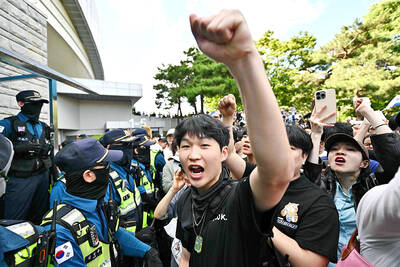
‘ABSURD MISTAKE’: The election commission said that there had been a failure to anticipate turnout after 14 polling stations ran short of ballot papers South Korean riot police yesterday cleared protesters from a Seoul polling station after a 35-hour blockade sparked by a shortage of ballot papers during local elections earlier this week. Wednesday’s election was the first nationwide vote since South Korean President Lee Jae-myung took office following the ouster of Yoon Suk-yeol over his short-lived martial law declaration. Lee’s ruling Democratic Party swept most races, but failed to flip the crucial Seoul mayoral seat. The South Korean National Election Commission apologized, blaming a failure to anticipate turnout after 14 polling stations in Seoul ran short of ballot papers. Some polling stations stayed open until 10pm to

France experienced its hottest spring on record, the French weather service said on Tuesday, after an exceptional early heat wave that also broke highs for the season in England and Wales. Meteo-France said the average nationwide temperature over March to May was 13.8°C — about 1.7°C above the norm, and surpassing records set in 2011 and 2020. “The warmest spring since records began in 1900,” it said in a bulletin. All three months were warmer than average, but the onset of an “unprecedented heatwave” late last month pushed the mercury to highs typically seen at the height of the summer. “Our country had never

A Sherpa guide was found crawling to base camp on Mount Everest a week after he went missing and was reunited with his family, who had given up hope he would return. Dawa Sherpa was last seen on Friday last week descending the mountain, but he did not reach base camp even though his client did. The pair were among the last climbers on the mountain as the climbing season came to an end and the route was dismantled. Dawa was located by a cleaning crew on Thursday morning as he was crawling down the snowy slopes around the Khumbu Icefall, just above
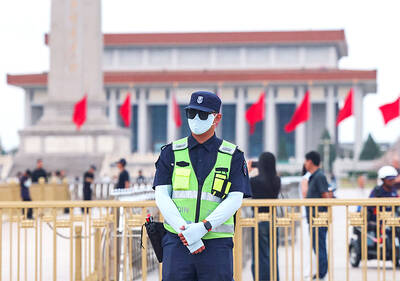
Chinese authorities are snuffing out any remembrance of the deadly 1989 military crackdown on student-led pro-democracy protests in Tiananmen Square, which happened 37 years ago yesterday, in a further tightening of a years-long campaign to erase what happened from public memory. Police told relatives of the victims they would not be allowed to visit a cemetery in Beijing on the anniversary of the crackdown, a person with knowledge of the matter said. Relatives of the victims visited the cemetery on the anniversary for more than 30 years to read memorial statements with police keeping watch, Amnesty International said. Hundreds of people,


 RSS
RSS