


Behind coils of razor wire at Guan-tanamo Bay, Cuba, one group of prisoners held by the US military faces a unique dilemma -- if returned to China, human rights groups warn, they could be tortured or killed.
Some 22 ethnic Uighurs, Muslims from China's desert northwest, are at the US prison for terror suspects, Amnesty International said this week.
"They're at grave risk if returned," Alistair Hodgett, a spokes-man for the London-based rights group said on Friday. "They are highly likely to face, at a minimum, continued detention, and very likely to face torture, ill treatment and possible execution."
Amnesty also accused China of sending a delegation in September 2002 that participated in interrogations in which Uighurs were subjected to threats and "stress and duress" techniques such as sleep deprivation, forced sitting for hours and "environmental manipulation" -- which can include extreme heat or cold.
In Beijing, the Chinese government on Thursday called the claims "totally groundless."
The US military also denies abuse during interrogations of the 600 prisoners from about 40 countries at its Navy base in Cuba.
"We don't engage in sleep deprivation or physical abuse," said spokesman Lieutenant-Commander Robert Mulac.
Amnesty International said it had confirmed reports that many Uighurs were in a medium-security prison wing reserved for the most "cooperative" detainees deemed not to threaten US interests and most likely to be freed.
Human rights groups say Uighurs, particularly those who advocate independence for their northwest territory of Xinjiang, face repression from Chinese authorities who call them terrorists.
China claims it is fighting an Islamic movement linked to al-Qaeda terrorist network, but diplomats say they doubt that. There has been no major separatist violence in recent years, but Hodgett said they have frequent reports of beatings, torture and executions of alleged Uighur separatists.
Hodgett said it is believed the Uighur detainees were captured during the US war in Afghanistan.
"We're very concerned," Mickey Spiegel of New York-based Human Rights Watch said of the fate of Uighur detainees. "Any kind of forcible repatriation as far as we're concerned is very much out of the question ... The US has a responsibility to see that these people are not returned to China."
Before a prisoner is returned home, the US State Department makes recommendations and confers with the home government, Pentagon spokeswoman Lieutenant-Commander Barbara Burfeind said. Asked whether possible persecution would be a factor, she said, "that would probably be something that would be part of those discussions."
Human rights groups suggest any freed Uighurs be granted asylum in another country, but Spiegel asked which would accept people once branded terrorists.
"We see it as a dilemma," she said. "What country is going to be willing to take them?"
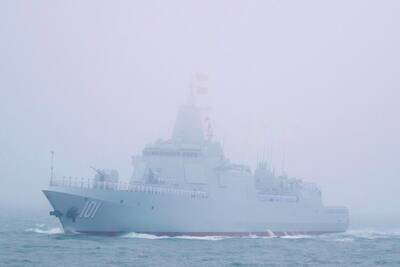
BRUSHED OFF: An ambassador to Australia previously said that Beijing does not see a reason to apologize for its naval exercises and military maneuvers in international areas China set off alarm bells in New Zealand when it dispatched powerful warships on unprecedented missions in the South Pacific without explanation, military documents showed. Beijing has spent years expanding its reach in the southern Pacific Ocean, courting island nations with new hospitals, freshly paved roads and generous offers of climate aid. However, these diplomatic efforts have increasingly been accompanied by more overt displays of military power. Three Chinese warships sailed the Tasman Sea between Australia and New Zealand in February, the first time such a task group had been sighted in those waters. “We have never seen vessels with this capability
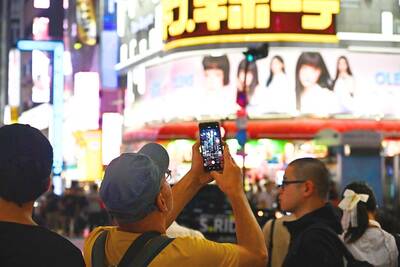
A Japanese city would urge all smartphone users to limit screen time to two hours a day outside work or school under a proposed ordinance that includes no penalties. The limit — which would be recommended for all residents in Toyoake City — would not be binding and there would be no penalties incurred for higher usage, the draft ordinance showed. The proposal aims “to prevent excessive use of devices causing physical and mental health issues... including sleep problems,” Mayor Masafumi Koki said yesterday. The draft urges elementary-school students to avoid smartphones after 9pm, and junior-high students and older are advised not

Philippine President Ferdinand Marcos Jr has fired his national police chief, who gained attention for leading the separate arrests of former Philippine president Rodrigo Duterte on orders of the International Criminal Court and televangelist Apollo Carreon Quiboloy, who is on the FBI’s most-wanted list for alleged child sex trafficking. Philippine Executive Secretary Lucas Bersamin did not cite a reason for the removal of General Nicolas Torre as head of the 232,000-member national police force, a position he was appointed to by Marcos in May and which he would have held until 2027. He was replaced by another senior police general, Jose
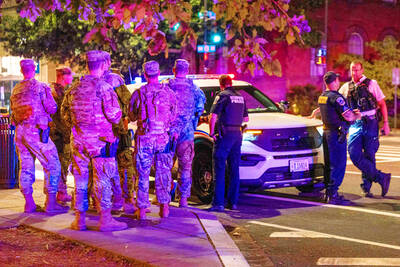
POWER CONFLICT: The US president threatened to deploy National Guards in Baltimore. US media reports said he is also planning to station troops in Chicago US President Donald Trump on Sunday threatened to deploy National Guard troops to yet another Democratic stronghold, the Maryland city of Baltimore, as he seeks to expand his crackdown on crime and immigration. The Republican’s latest online rant about an “out of control, crime-ridden” city comes as Democratic state leaders — including Maryland Governor Wes Moore — line up to berate Trump on a high-profile political stage. Trump this month deployed the National Guard to the streets of Washington, in a widely criticized show of force the president said amounts to a federal takeover of US capital policing. The Guard began carrying


 RSS
RSS