


Firing nuclear waste into the sun, placing it in Antarctic ice sheets so it sinks by its own heat to the bedrock, or putting it under Earth's crust so it is sucked to the molten core. These are three of the 14 options the government's advisers are considering to get rid of the UK's troublesome nuclear waste legacy.
All options are technically possible and many are potentially hazardous -- either to current generations or those yet unborn. Most also have political drawbacks and are expensive, around ?50 billion and counting, yet it is a problem the government has decided it must solve.
Last year it appointed a committee on radioactive waste management to re-examine all possibilities to find a publicly acceptable solution to the nuclear waste problem -- something that successive governments have failed to do for 50 years.
The committee's options range from the exotic to the well established. And most have their difficulties. For example, firing waste into the sun or into outer space may permanently rid Earth of the problem, but the possibility of rocket failure may make this seem too much of a gamble.
The Antarctica solution, allowing heat producing waste to bury itself in the ice, runs into the difficulty that the internationally agreed Antarctic Treaty bans such activity. The last pristine continent is supposed to be untouched by nuclear material.
Sub-seabed disposal, where waste is placed in a pre-dug hole or dropped in specially built penetrators to bury itself in the soft seabed, may be the best technical option. Even if the packages eventually rot and the radioactivity escapes it will be diluted by the sea water. But sea dumping is banned.
Some of the other ideas, such as placing it deep in the ground either to lose it in the Earth's mantle or in deep stratas where it would remain have been tried by Russians and Americans. The Swedes are successfully using a deep depository, but so far the UK has proved short of suitable geological formations. Exporting nuclear waste is also against government policy and likely to draw international protests.
All of the ideas remain on the table and none is yet a frontrunner. The present policy, by default, is storage -- but with a government committed to safeguarding the environment for future generations, this may be ruled out as an option too. Nuclear waste stays dangerous for 250,000 years and even the best-constructed concrete bunker is likely to need upgrading every 100 years or so.
A report to the committee says: "Fifty years of experience has proved the pursuit of 'the best' in the long term management of radioactive waste to be an illusory concept. The UK is currently engaged in a process, the success of which would be the identification of `the acceptable,' at a level which would allow the government to proceed with confidence."
Martin Forwood, of Cumbrians Opposed to Radioactive Environment, who is due to meet members of the government committee this week, was dismissive of the 14 ideas: "We thought all these madcap schemes had been junked donkey's years ago. The only sensible solution is to store it where it rightfully belongs -- in above ground custom-built concrete stores at the site of origin."
The government's estimates it will soon have 500,000 tonnes of high-level nuclear waste it has no home for, even if it never builds another nuclear power station. The even higher volume of low level waste is sent to a waste dump at Drigg, near Sellafield, in Cumbria, for disposal in specially-engineered trenches. By far the largest stores and the most dangerous high level heat-producing liquid wastes are at Sellafield, where Britain's major nuclear facilities were built and developed.
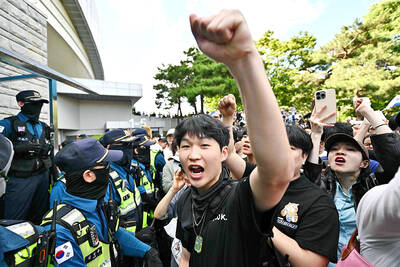
‘ABSURD MISTAKE’: The election commission said that there had been a failure to anticipate turnout after 14 polling stations ran short of ballot papers South Korean riot police yesterday cleared protesters from a Seoul polling station after a 35-hour blockade sparked by a shortage of ballot papers during local elections earlier this week. Wednesday’s election was the first nationwide vote since South Korean President Lee Jae-myung took office following the ouster of Yoon Suk-yeol over his short-lived martial law declaration. Lee’s ruling Democratic Party swept most races, but failed to flip the crucial Seoul mayoral seat. The South Korean National Election Commission apologized, blaming a failure to anticipate turnout after 14 polling stations in Seoul ran short of ballot papers. Some polling stations stayed open until 10pm to

France experienced its hottest spring on record, the French weather service said on Tuesday, after an exceptional early heat wave that also broke highs for the season in England and Wales. Meteo-France said the average nationwide temperature over March to May was 13.8°C — about 1.7°C above the norm, and surpassing records set in 2011 and 2020. “The warmest spring since records began in 1900,” it said in a bulletin. All three months were warmer than average, but the onset of an “unprecedented heatwave” late last month pushed the mercury to highs typically seen at the height of the summer. “Our country had never

A Sherpa guide was found crawling to base camp on Mount Everest a week after he went missing and was reunited with his family, who had given up hope he would return. Dawa Sherpa was last seen on Friday last week descending the mountain, but he did not reach base camp even though his client did. The pair were among the last climbers on the mountain as the climbing season came to an end and the route was dismantled. Dawa was located by a cleaning crew on Thursday morning as he was crawling down the snowy slopes around the Khumbu Icefall, just above
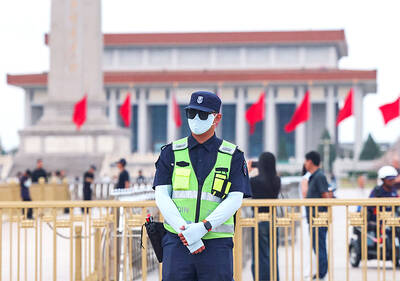
Chinese authorities are snuffing out any remembrance of the deadly 1989 military crackdown on student-led pro-democracy protests in Tiananmen Square, which happened 37 years ago yesterday, in a further tightening of a years-long campaign to erase what happened from public memory. Police told relatives of the victims they would not be allowed to visit a cemetery in Beijing on the anniversary of the crackdown, a person with knowledge of the matter said. Relatives of the victims visited the cemetery on the anniversary for more than 30 years to read memorial statements with police keeping watch, Amnesty International said. Hundreds of people,


 RSS
RSS