


One of the chief US weapons in the battle to win Iraqi hearts and minds is al-Iraqiya -- a Pentagon-funded TV station with an optimistic, pro-American slant.
Announcers on al-Iraqiya, which reaches 85 percent of Iraqis, decry the guerrillas attacking US military and Iraqi civilian targets as "terrorists."
Problem is, those Iraqis fortunate enough to have satellite dishes consider al-Iraqiya stodgy and slow on breaking news. They prefer al-Jazeera and al-Arabiya, the flashy Gulf-based stations where anti-American fighters are branded "resisters."
Recently, condemnation has focused on the Qatar- and Dubai-based networks. The US-appointed Iraqi Governing Council shut down Saudi-owned al-Arabiya for "inciting murder" by broadcasting a voice said to belong to Saddam Hussein. The US Department of State approved of the temporary closure but groups advocating press freedom were enraged by it.
Americans and their allies also show little love for al-Jazeera.
US Secretary of Defense Donald Rumsfeld has branded both networks "violently anti-coalition." He said a separate, US-owned satellite station would begin broadcasting next month, aiming to capture Arab viewers from the Gulf stations.
But al-Iraqiya has critics, too. Many see it as a pawn of the U.S.-led occupation authorities.
"The whole country is under the control of the Americans, not just al-Iraqiya," complained one man, a Baghdad candy vendor who declined to give his name.
An editor at the station, Kareem Hammadi, said he accentuates positive news "for the good of the Iraqi people."
"The most important events are the good news stories: the liberation, freedom, electricity improvements and the capture of terrorists," said Hammadi, the 34-year-old host of a political talk show.
Such fare is seen as boring by Iraqis -- and others.
On Wednesday, the former chief of Iraq's interim administration, retired Lieutenant General Jay Garner, said the US did a "bad job" of communicating with Iraqis, adding that "the consequence of that is who they got to listen to is al-Jazeera."
An October study by the US Department of State showed the Arab channels gaining on al-Iraqiya. It said 59 percent of Iraqis with only local television depended on al-Iraqiya for news.
By comparison, 63 percent of Iraqis with access to a satellite dish got their news from al-Jazeera and al-Arabiya, and only 12 percent watched al-Iraqiya, the study found.
The station's ties to the US-led Coalition Provisional Authority have hamstrung its credibility, said Don North, an adviser and trainer at al-Iraqiya who later left the network.
Al-Iraqiya, run by the Iraqi Media Network (IMN) that also includes two Baghdad radio stations, gets exclusive interviews with coalition leaders and streams live broadcasts of speeches by Paul Bremer, the top US official in Iraq.
On Thursday, a pair of al-Iraqiya reporters were the sole Arab journalists to capture US President George W. Bush's surprise visit.
"IMN has become an irrelevant mouthpiece for CPA propaganda, managed news and mediocre foreign programs," North wrote in a letter to reporters.
Al-Iraqiya does cover attacks -- albeit slowly. The station has bureaus in five cities, but none can stream live video on-air, so crews must drive to Baghdad with videotapes.
Al-Arabiya editor-in-chief Salah Negm and Al-Jazeera spokesman Jihad Ballout said they had not seen al-Iraqiya so they could not comment on its content. Nor would they estimate the number of their Iraqi viewers.
The Pentagon is seeking bids for a US$100 million upgrade to the IMN network, adding an all-news channel that would eventually be broadcast via satellite -- in direct challenge to the Arab satellite channels.
The winner of that contract will play a large role in shaping Iraq's media. The BBC is one of those in the running.
IMN and al-Iraqiya were conceived during the State Department's war preparations and are funded by the Defense Department.
After Baghdad fell, the Pentagon sent equipment and media experts from Science Applications International, a US defense contractor whose staff is packed with ex-US military and intelligence officials. SAIC hired 350 Iraqis for the network, which went live May 13.
IMN's current chief executive, Shameem Rassam, is an SAIC subcontractor and an Iraqi exile who anchored Iraq's state TV news in the 1960s until fleeing in 1990.
During Saddam's reign, TV news was stilted and anti-American, and satellite dishes were banned.
Getting Iraq's journalists and TV watchers used to press freedom is a big job, Rassam said.
"I hate to be compared with al-Jazeera and al-Arabiya," Rassam said. "We're working with people who had no chance to think for themselves for 30 years. And our audience, for 30 years, saw only one thing on TV. In six months, you expect them to believe this institution?"
Most Iraqis interviewed said they preferred al-Jazeera and al-Arabiya because of their mastery at covering breaking news.
But three men on a central Baghdad street said they were turned off by the two Arab satellite channels.
"They encourage the terrorists and they broadcast the Saddam Hussein recordings," said Ahmed Sabri, 22, a laborer from the Shiite slum of Sadr City.
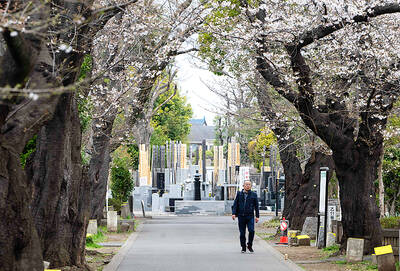
ROCKY RELATIONS: The figures on residents come as Chinese tourist numbers drop following Beijing’s warnings to avoid traveling to Japan The number of Chinese residents in Japan has continued to rise, even as ties between the two countries have become increasingly fractious, data released on Friday showed. As of the end of December last year, the number of Chinese residents had increased by 6.5 percent from the previous year to 930,428. Chinese people accounted for 22.6 percent of all foreign residents in Japan, making them by far the largest group, Japanese Ministry of Justice data showed. Beijing has criticized Tokyo in increasingly strident terms since Japanese Prime Minister Sanae Takaichi last year suggested that a military conflict around Taiwan could
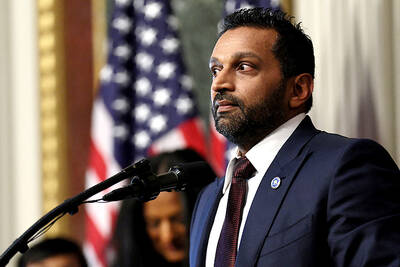
A pro-Iran hacking group claimed to breach FBI Director Kash Patel’s personal e-mail inbox and posted some of the contents online. The e-mails provided by the hacking group include travel details, correspondence with leasing agents in Washington and global entry, and loyalty account numbers. The e-mail address the hackers claim to have compromised has been previously tied to Patel’s personal details, and the leaked e-mails contain photos of Patel and others, in addition to correspondence with family members and colleagues. “The FBI is aware of malicious actors targeting Director Patel’s personal email information,” the agency said in a statement on
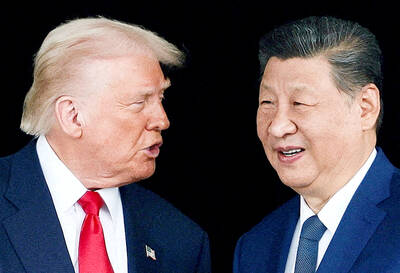
RIVALRY: ‘We know that these are merely symbolic investigations initiated by China, which is in fact the world’s most profligate disrupter of supply chains,’ a US official said China has started a pair of investigations into US trade practices, retaliating against similar probes by US President Donald Trump’s administration as the superpowers stake out positions before an expected presidential summit in May. The move, announced by the Chinese Ministry of Commerce on Friday, is a direct mirror of steps Trump took to revive his tariff agenda after the US Supreme Court last month struck down some of his duties. “China expresses its strong dissatisfaction and firm opposition to these actions,” a ministry spokesperson said in a statement, referring to the so-called Section 301 investigations initiated on March 11.

When a hiker fell from a 55m waterfall in wild New Zealand bush, rescuers were forced to evacuate the badly hurt woman without her dog, which could not be found. After strangers raised thousands of dollars for a search, border collie Molly was flown to safety by a helicopter pilot who was determined to reunite the pet and the owner. A week earlier, an emergency rescue helicopter found the woman with bruises and lacerations after a fall at a rocky spot at the waterfall on the South Island’s West Coast. She was airlifted on March 24, but they were forced to


 RSS
RSS