


After a seven-and-a-half-year trial, the chief lawyer defending doomsday cult guru Shoko Asahara, charged with masterminding the deadly 1995 nerve gas attack on Tokyo's subway, is about to wrap up his case and wait for a verdict.
If convicted, Asahara could be hanged. But lawyer Osamu Watanabe says he would appeal if a death sentence is handed down, and that could add additional years before the case is concluded.
Watanabe told reporters he will claim in his final argument tomorrow that the prosecution has failed to prove Asahara was directly responsible for the rush-hour attack, which left a dozen people dead and sickened thousands.
"The trial started with the assumption that Asahara's group was a bunch of murderers," he said in an interview earlier this week. "Asahara's responsibility as the leader of the religious group and his criminal responsibility are two different things."
Watanabe also claimed the three-judge tribunal at the Tokyo District Court has been excessively lenient toward the prosecution -- an allegation often leveled against the Japanese judicial system, in which more than 95 percent of all defendants are found guilty.
Along with the March 20, 1995, nerve gas attack, Asahara is charged with planning and ordering a series of other killings, assaults and kidnappings that resulted in 27 deaths, prosecutors say. In April, after presenting their final arguments, they demanded the death penalty.
The involvement of members of the Aum Shinri Kyo cult, which Asahara founded and built into a group that at its height claimed as many as 30,000 followers, has already been proved in court.
Nine of Asahara's top lieutenants have been sentenced to death for their roles in the subway attack and other cult-related crimes. Two other verdicts are pending that could lead to capital punishment.
But throughout the trial, Watanabe and his team of defense lawyers have argued Asahara, though worshipped as a living god by his disciples, was not responsible and that his followers were acting on their own. The defense has stressed that Asahara was not at the scene of most of the attacks.
Watanabe, a well-known human rights advocate and outspoken opponent of the death penalty, said he would appeal such a sentence.
He conceded that public opinion is overwhelmingly against Asahara's defense team, and said that has tainted the proceedings.
The subway attack and subsequent revelations of other brutal acts made him and his neo-Buddhist followers the focus of intense hatred and fear throughout Japan.

JAN. 1 CLAUSE: As military service is voluntary, applications for permission to stay abroad for over three months for men up to age 45 must, in principle, be granted A little-noticed clause in sweeping changes to Germany’s military service policy has triggered an uproar after it emerged that the law requires men aged up to 45 to get permission from the armed forces before any significant stay abroad, even in peacetime. The legislation, which went into effect on Jan. 1 aims to bolster the military and demands all 18-year-old men fill out a questionnaire to gauge their suitability to serve in the armed forces, but stops short of conscription. If the “modernized” model fails to pull in enough recruits, parliament will be compelled to discuss the reintroduction of compulsory service, German

For two decades, researchers observed members of the Ngogo chimpanzee group of Kibale National Park in Uganda spend their days eating fruits and leaves, resting, traveling and grooming in their tropical rainforest abode, but this stable community then fractured and descended into years of deadly violence. The researchers are now describing the first clearly documented example of a group of wild chimpanzees splitting into two separate factions, with one launching a series of coordinated attacks against the other. Adult males and infants were targeted, with 28 deaths. “Biting, pounding the victim with their hands, dragging them, kicking them — mostly adult males,
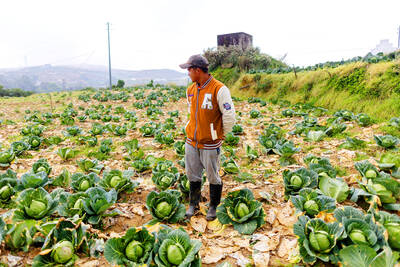
Filipino farmers like Romeo Wagayan have been left with little choice but to let their vegetables rot in the field rather than sell them at a loss, as rising oil prices linked to the Iran war drive up the cost of harvesting, labor and transport. “There’s nothing we can do,” said Wagayan, a 57-year old vegetable farmer in the northern Philippine province of Benguet. “If we harvest it, our losses only increase because of labor, transportation and packing costs. We don’t earn anything from it. That’s why we decided not to harvest at all,” he said. Soaring costs caused by the Middle East

PHISHING: The con might appear convincing, as the scam e-mails can coincide with genuine messages from Apple saying you have run out of storage For a while you have been getting messages from Apple saying “your iCloud storage is full.” They say you have exceeded your storage plan, so documents are no longer being backed up, and photos you take are not being uploaded. You have been resisting Apple’s efforts to get you to pay a minimum of £0.99 (US$1.33) a month for more storage, but it seems that you cannot keep putting off the inevitable: You have received an e-mail which says your iCloud account has been blocked, and your photos and videos would be deleted very soon. To keep them you need


 RSS
RSS