


Chancellor Gerhard Schroeder said on Friday that Germany had been right to oppose the US-led war in Iraq, driving home his defiant message by repeatedly using the German word for "power," which leaders have long eschewed because of its associations with the Nazi era.
Schroeder, in a speech marking the 13th anniversary of German reunification, described the country as a "civil power" and an "economic power," responsible for fueling the growth of the EU.
The word "macht", or "power," has been laden with meaning since Hitler used it to describe a Germany bent on dominating its neighbors. But Schroeder talked about Germany's "civil power," which he said manifested itself in a peaceful foreign policy that could be spread throughout the world.
"German peace polices are policies for Europe and beyond," he said in a nationally televised speech. "I think we can be proud of the way Germany has accepted growing international responsibilities in recent years."
The chancellor's remarks came a week after he and President Bush exchanged a hearty handshake at the UN in a bid to mend the frayed ties between Germany and the US over Iraq.
On Friday, though, Schroeder won thunderous applause by reaffirming Germany's decision to sit out the war.
"When we were convinced that the assumed threat did not justify the dangers and consequences of war, we had the courage to say `No,'" he told a crowd of 1,400.
Schroeder's speech, delivered in the east, was clearly aimed at a domestic audience. His antiwar stance has been particularly popular among eastern Germans, helping to lift him to a razor-thin victory against a conservative challenger last fall.
Much of Schroeder's message was calculated to win support for his campaign to reform Germany's calcified economy. The unemployment rate in eastern Germany is close to 20 percent, after a decade of subsidies from the west that have failed to bring prosperity.
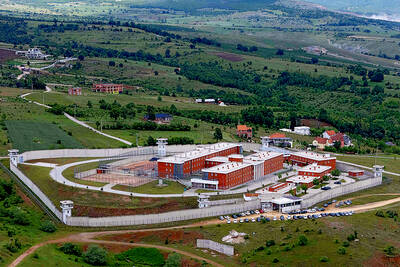
By 2027, Denmark would relocate its foreign convicts to a prison in Kosovo under a 200-million-euro (US$228.6 million) agreement that has raised concerns among non-governmental organizations (NGOs) and residents, but which could serve as a model for the rest of the EU. The agreement, reached in 2022 and ratified by Kosovar lawmakers last year, provides for the reception of up to 300 foreign prisoners sentenced in Denmark. They must not have been convicted of terrorism or war crimes, or have a mental condition or terminal disease. Once their sentence is completed in Kosovan, they would be deported to their home country. In

Brazil, the world’s largest Roman Catholic country, saw its Catholic population decline further in 2022, while evangelical Christians and those with no religion continued to rise, census data released on Friday by the Brazilian Institute of Geography and Statistics (IBGE) showed. The census indicated that Brazil had 100.2 million Roman Catholics in 2022, accounting for 56.7 percent of the population, down from 65.1 percent or 105.4 million recorded in the 2010 census. Meanwhile, the share of evangelical Christians rose to 26.9 percent last year, up from 21.6 percent in 2010, adding 12 million followers to reach 47.4 million — the highest figure

A Chinese scientist was arrested while arriving in the US at Detroit airport, the second case in days involving the alleged smuggling of biological material, authorities said on Monday. The scientist is accused of shipping biological material months ago to staff at a laboratory at the University of Michigan. The FBI, in a court filing, described it as material related to certain worms and requires a government permit. “The guidelines for importing biological materials into the US for research purposes are stringent, but clear, and actions like this undermine the legitimate work of other visiting scholars,” said John Nowak, who leads field

LOST CONTACT: The mission carried payloads from Japan, the US and Taiwan’s National Central University, including a deep space radiation probe, ispace said Japanese company ispace said its uncrewed moon lander likely crashed onto the moon’s surface during its lunar touchdown attempt yesterday, marking another failure two years after its unsuccessful inaugural mission. Tokyo-based ispace had hoped to join US firms Intuitive Machines and Firefly Aerospace as companies that have accomplished commercial landings amid a global race for the moon, which includes state-run missions from China and India. A successful mission would have made ispace the first company outside the US to achieve a moon landing. Resilience, ispace’s second lunar lander, could not decelerate fast enough as it approached the moon, and the company has


 RSS
RSS