


US and South Korean officials warned yesterday that next week's six-nation talks on North Korea's suspected nuclear-weapons program were unlikely to produce a fast resolution to the crisis.
South Korean Foreign Minister Yoon Young-kwan cautioned against high expectations for the Aug. 27 to 29 talks in Beijing where representatives from his country, the US, China, Japan and Russia will try to persuade North Korea to abandon its nuclear ambitions.
"We should not expect that the issue will be resolved after one or two rounds of talks," Yoon said at a news conference. "We can see the Beijing talks as just the beginning of a long process of resolving the North Korean nuclear issue."
US Ambassador Thomas Hubbard also warned against hopes for a speedy resolution.
"We don't enter into talks without some degree of hope and optimism that they will succeed," said Hubbard, who was in Hawaii for a seminar. "But I don't think that we can expect early, quick results."
The South Korean minister also urged North Korea "not to take any additional steps that could worsen the situation."
"It is important that we should make sure that we keep the momentum alive for dialogue and build confidence that we can resolve the matter through dialogue ... and possibly set the date for the next round of talks," Yoon said.
South Korea has already called on North Korea to refrain from raising tensions by test-launching missiles or taking steps toward building nuclear weapons.
On Monday, the North threatened to boycott the World University Games in the South because of anti-North Korean protests there. But Pyongyang later said it would send its team after South Korea expressed regret over the demonstrations.
North Korea agreed to the US-proposed multilateral talks on condition that the US hold one-on-one talks with North Korea on the sidelines.
However, yesterday North Korea rejected suggestions that it should open its nuclear facilities to early inspections.
North Korea's official state-run news agency said Washington wanted to form an inspection team from the six countries taking part in the Beijing talks.
"The Iraqi war proved that consenting to disarmament through inspection does not help prevent a war but sparks it," said the agency. "Inspection is just like a detonating fuse and a prelude to a war ... This act would be little short of opening Pandora's box."
The nuclear crisis flared in October when US officials said Pyongyang admitted running a clandestine nuclear weapons program using enriched uranium against a 1994 agreeement.
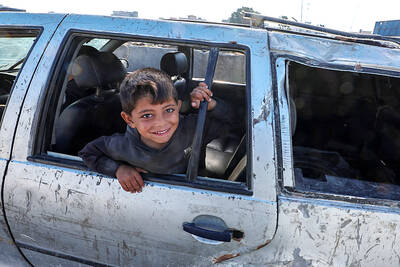
Gaza is rapidly running out of its limited fuel supply and stocks of food staples might become tight, officials said, after Israel blocked the entry of fuel and goods into the war-shattered territory, citing fighting with Iran. The Israeli military closed all Gaza border crossings on Saturday after announcing airstrikes on Iran carried out jointly with the US. Israeli authorities late on Monday night said that they would reopen the Kerem Shalom crossing from Israel to Gaza yesterday, for “gradual entry of humanitarian aid” into the strip, without saying how much. Israeli authorities previously said the crossings could not be operated safely during
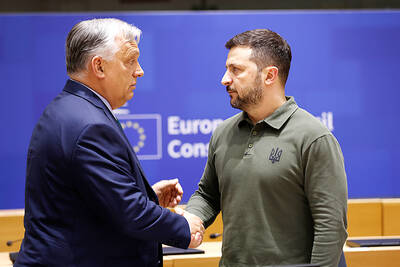
Hungarian authorities temporarily detained seven Ukrainian citizens and seized two armored cars carrying tens of millions of euros in cash across Hungary on suspicion of money laundering, officials said on Friday. The Ukrainians were released on Friday, following their detention on Thursday, but Hungarian officials held onto the cash, prompting Ukraine to accuse Hungary’s Russia-friendly government of illegally seizing the money. “We will not tolerate this state banditism,” Ukrainian Minister of Foreign Affairs Andrii Sybiha said. The seven detained Ukrainians were employees of the Ukrainian state-owned Oschadbank, who were traveling in the two armored cars that were carrying the money between Austria and
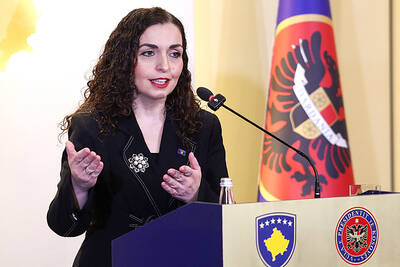
Kosovar President Vjosa Osmani on Friday after dissolving the Kosovar parliament said a snap election should be held as soon as possible to avoid another prolonged political crisis in the Balkan country at a time of global turmoil. Osmani said it is important for Kosovo to wrap up the upcoming election process and form functional institutions for political stability as the war rages in the Middle East. “Precisely because the geopolitical situation is that complex, it is important to finish this electoral process which is coming up,” she said. “It is very hard now to imagine what will happen next.” Kosovo, which declared
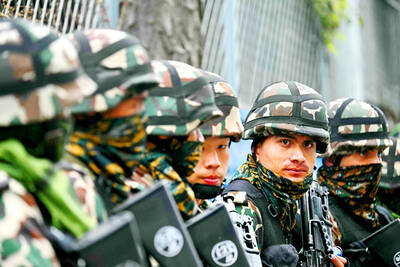
Counting was under way in Nepal yesterday, after a high-stakes parliamentary election to reshape the country’s leadership following protests last year that toppled the government. Key figures vying for power include former Nepalese prime minister K. P. Sharma Oli, rapper-turned-mayor Balendra Shah, who is bidding for the youth vote, and newly elected Nepali Congress party leader Gagan Thapa. In Kathmandu’s tea shops and city squares, people were glued to their phones, checking results as early trends flashed up — suggesting Shah’s centrist Rastriya Swatantra Party (RSP) was ahead. Nepalese Election Commission spokesman Prakash Nyupane said the counting was ongoing “in a peaceful manner”


 RSS
RSS