


Taipei Times: The recent buying frenzy for lottery tickets has led to some opposition to the lottery. Could you comment on the issue?
Richard Yang (
The first one is revenue. The public welfare lottery is likely to generate more revenue than the merchandise tax and at almost no cost to the government. (The lottery is estimated to generate NT$40 billion in revenue in its first year.)
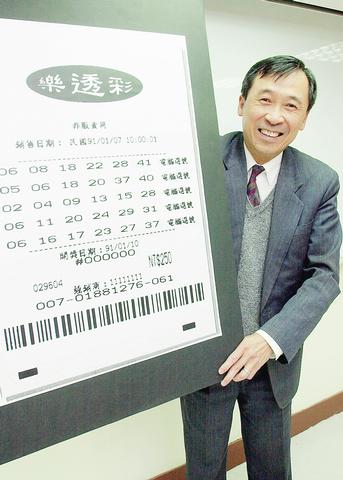
PHOTO: CHIANG YING-YING, TAIPEI TIMES.
The second one is the lottery could provide a stimulus to related industries and help the economy.
The third one is it helps employment, especially for those people who have trouble finding work, such as the handicapped. Although the lottery has created jobs for just 8,500 retailers, most of them have had difficulties finding other job opportunities. In a way, the lottery has lessened the necessity for the government [to provide] subsidies [for those people].
The last one is the lottery provides hope for everyone to get rich on an equal basis -- especially those who are naturally inferior in intelligence or in their family backgrounds ... for example, those with very little education and brought up in a poor environment.
There is always a group of people who [have little chance of] getting rich in their lives. Whoever you are, the chances of getting rich is the same when you spend NT$50 on a lottery ticket.
Although the chance of winning is slim, the hope is very important for people to live on, and the lottery provides that hope for everyone. This is a view that few people take.
TT: In most states in the US, the lottery needs to go through a public referendum or be approved by state legislators before being launched. Do you think Taiwan needs a referendum to decide the future of the lottery?
Yang: The Legislative Yuan approved Taiwan's lottery last year after a prolonged and turbulent process, though no referendum was held. But before the approval, there was a poll conducted by Gallop, which showed that 67 percent of the public was in favor.
Although there has been no poll on the issue since the lottery was launched, my personal view is that currently more than half of the public would support the lottery being continued.
TT: Do you think the frequency of the lottery's draw should be reduced?
Yang: Actually, two draws a week in Taiwan is not on the high end. In many states in the US and in Hong Kong, the lotteries are drawn three or even four times a week. Some games such as [California's] Keno draws every four minutes. You can bet one dollar and win 10 or 20 dollars.
TT: Some suggest that buying a lottery ticket is the same as speculating in the stock market. What's your view on the issue?
Yang: To win the lottery jackpot, the odds are one in 5.24 million. The odds are very small but the rate of return is much higher than buying stocks. To buy stocks, you need at least some knowledge of the market's fundamentals, but not in lottery. It's only a guess. The nature between the two are quite different. We should not treat the lottery as an investment tool.
TT: Many states in the US spend their lottery revenue on education. Taiwan's lottery is different. Do you have any comment on how to spend the lottery revenue?
Yang: There's no minimum of government budget that is required to be spent on education in most states in the US. Therefore, many states have turned to lottery revenue to subsidize education.
The constitution in this country stipulates that a certain percentage of the annual government budget must be allocated to education. Therefore, we don't have a similar problem.
But according to current regulations for the lottery, 50 percent of lottery revenue will be given to local governments, another 45 percent will be used as reserves for a national annuity (
My personal view is that because the public welfare lottery should be used for welfare, the 50 percent contribution to local governments poses a question of whether the money will actually be used for welfare programs instead of other expenses, such as personnel or general expenses.
A better way is to enact new laws to govern the use of lottery revenue, such as subsidies for the poor and handicapped. But it is a task for the Legislative Yuan and media to pursue in the future.
TT: Local media have been questioning the transparency of the lottery draws. Could you explain why it takes three hours to announce prize winners after a draw?
Yang: Taiwan's lottery draw does not take longer when compared with other countries. For example, the recent NT$6.7 billion lottery jackpot in California announced the winning numbers at about 7pm, and the winners were not announced until 10am the next day.
In addition, it actually takes just about one and half hours to process the (20 million to 40 million) lottery numbers. But the computer system only starts to run the batch processing after 9pm, when the ticket retailers close their shops. It takes another half hour to verify the accuracy of the computer report.
So it only takes about two hours to complete the process. The reason the draws cannot be postponed to 9pm is that the (Power TV) television station wants to attract the most audience at 8pm, or else we could shorten the process to around 10pm on draw nights.
The technical reason that it takes one and half hours to process are that there are two sets of programs that need to be run. The first one is from GTECH Corp, the US lottery system provider, and the other one was developed by TaipeiBank to verify the accuracy of the first program for the winning list.
Only when the reports of the two match each other will the TaipeiBank release the winning list. It's unlikely that any tickets can be added after 7pm on Tuesday and Friday, when the lottery is closed. There's a time-stamp on each ticket stating when it was issued and where it was sold. All the records and files will be sealed for 15 years and audited by regulatory agencies, including the Ministry of Finance, which oversees the lottery.
Also, the court can issue a request to verify the records.
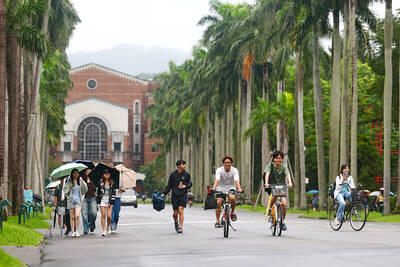
National Taiwan University (NTU) yesterday said it disqualified a person from an entrance examination for using AI smart glasses to cheat, along with two others for making untruthful statements in their curriculum vitae. The three applicants were given null scores, Taiwan’s highest-ranked university said, calling on prospective students to be honest in the admissions process. NTU registrar Lee Hung-sen (李宏森) said that the cheating applicant wore a hat and thick-rimmed glasses to the second written exam for medical school, claiming that they felt cold. Suspicions were aroused when the applicant stared oddly at the test for long stretches while steadily bringing the paper
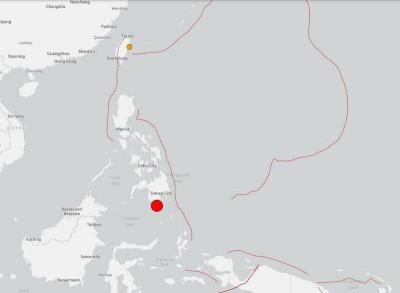
A magnitude 7.8 earthquake struck off the southern coast of Mindanao in the Philippines at 7:38am today, prompting the US Tsunami Warning System to issue an alert for neighboring countries, including Taiwan. The system issued a purple alert indicating a "tsunami threat." The potential threat zone includes Taiwan, the Philippines, Papua New Guinea, Yap and Palau. Philippine authorities were assessing the damage from the quake, with the office of civil defense seeking to verifying initial reports that 15 people had been killed and 129 injured in the region, mostly from falling debris. Arlene Hollero, disaster chief of Maasim town in the Philippines' Sarangani Province,

‘GRAY ZONE’ PRESSURE: Beijing’s activities are intended to create the deceitful impression that China has jurisdiction over the area around Taiwan, the CGA said Taiwan’s rights over its territorial waters and exclusive economic zone must not be violated by any country, the Mainland Affairs Council said yesterday, adding that it will not accept any unprovoked actions. The council issued the remarks in response to the China Coast Guard conducting maritime enforcement drills near eastern Taiwan and claiming to fully exercise China’s maritime administrative law enforcement authority. The Coast Guard Administration (CGA) has been closely monitoring the situation and is taking concrete steps to defend the nation’s sovereignty and secure its waters, the council said. China has no sovereign rights over the waters off eastern
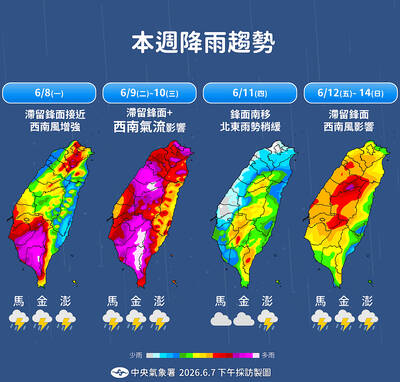
Heavy rain is expected to affect parts of Taiwan this week, the Central Weather Administration (CWA) said yesterday as a meteorologist said the active part of the annual plum rain season has started. A stationary plum rain front and southwesterly winds would bring unstable weather and abundant moisture to Taiwan from today for about a week, with the heaviest rainfall forecast for tomorrow and Wednesday, the CWA said. The agency said western and northeastern Taiwan, and mountainous areas in the east and southeast, could expect showers or thunderstorms on those two days, with localized heavy rain possible. Other parts of


 RSS
RSS