


When German author Gunter Grass was born in a suburb of this historic city on the southern coast of the Baltic Sea 80 years ago it was known to most of the world as Danzig.
The port now goes under the Polish name of Gdansk and the district of Langfuhr, where Grass first saw the light of day, has changed its name to Wreszcz.
A great deal has happened in the meantime including a war unleashed by the Germans that killed 50 million people and destroyed the Free City of Danzig. The Old Town was reduced to rubble. The German population was forced to leave and only a small ethnic minority remained. Thanks to excellent restoration work, the seaport is now as handsome as it was before hostilities began.

Once a free city under the Protection of the League of Nations, the Danzig of yore lives on in the novels of Nobel Literature laureate Gunter Grass. Echoes of the heroes of his first and probably best-known novel The Tin Drum - especially of the diminutive Oskar Matzerath - can be found in the streets of the old Hanseatic city.
Gdansk attracts countless tourists who are fascinated by the places that inspired the work of Germany's most famous post-war novelist. Their numbers are sure to increase in the run-up to the author's 80th birthday on Oct. 16.
Langfuhr, or Wreszcz, used to be on the outskirts of Gdansk but is now an integral part of the city. Mieczyslaw Abramowicz, a member of the Gunter Grass Society in Gdansk, has devised a route through Wreszcz that follows the biographical and literary footsteps of the author. A total of four such tours are planned in various parts of the city.
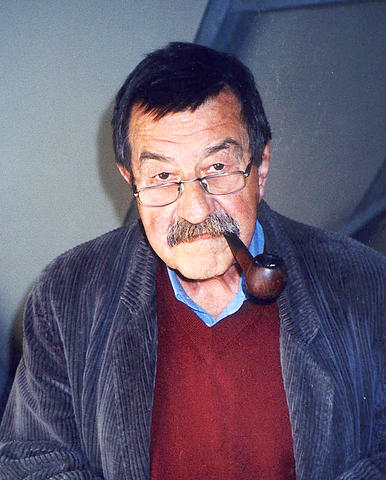
Last June saw the inauguration of the first of these literary round trips, one that has been given the name "Eight gifts to mark the 80th birthday of Gunter Grass." Each of the "presents" is a place which reminds visitors of the writer or one of his characters - such as the old brewery in Langfuhr or the Church of the Sacred Heart. Grass was christened here, just like Oskar Matzerath, whose frenetic drum-playing later gets him into a lot of trouble.
Abramowicz is very familiar with all these places, such as the market square in Wreszcz where in The Tin Drum Oskar's grandmother Anna Koljaiczek peddles her eggs, butter and geese every Tuesday with hot bricks secreted under her skirts in order to keep warm. Not far from here is the site of the former synagogue in Wreszcz, which has since been converted to a school for music. It was sold by the Jewish congregation even before war broke out. Most Jews in Danzig had fled the city before the tide of anti-Semitism. Those who did not leave were murdered.
Most tourists who come to Wreszcz find their way to a street that used to be called Labesweg. Here stands the house where Gunter Grass was born. It was a cramped place and he often alluded to it in his writings. The street has been renamed Ulica Lelewela, but the appearance of number 13 has hardly changed through the years. It is easy to imagine how uncomfortable it must have been to grow up here.
Grass has long been an honorary citizen of Gdansk and plans to erect a statue in his honor have been on the cards for years. Grass suggested using the money instead to pay for indoor toilets to be installed in houses in the Ulica Lelewela. "They still haven't got them," said Abramowicz. And there is no sign of the proposed monument to Grass either. A statue of Oskar Matzerath does exist, though, and can be found not far from the Ulica Lelewela.
One of the most memorable passages in The Tin Drum describes how World War II was triggered when Germany attacked Poland. The first shots were aimed at Danzig. They were fired on Sept. 1, 1939 by the elderly German battle cruiser Schleswig-Holstein.
A German police unit then stormed the city's Polish post office building. In The Tin Drum, Oskar's uncle and his assumed father Jan Bronski were among the "defenders of the Polish Post Office" who were later murdered. The original building remains standing and parts of it are still used by the postal authority. The other half is a museum dedicated to those dramatic, opening events of the war. Plaques above the main entrance list the names of those who died in the fighting there.

From the Post Office the city's main attractions are only a few meters away. It is just a short walk to the church of St Mary, the largest brick church in the world, the Golden Gate (Zlota Brama), built between 1612 and 1614 and the Long Market (Dlugi Targ) with its famous Neptune fountain. The Polish restoration teams made such a good job of restoring the ruins of these ancient buildings in the 1950s and 1960s that they are scarcely distinguishable from the originals. Thanks to them, Gdansk is the most handsome city in Poland next to Wroclaw.
One of the few places that escaped destruction is the old Town Hall in the city center. A stairway laid out with a red carpet leads up to the first floor where magnificently decorated chambers bear witness to the prosperity of Gdansk in its trading heyday. Right next to the entrance is the Turbot restaurant that takes its name from the Polish word for "flounder."
The restaurant is owned by Maciej Krainski, president of the Gunter Grass Society, who named it after the 1977 Grass fable The Flounder. Members of the Grass-Society meet regularly on these premises.
What the Krainskis have in common with most of its fellow society members is that they came to Gdansk after the war. They were strangers to the city. "Yet through Gunter Grass we came to learn so much about the complicated history of the region," said Maciej, It is a feeling shared by many people who have made the journey to Gdansk.
On the Net: www.gdansk-life.com;
www.pl-info.net/en/

NO HUMAN ERROR: After the incident, the Coast Guard Administration said it would obtain uncrewed aerial vehicles and vessels to boost its detection capacity Authorities would improve border control to prevent unlawful entry into Taiwan’s waters and safeguard national security, the Mainland Affairs Council (MAC) said yesterday after a Chinese man reached the nation’s coast on an inflatable boat, saying he “defected to freedom.” The man was found on a rubber boat when he was about to set foot on Taiwan at the estuary of Houkeng River (後坑溪) near Taiping Borough (太平) in New Taipei City’s Linkou District (林口), authorities said. The Coast Guard Administration’s (CGA) northern branch said it received a report at 6:30am yesterday morning from the New Taipei City Fire Department about a

IN BEIJING’S FAVOR: A China Coast Guard spokesperson said that the Chinese maritime police would continue to carry out law enforcement activities in waters it claims The Philippines withdrew its coast guard vessel from a South China Sea shoal that has recently been at the center of tensions with Beijing. BRP Teresa Magbanua “was compelled to return to port” from Sabina Shoal (Xianbin Shoal, 仙濱暗沙) due to bad weather, depleted supplies and the need to evacuate personnel requiring medical care, the Philippine Coast Guard (PCG) spokesman Jay Tarriela said yesterday in a post on X. The Philippine vessel “will be in tiptop shape to resume her mission” after it has been resupplied and repaired, Philippine Executive Secretary Lucas Bersamin, who heads the nation’s maritime council, said

CHINA POLICY: At the seventh US-EU Dialogue on China, the two sides issued strong support for Taiwan and condemned China’s actions in the South China Sea The US and EU issued a joint statement on Wednesday supporting Taiwan’s international participation, notably omitting the “one China” policy in a departure from previous similar statements, following high-level talks on China and the Indo-Pacific region. The statement also urged China to show restraint in the Taiwan Strait. US Deputy Secretary of State Kurt Campbell and European External Action Service Secretary-General Stefano Sannino cochaired the seventh US-EU Dialogue on China and the sixth US-EU Indo-Pacific Consultations from Monday to Tuesday. Since the Indo-Pacific consultations were launched in 2021, references to the “one China” policy have appeared in every statement apart from the

More than 500 people on Saturday marched in New York in support of Taiwan’s entry to the UN, significantly more people than previous years. The march, coinciding with the ongoing 79th session of the UN General Assembly, comes close on the heels of growing international discourse regarding the meaning of UN Resolution 2758. Resolution 2758, adopted by the UN General Assembly in 1971, recognizes the People’s Republic of China (PRC) as the “only lawful representative of China.” It resulted in the Republic of China (ROC) losing its seat at the UN to the PRC. Taiwan has since been excluded from


 RSS
RSS