


It is important to preserve the history of Taiwan’s democratization and memories of the 1979 Formosa Incident, Academia Sinica research fellow Wu Nai-teh (吳乃德) said yesterday.
Wu made the remarks in Taipei at the launch of his latest book, titled Taiwan’s Finest Hour, 1977-1987 (臺灣最好的時刻, 1977-1987).
“The Formosa Incident took place during a time of severe oppression, with people under constant surveillance,” he said, referring to the White Terror era under the then-Chinese Nationalist Party’s (KMT) military dictatorship.

Photo: Fang Pin-chao, Taipei Times
The Incident, also known as the Kaohsiung Incident, refers to a crackdown by the then-KMT regime on a rally organized by Formosa Magazine and opposition politicians on Dec. 10, 1979, to mark Human Rights Day.
“Yet it was also the time when Taiwanese were most courageous, most selfless and most unified in their struggle for freedom,” he said.
The book’s title also refers to a speech then-British prime minister Winston Churchill made in June 1940 during World War II.
The Formosa Incident and democracy events from 1977 to 1987 have ramifications to this day, as modern Taiwanese enjoy a free and democratic society, direct elections and protection of human rights, he said.
Also at the book launch were Yao Chia-wen (姚嘉文), who was arrested and tried in military court following the Incident; Chen Chung-hsin (陳忠信), former editor-in-chief of Formosa Magazine; and Hsu Hsin-liang (許信良), the magazine’s publisher.
Wu said he wrote the book as if it were stories for his son, and that he gathered information by interviewing principal figures and searching for government files.
It is important to record the accounts of those who faced trial and to document the Formosa Incident for young Taiwanese, he said.
“People born after 1980 had no real experience of the dark days of the Martial Law era, the KMT’s one-party dictatorship and pervasive state surveillance,” Wu said. “This book tells what happened. It describes the military trials and other key events in Taiwan’s democratization.”
“If Taiwan’s democracy is put at risk, it is up to young people to have the will and courage to stand up and safeguard our freedom and democracy,” he said.
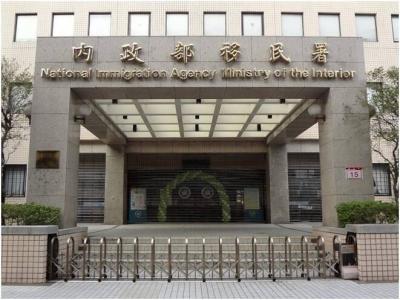
A small number of Taiwanese this year lost their citizenship rights after traveling in China and obtaining a one-time Chinese passport to cross the border into Russia, a source said today. The people signed up through Chinese travel agencies for tours of neighboring Russia with companies claiming they could obtain Russian visas and fast-track border clearance, the source said on condition of anonymity. The travelers were actually issued one-time-use Chinese passports, they said. Taiwanese are prohibited from holding a Chinese passport or household registration. If found to have a Chinese ID, they may lose their resident status under Article 9-1
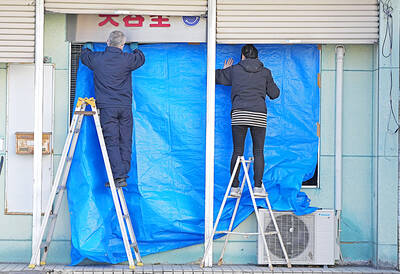
Taiwanese were praised for their composure after a video filmed by Taiwanese tourists capturing the moment a magnitude 7.5 earthquake struck Japan’s Aomori Prefecture went viral on social media. The video shows a hotel room shaking violently amid Monday’s quake, with objects falling to the ground. Two Taiwanese began filming with their mobile phones, while two others held the sides of a TV to prevent it from falling. When the shaking stopped, the pair calmly took down the TV and laid it flat on a tatami mat, the video shows. The video also captured the group talking about the safety of their companions bathing

PROBLEMATIC APP: Citing more than 1,000 fraud cases, the government is taking the app down for a year, but opposition voices are calling it censorship Chinese Nationalist Party (KMT) Chairwoman Cheng Li-wun (鄭麗文) yesterday decried a government plan to suspend access to Chinese social media platform Xiaohongshu (小紅書) for one year as censorship, while the Presidential Office backed the plan. The Ministry of the Interior on Thursday cited security risks and accusations that the Instagram-like app, known as Rednote in English, had figured in more than 1,700 fraud cases since last year. The company, which has about 3 million users in Taiwan, has not yet responded to requests for comment. “Many people online are already asking ‘How to climb over the firewall to access Xiaohongshu,’” Cheng posted on

A classified Pentagon-produced, multiyear assessment — the Overmatch brief — highlighted unreported Chinese capabilities to destroy US military assets and identified US supply chain choke points, painting a disturbing picture of waning US military might, a New York Times editorial published on Monday said. US Secretary of Defense Pete Hegseth’s comments in November last year that “we lose every time” in Pentagon-conducted war games pitting the US against China further highlighted the uncertainty about the US’ capability to intervene in the event of a Chinese invasion of Taiwan. “It shows the Pentagon’s overreliance on expensive, vulnerable weapons as adversaries field cheap, technologically


 RSS
RSS