


The National Palace Museum on Sunday announced that it would adjust its opening hours to prevent the spread of the 2019 novel coronavirus.
From Friday to March 31, the museum is to be open from 9am to 5pm on Tuesdays through Sundays and closed on Mondays, the museum said.
The adjustment is being made to “strengthen various epidemic prevention and related efforts,” it said.
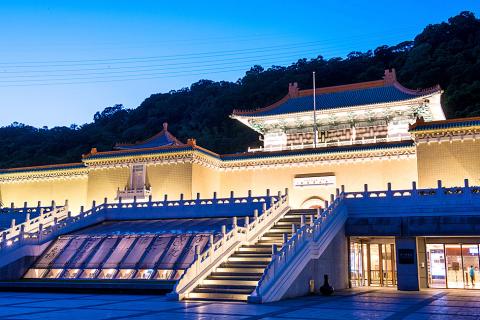
Photo courtesy of the National Palace Museum
The reduced hours are when the museum would typically see the least visitors, the museum said, adding that travel agencies have been given a week to adapt to the change.
While the museum is closed to the public, various facilities and equipment would be maintained, calibrated and disinfected, it said, adding that after closing each day, various disinfection procedures would be taken.
The hours at the National Palace Museum Southern Branch in Chiayi County would remain unchanged, the museum said, but added that they might be adjusted depending on the situation.
Separately, the Puli Township Office and organizers on Saturday said that they have decided to cancel the fifth edition of the Puli Power marathon, originally scheduled for March 15 in Nantou County.
Organizers cited the novel coronavirus as the reason for the cancelation.
About 4,600 runners had signed up for the marathon, office head Liao Chih-cheng (廖志城) said.
However, after careful consideration, the organizers decided to cancel the event to prevent the risk of infection, he said.
The marathon has been be postponed to March next year, he added.
Organizers said they would begin processing refunds on Feb. 27.

The manufacture of the remaining 28 M1A2T Abrams tanks Taiwan purchased from the US has recently been completed, and they are expected to be delivered within the next one to two months, a source said yesterday. The Ministry of National Defense is arranging cargo ships to transport the tanks to Taiwan as soon as possible, said the source, who is familiar with the matter. The estimated arrival time ranges from late this month to early next month, the source said. The 28 Abrams tanks make up the third and final batch of a total of 108 tanks, valued at about NT$40.5 billion

A group from the Taiwanese Designers in Australia association yesterday represented Taiwan at the Midsumma Pride March in Melbourne. The march, held in the St. Kilda suburb, is the city’s largest LGBTQIA+ parade and the flagship event of the annual Midsumma Festival. It attracted more than 45,000 spectators who supported the 400 groups and 10,000 marchers that participated this year, the association said. Taiwanese Designers said they organized a team to march for Taiwan this year, joining politicians, government agencies, professionals and community organizations in showing support for LGBTQIA+ people and diverse communities. As the first country in Asia to legalize same-sex
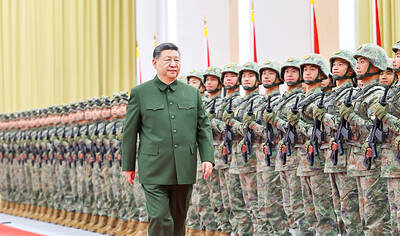
MOTIVES QUESTIONED The PLA considers Xi’s policies toward Taiwan to be driven by personal considerations rather than military assessment, the Epoch Times reports Chinese President Xi Jinping’s (習近平) latest purge of the Chinese People’s Liberation Army (PLA) leadership might have been prompted by the military’s opposition to plans of invading Taiwan, the Epoch Times said. The Chinese military opposes waging war against Taiwan by a large consensus, putting it at odds with Xi’s vision, the Falun Gong-affiliated daily said in a report on Thursday, citing anonymous sources with insight into the PLA’s inner workings. The opposition is not the opinion of a few generals, but a widely shared view among the PLA cadre, the Epoch Times cited them as saying. “Chinese forces know full well that
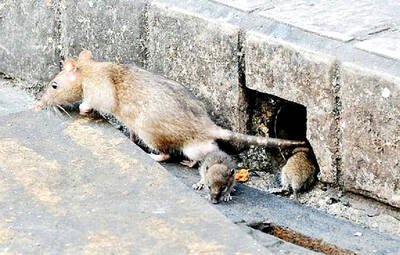
An elderly man with underlying health conditions died in mid-January, eight days after the onset of symptoms, marking Taiwan’s first hantavirus death this year, the Centers for Disease Control (CDC) said yesterday. The man, who was in his 70s and lived in Taipei’s Daan District (大安), tested positive posthumously for hantavirus after passing away on Jan. 13 from sepsis complicated by multiple organ failure and pneumonia, the CDC said in a press release. According to the CDC, the man sought treatment on Jan. 6 for respiratory issues and low blood pressure before returning two


 RSS
RSS