


Hand washing is frequently more important in preventing diseases than wearing a surgical mask, an infectious disease specialist said yesterday.
Miu Wei-chieh (繆偉傑), a doctor at Mennonite Christian Hospital in Hualien who is the Ministry of Health and Welfare’s official in charge of infectious disease prevention in eastern Taiwan, made the remarks following reports of panic buying of masks amid an outbreak of the 2019 novel coronavirus in China.
Both “wet wash” and “dry wash” techniques can effectively prevent people from catching the virus, Miu said.
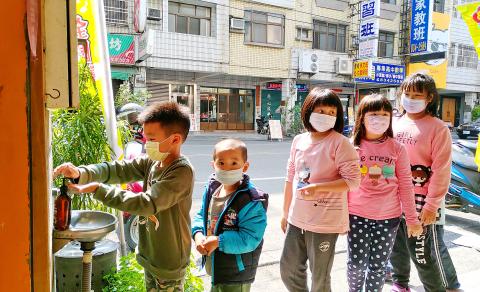
Photo: Chen Kuan-pei, Taipei Times
A wet wash is when a person washes their hands under running water with soap, scrubbing for more than one minute to ensure that their hands are thoroughly clean, he said, adding: “Using only warm water has no effect.”
A dry wash is using alcohol-based hand sanitizer to cleanse the hands, he said.
Mask protection is necessary for people who visit a hospital, or who have respiratory or chronic illnesses, Miu said, adding that government-recommended masks have a certification number issued by the ministry on the packaging.
Given the variety of online comments, people should exercise caution and not share unverified information, such as self-proclaimed experts touting dietary regimes or other special measures as protection against the virus, he said.
Visit the Centers for Disease Control’s Web site to find credible information, or use the social messaging app Line to receive the latest prevention updates from the ministry’s artificial intelligence account by adding “disease prevention housekeeper” (疾管家), he said.
Given that the nation’s flu season is still under way, people can boost their immune systems by being vaccinated against the flu, with those who qualify receiving a government-funded vaccine, Miu added.
Meanwhile, Taipei-based urologist Chen Wei-po (陳偉寶) on Sunday said that masks can be reused by the same wearer as long as the masks do not get wet and are not worn for more than four to six hours in high-risk locations such as a hospital.
Exposing each side of the mask for 30 minutes to ultraviolet (UV) light is enough to properly sterilize it, and a home dish dryer equipped with a UV sterilization lamp can be used, Chen said.
However, after sterilization, masks need to be stored in a clean and dry environment for three days before being reused, he said.
A mask can also be reused by spraying alcohol on both sides of the mask, as long as the mask is not damaged or contaminated, said Huang Ching-tai (黃景泰), head of the infectious diseases division at Chang Gung Memorial Hospital in New Taipei City’s Linkou District (林口).
Studies have shown that secondhand masks have less effective filtration, but are still usable, he said.
Masks worn by the public can be disposed of in the same way as regular trash, while those worn by medical staff should be handled by professional waste management operators, Environmental Protection Administration (EPA) Department of Waste Management Director-General Lai Ying-ying (賴瑩瑩) said.
However, the masks worn by the more than 200 Taiwanese who returned to Taiwan yesterday from Wuhan, China, on an evacuated flight would be treated as medical waste to avoid possibly spreading the virus, the EPA said.
Additional reporting by Lo Chi and CNA
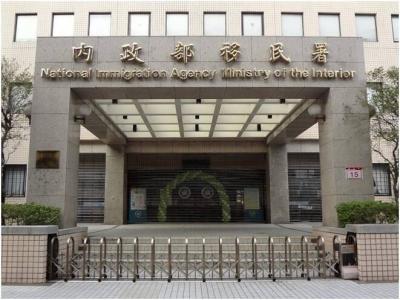
A small number of Taiwanese this year lost their citizenship rights after traveling in China and obtaining a one-time Chinese passport to cross the border into Russia, a source said today. The people signed up through Chinese travel agencies for tours of neighboring Russia with companies claiming they could obtain Russian visas and fast-track border clearance, the source said on condition of anonymity. The travelers were actually issued one-time-use Chinese passports, they said. Taiwanese are prohibited from holding a Chinese passport or household registration. If found to have a Chinese ID, they may lose their resident status under Article 9-1
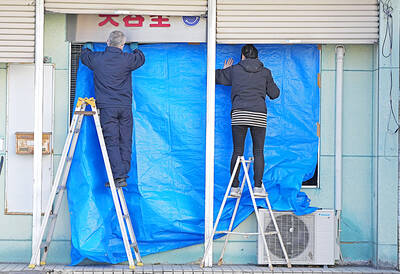
Taiwanese were praised for their composure after a video filmed by Taiwanese tourists capturing the moment a magnitude 7.5 earthquake struck Japan’s Aomori Prefecture went viral on social media. The video shows a hotel room shaking violently amid Monday’s quake, with objects falling to the ground. Two Taiwanese began filming with their mobile phones, while two others held the sides of a TV to prevent it from falling. When the shaking stopped, the pair calmly took down the TV and laid it flat on a tatami mat, the video shows. The video also captured the group talking about the safety of their companions bathing

PROBLEMATIC APP: Citing more than 1,000 fraud cases, the government is taking the app down for a year, but opposition voices are calling it censorship Chinese Nationalist Party (KMT) Chairwoman Cheng Li-wun (鄭麗文) yesterday decried a government plan to suspend access to Chinese social media platform Xiaohongshu (小紅書) for one year as censorship, while the Presidential Office backed the plan. The Ministry of the Interior on Thursday cited security risks and accusations that the Instagram-like app, known as Rednote in English, had figured in more than 1,700 fraud cases since last year. The company, which has about 3 million users in Taiwan, has not yet responded to requests for comment. “Many people online are already asking ‘How to climb over the firewall to access Xiaohongshu,’” Cheng posted on

A classified Pentagon-produced, multiyear assessment — the Overmatch brief — highlighted unreported Chinese capabilities to destroy US military assets and identified US supply chain choke points, painting a disturbing picture of waning US military might, a New York Times editorial published on Monday said. US Secretary of Defense Pete Hegseth’s comments in November last year that “we lose every time” in Pentagon-conducted war games pitting the US against China further highlighted the uncertainty about the US’ capability to intervene in the event of a Chinese invasion of Taiwan. “It shows the Pentagon’s overreliance on expensive, vulnerable weapons as adversaries field cheap, technologically


 RSS
RSS