


Kaohsiung Mayor Han Kuo-yu (韓國瑜), the Chinese Nationalist Party’s (KMT) presidential candidate, yesterday unveiled a cross-strait policy white paper, saying he would try to restore cross-strait dialogue if elected president.
Under President Tsai Ing-wen’s (蔡英文) administration, trust is lacking between both sides of the Taiwan Strait and in less than four years, Taiwan has lost seven diplomatic allies, Han said during a Facebook livestream.
Describing Tsai’s cross-strait policy as “China-hating, self-serving and damaging to Taiwan,” Han said that he would work to rebuild trust between both sides of the Strait.

Photo: Chang Chung-i, Taipei Times
His vision for cross-strait relations includes defending the nation’s sovereignty by insisting on the “1992 consensus” for rebuilding cross-strait trust, as well as helping to promote China’s democratization to ensure cross-strait peace, he said.
He would also build mechanisms for internal dialogue to form a consensus in Taiwan on cross-strait issues, Han said.
The so-called “1992 consensus,” a term former Mainland Affairs Council chairman Su Chi (蘇起) in 2006 admitted making up in 2000, refers to a tacit understanding between the KMT and the Chinese government that both sides of the Strait acknowledge there is “one China,” with each side having its own interpretation of what “China” means.
The current cross-strait situation does not offer the conditions for unification or independence, Han said.
“Our generation does not have the right to limit the choices of subsequent generations, and it is our responsibility to create a stronger and more peaceful environment for them,” he said.
He would not allow anyone to harm Taiwan, he said, adding: “If necessary, every citizen, including myself, would protect the sovereignty of the Republic of China with a gun.”
Su, who a policy adviser of Han’s, said the meaning of the “1992 consensus” has been distorted after Tsai linked it to Beijing’s “one country, two systems.”
If Han is elected president, he would restore cross-strait dialogue using the “consensus” as a foundation, Su said.
Under the Tsai administration, national security is facing serious threats from China, Su said.
“I am worried that if Tsai is re-elected, Taiwan would enter a situation equivalent to a volcanic eruption,” he said.
In other developments, KMT Pingtung County Chapter head Liao Wan-ju (廖婉汝) said that Han is planning to visit the county on Wednesday next week on the first stop of a campaign tour.
Han’s campaign office spokeswoman Ho Ting-huan (何庭歡) said that Han is planning to travel throughout Taiwan to consult industries and members of the public on policymaking, but added that no dates have been set.
Additional reporting by CNA

Yangmingshan National Park authorities yesterday urged visitors to respect public spaces and obey the law after a couple was caught on a camera livestream having sex at the park’s Qingtiangang (擎天崗) earlier in the day. The Shilin Police Precinct in Taipei said it has identified a suspect and his vehicle registration number, and would summon him for questioning. The case would be handled in accordance with public indecency charges, it added. The couple entered the park at about 11pm on Thursday and began fooling around by 1am yesterday, the police said, adding that the two were unaware of the park’s all-day live

A former soldier and an active-duty army officer were yesterday indicted for allegedly selling classified military training materials to a Chinese intelligence operative for a total of NT$79,440. The Taipei District Prosecutors’ Office indicted Chen Tai-yin (陳泰尹) and Lee Chun-ta (李俊達) for contravening the National Security Act (國家安全法) and the Anti-Corruption Act (貪污治罪條例). Chen left the military in September 2013 after serving alongside then-staff sergeant Lee, now an army lieutenant, at the 21st Artillery Command of the army’s Sixth Corps from 2011 to 2013, according to the indictment. Chen met a Chinese intelligence operative identified as “Wang” (王) through a friend in November

Minister of Digital Affairs Lin Yi-ching (林宜敬) yesterday cited regulatory issues and national security concerns as an expert said that Taiwan is among the few Asian regions without Starlink. Lin made the remarks on Facebook after funP Innovation Group chief executive officer Nathan Chiu (邱繼弘) on Friday said Taiwan and four other countries in Asia — China, North Korea, Afghanistan and Syria — have no access to Starlink. Starlink has become available in 166 countries worldwide, including Ukraine, Malaysia, the Philippines and Vietnam, in the six years since it became commercial, he said. While China and North Korea block Starlink, Syria is not
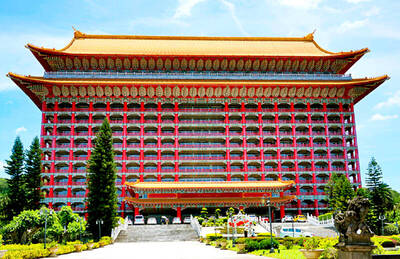
The Grand Hotel Taipei has rejected media reports claiming that the hotel had prevented CBS from broadcasting coverage of the Beijing summit between U.S. President Donald Trump and Chinese President Xi Jinping (習近平) on its premises. Media reports alleging that the hotel owner, dissatisfied with CBS’s coverage, prohibited the network from broadcasting political content on the hotel premises, are not true, the hotel said in a statement issued last night. The reports were “inconsistent with how the hotel actually handled the matter,” it said. The hotel said it received a refund request from a


 RSS
RSS