


More than 6,020 tonnes of garbage were collected from the nation’s beaches and coastal waters in the third quarter, with the majority coming from Kaohsiung, data released yesterday by the Ocean Conservation Administration showed.
The marine trash was collected by divers hired by local governments, civic group volunteers and companies from July to last month.
Of the total collected, nearly 5,793 tonnes came from beaches, while 227 tonnes were collected from waters and sea floors near the shores, agency data showed.
The amount of trash collected was higher than those in the previous two quarters, as more groups joined the cleanup last month, agency section chief Hsu Chung-li (徐仲禮) said, adding that the agency funded local governments that applied for cleanup projects.
More than 1,965 tonnes of the garbage were collected from the shores in Kaohsiung, mainly used fishing nets and gears, followed by 1,544 tonnes from Yunlin County, 631 tonnes from Miaoli County and 555 tonnes from Pingtung County, agency data showed.
The agency said that 31.7 percent of the collected trash was recyclable: glass bottles (11.8 percent); plastic bottles (7.6 percent); waste paper (7.1 percent); iron cans ( 2.9 percent); and aluminum cans (2.3 percent).
Meanwhile, 68.3 percent of the trash was not recyclable: fishing nets or gears (18.3 percent); bamboo or wooden debris (13.7 percent were); Styrofoam products (6.4 percent); and unclassifiable trash (29.9 percent), the data showed.
The ratio of non-recyclable trash dropped to 93.1 percent in the first half of this year, agency data showed.
Due to the potential impact of marine trash on creatures in the ocean, fishers are encouraged to collect trash for recycling and get additional incentives, Hsu said.
Apart from encouraging people to produce less garbage, the agency is seeking channels to recycle used nets that pose a greater risk to marine life, he said.
Several businesses, including Formosa Chemicals & Fibre Corp, have expressed an interest in reusing nets to make textile fibers, but they are more willing to accept nets made of nylon, instead of mixed materials, he said, advising fishers to sort out and clean used nets before giving them to recyclers.
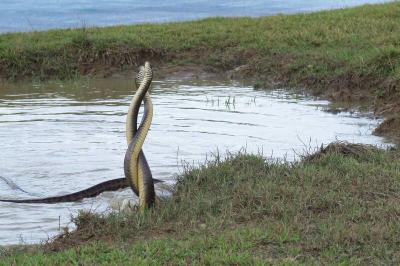
Kenting National Park service technician Yang Jien-fon (楊政峰) won a silver award in World Grand Prix Photography Awards Spring Season for his photograph of two male rat snakes intertwined in combat. Yang’s colleagues at Kenting National Park said he is a master of nature photography who has been held back by his job in civil service. The awards accept entries in all four seasons across six categories: architectural and urban photography, black-and-white and fine art photography, commercial and fashion photography, documentary and people photography, nature and experimental photography, and mobile photography. Awards are ranked according to scores and divided into platinum, gold and
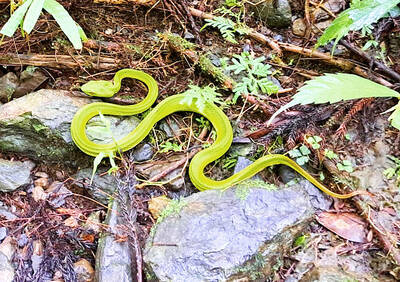
More than half of the bamboo vipers captured in Tainan in the past few years were found in the city’s Sinhua District (新化), while other districts had smaller catches or none at all. Every year, Tainan captures about 6,000 snakes which have made their way into people’s homes. Of the six major venomous snakes in Taiwan, the cobra, the many-banded krait, the brown-spotted pit viper and the bamboo viper are the most frequently captured. The high concentration of bamboo vipers captured in Sinhua District is puzzling. Tainan Agriculture Bureau Forestry and Nature Conservation Division head Chu Chien-ming (朱健明) earlier this week said that the
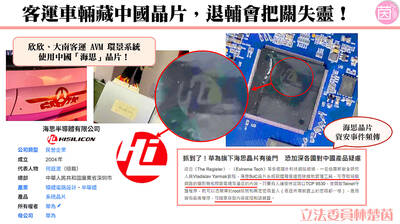
BREACH OF CONTRACT: The bus operators would seek compensation and have demanded that the manufacturer replace the chips with ones that meet regulations Two bus operators found to be using buses with China-made chips are to demand that the original manufacturers replace the systems and provide compensation for breach of contract, the Veterans Affairs Council said yesterday. Democratic Progressive Party Legislator Michelle Lin (林楚茵) yesterday said that Da Nan Bus Co and Shin-Shin Bus Co Ltd have fielded a total of 82 buses that are using Chinese chips. The bus models were made by Tron-E, while the systems provider was CYE Electronics, Lin said. Lin alleged that the buses were using chips manufactured by Huawei subsidiary HiSilicon Co, which presents a national security risk if the

The National Immigration Agency has banned two Chinese from returning to Taiwan, after they published social media content it described as disrespectful to national sovereignty. The agency imposed a two-month ban on a Chinese man surnamed Liang (梁) and a permanent ban on a woman surnamed Yang (楊), an influencer with 23 million followers, in October last year and last week respectively. Minister of the Interior Liu Shyh-fang (劉世芳) yesterday said on the sidelines of a legislative meeting that Chinese visitors to Taiwan are required to comply with the rules and regulations governing their entry permits. The government has handled the ban and


 RSS
RSS