


Taipei Mayor Ko Wen-je (柯文哲) yesterday said that he would ask the Taipei Department of Information Technology to draft a special regulation to protect personal information, after smart vending machines placed on school campuses in the city sparked privacy concerns.
The machines can only be operated by scanning a student’s ID card and do not accept cash.
“Smart city, big data, or AI [artificial intelligence] smart vending machines, these are imperative,” Ko said.
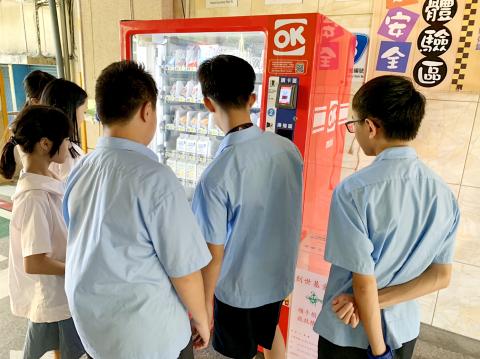
Photo courtesy of the Taipei Department of Education
“However, as people are concerned about personal information protection, I will ask the Department of Information Technology to draft a special chapter to regulate city government or private companies’ handling of data ownership,” he said.
While the city government references similar laws in the EU or the US, Taiwan also has the Computer-Processed Personal Data Protection Act (電腦保護個人資料處理法), he added.
The Taipei Department of Education in March announced that it had chosen nine schools to test smart vending machines to sell safety-approved food products and stationery on campus.
The policy’s aim is “to let students get used to cashless transactions from a young age,” it said.
The goal is to let every public school in the city have at least one smart vending machine, it said at the time.
The department said in a news release on Sunday that as of Sept. 30, smart vending machines had been installed in 89 schools in the city, but if the schools or parents have concerns over the policy, they can suspend the installations until a consensus has been reached.
“The department will continue to communicate and promote the policy to help schools and parents fully understand it. We hope that the policy, as well as courses on transaction data analysis, financial management and life education, can help students learn more about these concepts,” it said.
The policy also sparked debates about food hygiene and nutritional value, as well as possible overspending by children and personal information safety.
National Chengchi University associate professor of law Liu Hung-en (劉宏恩) on Monday said on Facebook that as student ID cards come with EasyCard payment functions, he suspects the policy’s aim is to collect big data on students’ consumption behavior to develop an “artificial intelligence business model.”
Democratic Progressive Party (DPP) Secretary-General Luo Wen-jia (羅文嘉) also questioned the policy, saying that its main purpose is to help companies make money and that it has no educational value.
DPP Taipei City Councilor Wu Pei-yi (吳沛憶) on Monday said that two companies have been commissioned to install the machines in more than 230 schools in the city.
The companies are to pay a rent of NT$1,000 per machine per month over three years, Wu said.
She asked whether the policy’s real aim is to collect data and why all of the city’s schools have been required to have at least one machine on their campus.
Taipei Department of Education Chief Secretary Chen Su-hui (陳素慧) yesterday said that when students buy products with their student IDs, the machines only scan the card number and do not access students’ personal information.
Ko has repeatedly said he aims to transform Taipei into a smart city, where transactions would be made through digital payments and cash would be eliminated.
He has also said that the city would take the lead by implementing a digital payment policy in government facilities.
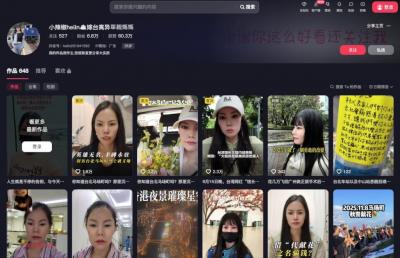
Chinese spouse and influencer Guan Guan’s (關關) residency permit has been revoked for repeatedly posting pro-China videos that threaten national security, the National Immigration Agency confirmed today. Guan Guan has said many controversial statements in her videos posted to Douyin (抖音), including “the red flag will soon be painted all over Taiwan” and “Taiwan is an inseparable part of China,” and expressing hope for expedited reunification. The agency last year received multiple reports alleging that Guan Guan had advocated for armed reunification. After verifying the reports, the agency last month issued a notice requiring her to appear and explain her actions. Guan

GIVE AND TAKE: Blood demand continues to rise each year, while fewer young donors are available due to the nation’s falling birthrate, a doctor said Blood donors can redeem points earned from donations to obtain limited edition Formosan black bear travel mugs, the Kaohsiung Blood Center said yesterday, as it announced a goal of stocking 20,000 units of blood prior to the Lunar New Year. The last month of the lunar year is National Blood Donation Month, when local centers seek to stockpile blood for use during the Lunar New Year holiday. The blood demand in southern Taiwan — including Tainan and Kaohsiung, as well as Chiayi, Pingtung, Penghu and Taitung counties — is about 2,000 units per day, the center said. The donation campaign aims to boost

The Kaohsiung Tourism Bureau audited six hotels in an effort to prevent price gouging ahead of Korean band BTS’ concert tour in the city scheduled for Nov. 19, 21 and 22 this year. The bureau on Friday said that the audits — conducted in response to allegations of unfair pricing posted on social media — found no wrongdoing. These establishments included the local branches of Chateau de Chine, Hotel Nikko, My Humble House, and Grand Hai Lai, it said, adding that the Consumer Protection Commission would have penalized price gougers had the accusations been substantiated. The bureau said the Tourism Development Act
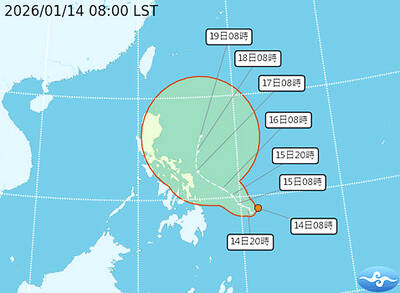
BACK TO WINTER: A strong continental cold air mass would move south on Tuesday next week, bringing colder temperatures to northern and central Taiwan A tropical depression east of the Philippines could soon be upgraded to be the first tropical storm of this year, the Central Weather Administration (CWA) said yesterday, adding that the next cold air mass is forecast to arrive on Monday next week. CWA forecaster Cheng Jie-ren (鄭傑仁) said the first tropical depression of this year is over waters east of the Philippines, about 1,867km southeast of Oluanpi (鵝鑾鼻), and could strengthen into Tropical Storm Nokaen by early today. The system is moving slowly from northwest to north, and is expected to remain east of the Philippines with little chance of affecting Taiwan,


 RSS
RSS