


An Environmental Protection Administration (EPA) survey of the nation’s 51 reservoirs found that six reservoirs on Taiwan proper and most of the reservoirs on the outlying islands suffer from eutrophication — a process by which lakes, reservoirs, and rivers become excessively enriched with nutrients.
The survey, conducted from April last year to March, was the first of its kind.
Of the 21 reservoirs considered important, 114 samples were taken from 74 sites every month, with 30 samples taken from the other reservoirs every month, the EPA said.
New Taipei City’s Feitsui Reservoir (翡翠水庫) was not listed in the survey as it has been conducting water quality inspections itself for a long time, the EPA added.
About 31 percent of the 21 important reservoirs had excessive pH levels, while 26 percent had excessive amounts of phosphorous and 21 percent had low dissolved oxygen levels, the survey found.
The Sun Moon Lake Reservoir (日月潭) had the best water quality nationwide with eutrophication of 33 percent, while the Lantan Reservoir (蘭潭) was second, the EPA said.
Miaoli County’s Mingde Reservoir (明德) and Kaohsiung’s Fongshan Reservoir (鳳山) were eutrophic over the whole period, it said.
Among common reservoirs, Hsinchu County’s Dapu Reservoir (大埔) was completely covered with common water hyacinths and no sample could be obtained, therefore it was considered 100 percent eutrophic, the EPA said.
The EPA’s Department of Environmental Monitoring and Information Management Director Lu Cheng-yang (呂澄洋) said that the reservoirs’ acidity levels were high due to algae.
Eutrophication is often caused by phosphorous run-off originating from fertilizer used at orchards, Lu said.
The EPA collected too few samples for a survey of such scale, said Lin Chang-mao (林長茂), standing director of Green Formosa Front, an environmental protection group.
Lin also said that the EPA was “unscientific” in determining sample sites.
Citing Shihmen Reservoir (石門) as an example, Lin said that the EPA took its samples from near Fusing Bridge (復興), which is not as heavily polluted as the Sikou Drawbridge (溪口吊橋) or Amuping (阿姆坪) areas.
Yuanshan Weir (鳶山堰) provided water for a significant population and should also be tested, Lin added.
Lu said the survey collected samples from sites used in previous surveys to better compare the data.
The EPA will take random samples to trace the origins of the alleged pollution, Lu added.

Taiwanese can file complaints with the Tourism Administration to report travel agencies if their activities caused termination of a person’s citizenship, Mainland Affairs Council Minister Chiu Chui-cheng (邱垂正) said yesterday, after a podcaster highlighted a case in which a person’s citizenship was canceled for receiving a single-use Chinese passport to enter Russia. The council is aware of incidents in which people who signed up through Chinese travel agencies for tours of Russia were told they could obtain Russian visas and fast-track border clearance, Chiu told reporters on the sidelines of an event in Taipei. However, the travel agencies actually applied

New measures aimed at making Taiwan more attractive to foreign professionals came into effect this month, the National Development Council said yesterday. Among the changes, international students at Taiwanese universities would be able to work in Taiwan without a work permit in the two years after they graduate, explainer materials provided by the council said. In addition, foreign nationals who graduated from one of the world’s top 200 universities within the past five years can also apply for a two-year open work permit. Previously, those graduates would have needed to apply for a work permit using point-based criteria or have a Taiwanese company
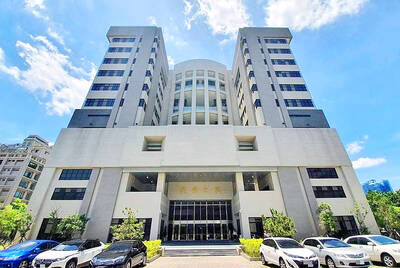
The Shilin District Prosecutors’ Office yesterday indicted two Taiwanese and issued a wanted notice for Pete Liu (劉作虎), founder of Shenzhen-based smartphone manufacturer OnePlus Technology Co (萬普拉斯科技), for allegedly contravening the Act Governing Relations Between the People of the Taiwan Area and the Mainland Area (臺灣地區與大陸地區人民關係條例) by poaching 70 engineers in Taiwan. Liu allegedly traveled to Taiwan at the end of 2014 and met with a Taiwanese man surnamed Lin (林) to discuss establishing a mobile software research and development (R&D) team in Taiwan, prosecutors said. Without approval from the government, Lin, following Liu’s instructions, recruited more than 70 software

Chinese spouse and influencer Guan Guan’s (關關) residency permit has been revoked for repeatedly posting pro-China videos that threaten national security, the National Immigration Agency confirmed today. Guan Guan has said many controversial statements in her videos posted to Douyin (抖音), including “the red flag will soon be painted all over Taiwan” and “Taiwan is an inseparable part of China,” and expressing hope for expedited reunification. The agency last year received multiple reports alleging that Guan Guan had advocated for armed reunification. After verifying the reports, the agency last month issued a notice requiring her to appear and explain her actions. Guan


 RSS
RSS