


Levels of PM2.5 in Kaohsiung and Pingtung have fallen over the past four years, the Environmental Protection Administration (EPA) said yesterday, as it considers setting up an air pollution management task force to address pollution in southern Taiwan.
The risk of developing lung adenocarcinoma was 15 times higher in the area than in northern Taiwan, potentially because of high emissions of PM2.5, or fine particulate matter measuring 2.5 micrometers or smaller, according to a joint study conducted by multiple universities, the National Health Research Institutes (NHRI) and the Taiwan Society of Cancer Registry.
Greater regional air pollution could be caused by the concentration of heavy industry in the area, the EPA said.
The government in 2015 implemented measures to reduce PM2.5 emissions, such as controlling emissions from fixed and mobile sources, promoting relevant policies in state-owned businesses, cutting down on diesel-powered vehicle emissions, promoting the collective burning of joss paper and reducing the number of events at which joss paper is burned, it said.
Overall air pollution has dropped from 198,403 tonnes in 2015 to 182,448 tonnes last year, the agency said.
General PM2.5 density in the Kaohsiung-Pingtung region dropped by 20.4 percent over the period, or from 23.5 micrograms per cubic meter (mcg/m3) in 2015 to 18.7mcg/m3 last year, it said.
The measures are expected to decrease air pollution emissions by 17,933 tonnes over the next four years, including 652 tonnes of particulate matter, 7,419 tonnes of sulfur dioxide, 8,666 tonnes of nitrogen oxide and 1,196 tonnes of volatile organic compounds, it added.
The EPA said that overall air quality has improved in the south, although it is continuing to hold talks with residents and to develop more efficient uses for the Air Pollution Control Fund.
While people are taking more actions to mitigate the effects of air pollution, such as wearing face masks, PM2.5 exposure in indoor environments or while traveling could also affect public health, NHRI associate researcher Chen Yu-cheng (陳裕政) said.
A two-year survey monitoring PM2.5 density in different environments showed that temples have the highest density among indoor environments at 62.5mcg/m3, Chen said.
Restaurants were second at 33.9mcg/m3, followed by offices, classrooms and barbershops with 18mcg/m3 each, Chen added.
The PM2.5 levels at temples that restrict incense burning were about the same as the atmospheric concentration levels, while those without such restrictions increased by 36.1mcg/m3 per hour, Chen said.
Korean barbecue restaurants had the highest PM2.5 density at 87mcg/m3, followed by teppanyaki restaurants (84mcg/m3) and steak restaurants (83mcg/m3), Chen said.
Direct exposure to a heat source exposes diners to higher PM2.5 concentration levels, Chen said, adding that people at Korean restaurants are exposed to 4.8 times more PM2.5 compared with those eating at Japanese restaurants.
People should choose restaurants with separated kitchen areas and well-ventilated dining areas, Chen said.
Night markets have the highest PM2.5 density for outdoor environments at 59.9mcg/m3, while traditional markets were second at 41.4mcg/m3, the survey showed.
Among travelers, scooter drivers are exposed to the highest PM2.5 density at 40.2mcg/m3, followed by train passengers at 32.4mcg/m3 and bus riders at 31.3mcg/m3, while cars have the lowest level at 16.5mcg/m3, the survey showed.
Additional reporting by CNA

LOUD AND PROUD Taiwan might have taken a drubbing against Australia and Japan, but you might not know it from the enthusiasm and numbers of the fans Taiwan might not be expected to win the World Baseball Classic (WBC) but their fans are making their presence felt in Tokyo, with tens of thousands decked out in the team’s blue, blowing horns and singing songs. Taiwanese fans have packed out the Tokyo Dome for all three of their games so far and even threatened to drown out home team supporters when their team played Japan on Friday. They blew trumpets, chanted for their favorite players and had their own cheerleading squad who dance on a stage during the game. The team struggled to match that exuberance on the field, with
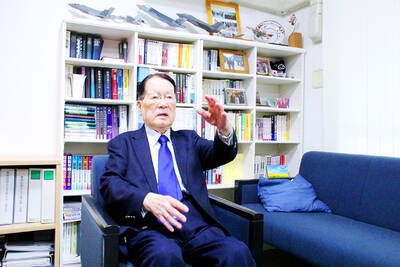
Whether Japan would help defend Taiwan in case of a cross-strait conflict would depend on the US and the extent to which Japan would be allowed to act under the US-Japan Security Treaty, former Japanese minister of defense Satoshi Morimoto said. As China has not given up on the idea of invading Taiwan by force, to what extent Japan could support US military action would hinge on Washington’s intention and its negotiation with Tokyo, Morimoto said in an interview with the Liberty Times (sister paper of the Taipei Times) yesterday. There has to be sufficient mutual recognition of how Japan could provide
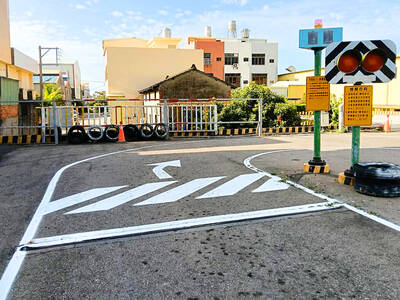
UPDATED TEST: The new rules aim to assess drivers’ awareness of risky behaviors and how they respond under certain circumstances, the Highway Bureau said Driver’s license applicants who fail to yield to pedestrians at intersections or to check blind spots, or omit pointing-and-calling procedures would fail the driving test, the Highway Bureau said yesterday. The change is set to be implemented at the end of the month, and is part of the bureau’s reform of the driving portion of the test, which has been criticized for failing to assess whether drivers can operate vehicles safely. Sedan drivers would be tested regarding yielding to pedestrians and turning their heads to check blind spots, while drivers of large vehicles would be tested on their familiarity with pointing-and-calling
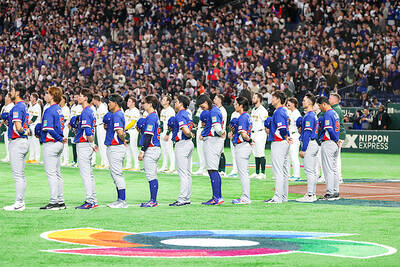
A Taiwanese man apologized on Friday after saying in a social media post that he worked with Australia to provide scouting reports on Taiwan’s team, enabling Australia’s victory in this year’s World Baseball Classic (WBC), saying it was a joke and that he did not hold any position with foreign teams or Taiwan’s sports training center. Chen Po-hao (陳柏豪) drew the rage of many Taiwan baseball fans when he posted online on Thursday night, claiming credit for Australia’s 3-0 win over Taiwan in the opening game for Pool C, saying he worked as a physical therapist with the national team and


 RSS
RSS