


The Directorate-General of Highways (DGH) yesterday defended the implementation of a policy requiring tour bus operators to install a GPS device on their buses, saying that the device has proved effective in enhancing the operational safety of tour buses.
The nation’s highway authority made the statement after New Taipei City Touring-Bus Craft Union for Drivers said that it would mobilize hundreds of tour bus owners to protest against the policy outside the Ministry of Transportation and Communications tomorrow.
The ministry should stop the policy, as it is intended to monitor drivers’ whereabouts, the union said.
It is mandatory for tour bus operators to install GPS, the DGH said, adding that the device enables the agency to track drivers’ locations and whether they have exceeded the speed limit or have been overworked.
Drivers could face a fine of NT$9,000 to NT$90,000 if they are found to have disconnected the device from their vehicle, it said.
The public is aware of the importance of tour bus safety after a fatal accident in October 2010 on the Suhua Highway and another in February 2017 on the Chiang Wei-shui Memorial Freeway (Freeway No. 5), the agency said.
In the first accident, 21 people died when the bus fell into the sea — 19 of whom were Chinese tourists — while 33 local tourists died in the latter.
Rescuers were not able to locate the tour bus in the 2010 accident, because it was not equipped with GPS, the agency said, adding that the device has proved indispensable in determining the exact location of traffic accidents, saving time and lives.
During the nine months in which the policy has been implemented, the DGH said that it received 15 reports on how traffic on highways was blocked by landslides.
Using GPS, it was able to inform 93 tour buses of the landslides, so that they could safely leave the area, the agency said.
GPS has also helped reduce by 82 percent the number of cases in which tour bus drivers were found to have been overworked, the DGH said, adding that it has helped prevent the tour buses from operating in no-entry zones, as well as reducing other types of contraventions.
The policy has also benefited travel agencies, it said.
Some of the tourist attractions and hotels are in mountainous areas, which are no-entry zones for large passenger vehicles. This has inconvenienced tour bus operators and travel agencies, as visitors would have to switch to smaller buses to reach their locations, the DGH said.
However, data collected through GPS have enabled the agency to revisit some of the no-entry zones and see if the restriction could be lifted or relaxed by improving the road designs, it said, adding that, as of June, 10 no-entry zones have been removed or changed to routes where large passenger vehicles should proceed with caution.
The policy also protects consumers, as they can check the basic information of their charter buses and track their whereabouts through a smartphone app developed by the agency, it said.

Taiwanese can file complaints with the Tourism Administration to report travel agencies if their activities caused termination of a person’s citizenship, Mainland Affairs Council Minister Chiu Chui-cheng (邱垂正) said yesterday, after a podcaster highlighted a case in which a person’s citizenship was canceled for receiving a single-use Chinese passport to enter Russia. The council is aware of incidents in which people who signed up through Chinese travel agencies for tours of Russia were told they could obtain Russian visas and fast-track border clearance, Chiu told reporters on the sidelines of an event in Taipei. However, the travel agencies actually applied

New measures aimed at making Taiwan more attractive to foreign professionals came into effect this month, the National Development Council said yesterday. Among the changes, international students at Taiwanese universities would be able to work in Taiwan without a work permit in the two years after they graduate, explainer materials provided by the council said. In addition, foreign nationals who graduated from one of the world’s top 200 universities within the past five years can also apply for a two-year open work permit. Previously, those graduates would have needed to apply for a work permit using point-based criteria or have a Taiwanese company
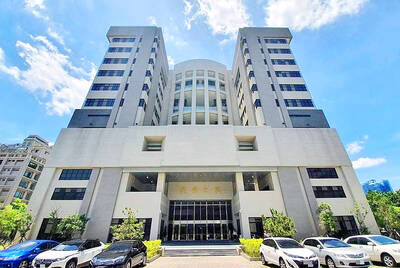
The Shilin District Prosecutors’ Office yesterday indicted two Taiwanese and issued a wanted notice for Pete Liu (劉作虎), founder of Shenzhen-based smartphone manufacturer OnePlus Technology Co (萬普拉斯科技), for allegedly contravening the Act Governing Relations Between the People of the Taiwan Area and the Mainland Area (臺灣地區與大陸地區人民關係條例) by poaching 70 engineers in Taiwan. Liu allegedly traveled to Taiwan at the end of 2014 and met with a Taiwanese man surnamed Lin (林) to discuss establishing a mobile software research and development (R&D) team in Taiwan, prosecutors said. Without approval from the government, Lin, following Liu’s instructions, recruited more than 70 software
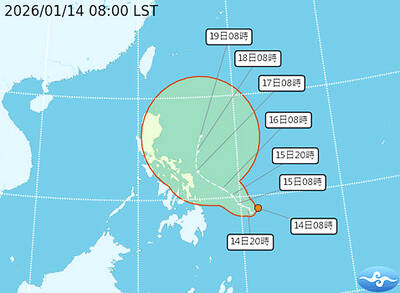
BACK TO WINTER: A strong continental cold air mass would move south on Tuesday next week, bringing colder temperatures to northern and central Taiwan A tropical depression east of the Philippines could soon be upgraded to be the first tropical storm of this year, the Central Weather Administration (CWA) said yesterday, adding that the next cold air mass is forecast to arrive on Monday next week. CWA forecaster Cheng Jie-ren (鄭傑仁) said the first tropical depression of this year is over waters east of the Philippines, about 1,867km southeast of Oluanpi (鵝鑾鼻), and could strengthen into Tropical Storm Nokaen by early today. The system is moving slowly from northwest to north, and is expected to remain east of the Philippines with little chance of affecting Taiwan,


 RSS
RSS