


President Tsai Ing-wen (蔡英文) yesterday marked Indigenous Peoples’ Day by paying respects to those involved in convincing the government to use the term “indigenous peoples” for Aborigines and called on them to continue their hard work, and present their viewpoints and histories.
The renaming movement 25 years ago included protests against the use of the word shanbao (mountain people, 山胞) in the Constitution and other government documents.
The word was replaced with yuanzhumin (indigenous peoples, 原住民) in Mandarin, on Aug. 1, 1994, which emphasizes the sense that they are the “original owners of the land,” Tsai said at a forum at the Taipei Grand Hotel, adding that she herself is of Paiwan descent.
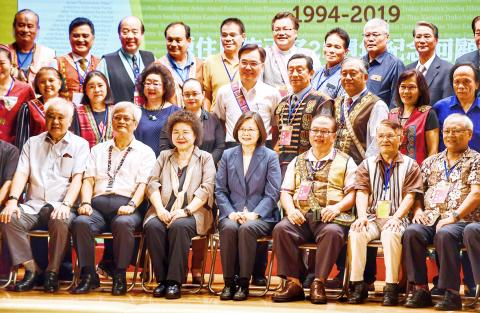
Photo: CNA
The renaming event was the first of three critical moments for indigenous rights, with the second the promulgation of the Indigenous Peoples Basic Act (原住民族基本法) in 2005, Tsai said.
Tsai said that three years ago she apologized on behalf of the government as legislative action and policies stalled after the act was promulgated.
Hopefully, the apology would mark a third period of critical advances in Aboriginal rights, she said.
Tsai said that her administration has had many accomplishments on issues relating to Aboriginal affairs.
The establishment of the Indigenous Historical Justice and Transitional Justice Committee under the Presidential Office periodically discusses with Aborigines issues that would help unveil “historical truths” from the vantage of different groups, she said.
The Indigenous Language Development Act (原住民族語言發展法) in 2017 nationalized Aboriginal languages and the government has promoted them with the goal of popularizing the languages to the extent that they would be spoken on a daily basis in Aboriginal areas, she said.
An amendment last year to the Education Act for Indigenous Peoples (原住民族教育法) in tandem with the 12-year national education program allows society to learn about Aboriginal history and culture, she said.
An amendment last year to the Act for the Utilization and Transfer of Reserved Mountainous Land (山坡地保育利用條例) removed a five-year waiting period for transfers of ownership for plots of land covered by the Regulations on Development and Management of the Lands Reserved for Indigenous Peoples (原住民保留地開發管理辦法), with 264,700 hectares nationwide set aside to encourage economic development and stability of life for Aborigines, she said.
The Forestry Bureau is relaxing regulations and trialing projects that allow Aborigines to hunt or harvest natural resources that they manage, she said.
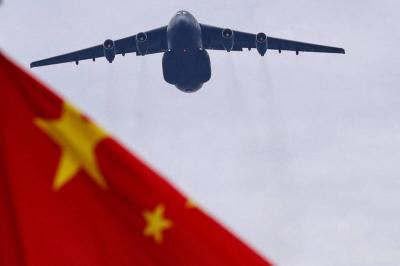
Beijing could eventually see a full amphibious invasion of Taiwan as the only "prudent" way to bring about unification, the US Department of Defense said in a newly released annual report to Congress. The Pentagon's "Annual Report to Congress: Military and Security Developments Involving the People's Republic of China 2025," was in many ways similar to last year’s report but reorganized the analysis of the options China has to take over Taiwan. Generally, according to the report, Chinese leaders view the People's Liberation Army's (PLA) capabilities for a Taiwan campaign as improving, but they remain uncertain about its readiness to successfully seize

Taiwan is getting a day off on Christmas for the first time in 25 years. The change comes after opposition parties passed a law earlier this year to add or restore five public holidays, including Constitution Day, which falls on today, Dec. 25. The day marks the 1947 adoption of the constitution of the Republic of China, as the government in Taipei is formally known. Back then the Chinese Nationalist Party (KMT) governed China from Nanjing. When the KMT, now an opposition party in Taiwan, passed the legislation on holidays, it said that they would help “commemorate the history of national development.” That

Taiwan has overtaken South Korea this year in per capita income for the first time in 23 years, IMF data showed. Per capita income is a nation’s GDP divided by the total population, used to compare average wealth levels across countries. Taiwan also beat Japan this year on per capita income, after surpassing it for the first time last year, US magazine Newsweek reported yesterday. Across Asia, Taiwan ranked fourth for per capita income at US$37,827 this year due to sustained economic growth, the report said. In the top three spots were Singapore, Macau and Hong Kong, it said. South

Snow fell on Yushan (Jade Mountain, 玉山) yesterday morning as a continental cold air mass sent temperatures below freezing on Taiwan’s tallest peak, the Central Weather Administration (CWA) said. Snowflakes were seen on Yushan’s north peak from 6:28am to 6:38am, but they did not fully cover the ground and no accumulation was recorded, the CWA said. As of 7:42am, the lowest temperature recorded across Taiwan was minus-5.5°C at Yushan’s Fengkou observatory and minus-4.7°C at the Yushan observatory, CWA data showed. On Hehuanshan (合歡山) in Nantou County, a low of 1.3°C was recorded at 6:39pm, when ice pellets fell at Songsyue Lodge (松雪樓), a


 RSS
RSS