


Frequent loud snoring and excessive daytime sleepiness might be signs of obstructive sleep apnea (OSA), a physician said yesterday, adding that about 1 million Taiwanese have the condition, which can also lead to increased risk of traffic accidents.
A man surnamed Liu (劉) snored loudly, woke abruptly during the night with a dry mouth or sore throat, and had excessive daytime sleepiness.
His wife, disturbed by her husband’s snoring, urged him to see a doctor, who diagnosed Liu with severe OSA, said Shiao Guang-ming (蕭光明), an attending physician at Taipei Veterans General Hospital’s chest department and founding president of the Taiwan Society of Sleep Medicine.
Liu was found to stop breathing more than 55 times per hour during sleep, Shiao said.
Liu was treated with a continuous positive airway pressure device, which is a face or nasal mask connected to a pump that provides a positive flow of air into the nasal passage, Shiao said, adding that the treatment alleviated Liu’s snoring, and improved his breathing and sleep quality.
Of the three types of sleep apnea — OSA, central sleep apnea and mixed apnea – OSA is the most common, Shiao said, adding that the condition is often associated with obesity and irregular upper airway structures that cause complete or partial obstruction of air flow during sleep.
There has been no large epidemiological study on OSA in Taiwan, but according to previous surveys, an estimated 5 percent of the population, or about 1 million people, have the condition, Shiao said, adding that about 4,000 to 5,000 people might be in need of continuous positive airway pressure therapy.
Statistics from other countries suggest that people who have OSA are about 3.47 times more at risk of getting involved in a traffic accident, Shiao said, adding that the risk declined after patients received positive airway pressure therapy.
People with mild or medium-level OSA can also be treated with a tongue stabilizing device or receive a sleep apnea surgical procedure, he said, adding that people should see a doctor if they have suspected symptoms.

Taiwanese can file complaints with the Tourism Administration to report travel agencies if their activities caused termination of a person’s citizenship, Mainland Affairs Council Minister Chiu Chui-cheng (邱垂正) said yesterday, after a podcaster highlighted a case in which a person’s citizenship was canceled for receiving a single-use Chinese passport to enter Russia. The council is aware of incidents in which people who signed up through Chinese travel agencies for tours of Russia were told they could obtain Russian visas and fast-track border clearance, Chiu told reporters on the sidelines of an event in Taipei. However, the travel agencies actually applied
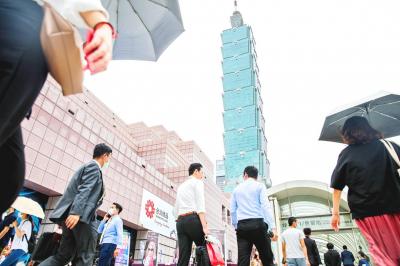
Japanese footwear brand Onitsuka Tiger today issued a public apology and said it has suspended an employee amid allegations that the staff member discriminated against a Vietnamese customer at its Taipei 101 store. Posting on the social media platform Threads yesterday, a user said that an employee at the store said that “those shoes are very expensive” when her friend, who is a migrant worker from Vietnam, asked for assistance. The employee then ignored her until she asked again, to which she replied: "We don't have a size 37." The post had amassed nearly 26,000 likes and 916 comments as of this

New measures aimed at making Taiwan more attractive to foreign professionals came into effect this month, the National Development Council said yesterday. Among the changes, international students at Taiwanese universities would be able to work in Taiwan without a work permit in the two years after they graduate, explainer materials provided by the council said. In addition, foreign nationals who graduated from one of the world’s top 200 universities within the past five years can also apply for a two-year open work permit. Previously, those graduates would have needed to apply for a work permit using point-based criteria or have a Taiwanese company
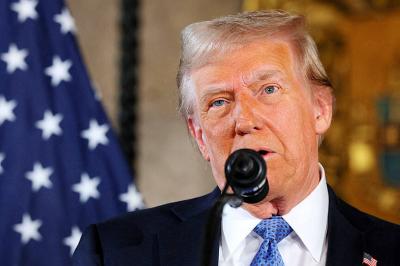
US President Donald Trump said "it’s up to" Chinese President Xi Jinping (習近平) what China does on Taiwan, but that he would be "very unhappy" with a change in the "status quo," the New York Times said in an interview published yesterday. Xi "considers it to be a part of China, and that’s up to him what he’s going to be doing," Trump told the newspaper on Wednesday. "But I’ve expressed to him that I would be very unhappy if he did that, and I don’t think he’ll do that," he added. "I hope he doesn’t do that." Trump made the comments in


 RSS
RSS