


The nation’s planned release of 5G licenses at the beginning of next year would be affected if lawmakers do not pass a draft telecommunication management act this legislative session, the National Communications Commission (NCC) said yesterday.
The commission in late March secured preliminary approval for the bill from the legislature’s Transportation Committee, Department of Legal Affairs Acting Director Huang Wen-che (黃文哲) said.
Lawmakers resolved the disagreements over only a few articles during cross-caucus negotiations on April 26, he added.
As the legislative session is to wrap up at the end of this month, the commission hopes that the draft act would be passed at a plenary session, Huang said.
“If lawmakers do not pass the draft act before this legislative session ends, we would have to stipulate rules for releasing 5G licenses based on the current Telecommunications Act (電信法), which states that telecom networks can only be built by telecom service carriers. Meanwhile, frequency bands cannot be traded or used in a more flexible manner. These two restrictions in the current act would greatly limit the development of 5G services,” Huang said.
Telecoms would be required to submit a preliminary business proposal before they can participate in 5G frequency band auctions, commission officials said, adding that that would help allay their uncertainty over 5G business prospects if the bill is passed.
Regarding the disagreements over the articles, Huang said that some lawmakers had hoped that the draft act would allow police and emergency responders to check telephone records of individuals to provide emergency assistance.
During the negotiations, lawmakers agreed that emergency responders can obtain private information about individuals as long as they follow the regulations stipulated in the Personal Information Protection Act (個人資料保護法) and agreed that a similar clause does not need to be repeated in the draft act, he said.
The Telecommunications Act requires telecoms engineers to join a pertinent telecommunications engineering enterprise association after they obtain their licenses, Huang said.
However, the draft act would require them to join a pertinent association without specifying that they have to join a telecommunications engineering enterprise association, he added.
Lawmakers had previously wanted to charge radio frequency utilization fees based on usage instead of a fixed fee, as they feared that consumers would have to pay more to access 5G services, Huang said.
“We have assured the lawmakers that we would review how the radio frequency utilization fees should be charged each year based on the progress telecoms make in network constructions and how they use the frequency bands,” he said, adding that lawmakers accepted the commission’s explanations.

Taiwanese can file complaints with the Tourism Administration to report travel agencies if their activities caused termination of a person’s citizenship, Mainland Affairs Council Minister Chiu Chui-cheng (邱垂正) said yesterday, after a podcaster highlighted a case in which a person’s citizenship was canceled for receiving a single-use Chinese passport to enter Russia. The council is aware of incidents in which people who signed up through Chinese travel agencies for tours of Russia were told they could obtain Russian visas and fast-track border clearance, Chiu told reporters on the sidelines of an event in Taipei. However, the travel agencies actually applied
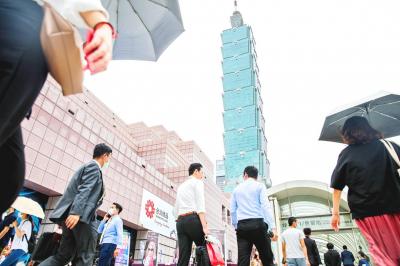
Japanese footwear brand Onitsuka Tiger today issued a public apology and said it has suspended an employee amid allegations that the staff member discriminated against a Vietnamese customer at its Taipei 101 store. Posting on the social media platform Threads yesterday, a user said that an employee at the store said that “those shoes are very expensive” when her friend, who is a migrant worker from Vietnam, asked for assistance. The employee then ignored her until she asked again, to which she replied: "We don't have a size 37." The post had amassed nearly 26,000 likes and 916 comments as of this

New measures aimed at making Taiwan more attractive to foreign professionals came into effect this month, the National Development Council said yesterday. Among the changes, international students at Taiwanese universities would be able to work in Taiwan without a work permit in the two years after they graduate, explainer materials provided by the council said. In addition, foreign nationals who graduated from one of the world’s top 200 universities within the past five years can also apply for a two-year open work permit. Previously, those graduates would have needed to apply for a work permit using point-based criteria or have a Taiwanese company
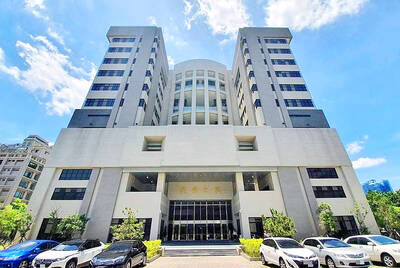
The Shilin District Prosecutors’ Office yesterday indicted two Taiwanese and issued a wanted notice for Pete Liu (劉作虎), founder of Shenzhen-based smartphone manufacturer OnePlus Technology Co (萬普拉斯科技), for allegedly contravening the Act Governing Relations Between the People of the Taiwan Area and the Mainland Area (臺灣地區與大陸地區人民關係條例) by poaching 70 engineers in Taiwan. Liu allegedly traveled to Taiwan at the end of 2014 and met with a Taiwanese man surnamed Lin (林) to discuss establishing a mobile software research and development (R&D) team in Taiwan, prosecutors said. Without approval from the government, Lin, following Liu’s instructions, recruited more than 70 software


 RSS
RSS