


The government would bring forward its plans to develop 5G mobile networks from June next year to December or January next year, Vice Premier Chen Chi-mai (陳其邁) said yesterday.
Chen made the announcement while visiting the Future Commerce Expo held by the Chinese-language Business Next magazine in Taipei.
People live in a rapidly developing world of technology, which has had a sweeping impact on all aspects of life, he said.

Photo: CNA
Because of the rise of 5G, blockchains, the Internet of Things (IoT), artificial intelligence and even extended reality, the ways in which businesses and industries are run have undergone fundamental changes, and while e-commerce is the buzzword, in three to five years people could be looking at collaborative commerce, or c-commerce, he said.
Citing as an example the government’s efforts to promote IoT applications, which under the auspices of the Executive Yuan’s “5+2” industries innovation initiative, have seen laws introduced to help innovative firms source funds and talent, Chen said that the government would follow this example in expediting the development of new technologies by working more closely with innovative companies.
In a bid to expedite the development of 5G, the Ministry of Transportation and Communications has said that it expects to announce in June the scope and timetable of 5G applications, as well as “Type I” telecoms eligible to roll out 5G services.
The rules are to be revised by the National Communications Commission, which would also be in charge with the auctioning of frequency spectrums, which is expected to take another eight to 10 months.
The Executive Yuan’s Board of Science and Technology has suggested that the Cabinet speed up licensing for 5G service providers in compliance with a resolution issued by lawmakers, board executive secretary Tsai Zse-hong (蔡志宏) said.
Additional reporting by CNA
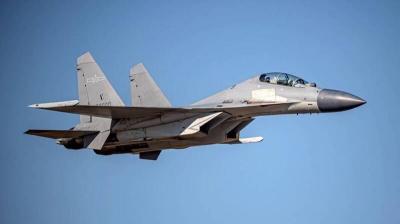
Eight Chinese naval vessels and 24 military aircraft were detected crossing the median line of the Taiwan Strait between 6am yesterday and 6am today, the Ministry of National Defense said this morning. The aircraft entered Taiwan’s northern, central, southwestern and eastern air defense identification zones, the ministry said. The armed forces responded with mission aircraft, naval vessels and shore-based missile systems to closely monitor the situation, it added. Eight naval vessels, one official ship and 36 aircraft sorties were spotted in total, the ministry said.
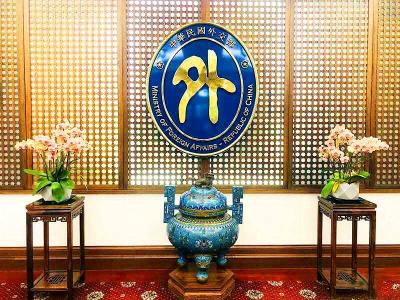
The Ministry of Foreign Affairs (MOFA) today said that if South Korea does not reply appropriately to its request to correct Taiwan’s name on its e-Arrival card system before March 31, it would take corresponding measures to alter how South Korea is labeled on the online Taiwan Arrival Card system. South Korea’s e-Arrival card system lists Taiwan as “China (Taiwan)” in the “point of departure” and “next destination” fields. The ministry said that it changed the nationality for South Koreans on Taiwan’s Alien Resident Certificates from “Korea” to “South Korea” on March 1, in a gesture of goodwill and based on the

Taiwanese officials were shown the first of 66 F-16V fighter jets purchased by Taiwan from the United States, the Ministry of National Defense said yesterday, adding the aircraft has completed an initial flight test and is expected to be delivered later this year. A delegation led by Deputy Minister of National Defense Hsu Szu-chien (徐斯儉) visited Lockheed Martin’s F-16 C/D Block 70 (also known as F-16V) assembly line in South Carolina on March 16 to view the aircraft. The jet will undergo a final acceptance flight in the US before being delivered to Taiwan, the
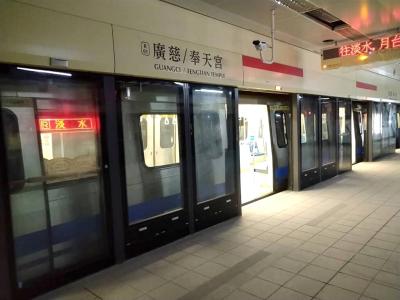
The New Taipei Metro's Sanyin Line and the eastern extension of the Taipei Metro's Tamsui-Xinyi Line (Red Line) are scheduled to begin operations in June, the National Development Council said today. The Red Line, which terminates at Xiangshan Station, would be connected by the 1.4km extension to a new eastern terminal, Guangci/Fengtian Temple Station, while the Sanyin Line would link New Taipei City's Tucheng and Yingge stations via Sanxia District (三峽). The council gave the updates at a council meeting reviewing progress on public construction projects for this year. Taiwan's annual public infrastructure budget would remain at NT$800 billion (US$25.08 billion), with NT$97.3


 RSS
RSS