


The Control Yuan has passed a proposal to censure the Food and Drug Administration (FDA) for setting loose standards for brewed soy sauce, officials said yesterday.
The FDA announced its draft Regulations Governing the Labeling of Prepackaged Soy Sauce Products (包裝醬油製程之標示規定) on March 8 last year, which would have required producers to identify their products according to the manufacturing process, and add either “rapid fermented,” “hydrolyzed,” “blended (mixed)” or “brewed” to the packaging labels.
The regulations were due to take effect on Jan. 1 this year, but the Control Yuan said the FDA and the Ministry of Health and Welfare had made significant changes to standards set out in the new rules.
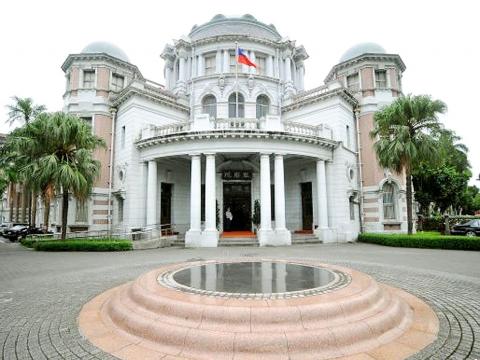
Photo: Chung Li-hua, Taipei Times
The ministry removed an important standard for identifying brewed soy sauce products — the levulinic acid level — after the FDA released its draft, and instead adopted a looser standard used by the Chinese National Standards (CNS) for Grade C soy sauce products — the total nitrogen level, the Control Yuan said.
The FDA also set a looser standard on the maximum level of the chemical 3-chloropropane-1,2-diol that can be in non-brewed soy sauce, the Control Yuan said, noting that the chemical is a contaminant formed during the manufacturing process.
The FDA failed to inspect the levels of chemical 4-methylimidazole, a contaminant formed during the manufacturing of certain caramel coloring agents used in food and drink products, in soy sauce, the Control Yuan said.
CNS No. 423 for grading soy sauce products requires brewed soy sauce to have a levulinic acid level of no more than 0.1 percent, but that was not included in the FDA’s regulations, it said.
Control Yuan members Tien Chiu-chin (田秋堇) and Tsai Chung-yi (蔡崇義) questioned FDA officials about the discrepancy, and FDA Food Safety Division head Pan Chih-kuan (潘志寬) told them the levulinic acid level requirement was added in the second announcement of the draft regulation, but was later removed from the final version.
FDA Director-General Wu Shou-mei (吳秀梅) told the Control Yuan that the requirement had been removed because many nations did not have such a requirement, but Tien and Tsai found that a FDA briefing document that showed the requirement’s removal had been suggested by a netizen, “may MAY,” on the government’s Policy Network Participation Platform.
It was not clear why such the suggestion had been made anonymously or why the FDA was willing to adopt it, so Tien and Tsai’s proposal that the FDA be issued a correction was passed, the Control Yuan said.
Industrial Development Bureau statistics showed that about 137,528 tonnes of soy sauce were manufactured in Taiwan between 2015 and 2017, the Control Yuan said.

Taiwanese can file complaints with the Tourism Administration to report travel agencies if their activities caused termination of a person’s citizenship, Mainland Affairs Council Minister Chiu Chui-cheng (邱垂正) said yesterday, after a podcaster highlighted a case in which a person’s citizenship was canceled for receiving a single-use Chinese passport to enter Russia. The council is aware of incidents in which people who signed up through Chinese travel agencies for tours of Russia were told they could obtain Russian visas and fast-track border clearance, Chiu told reporters on the sidelines of an event in Taipei. However, the travel agencies actually applied
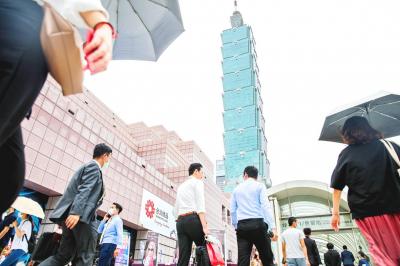
Japanese footwear brand Onitsuka Tiger today issued a public apology and said it has suspended an employee amid allegations that the staff member discriminated against a Vietnamese customer at its Taipei 101 store. Posting on the social media platform Threads yesterday, a user said that an employee at the store said that “those shoes are very expensive” when her friend, who is a migrant worker from Vietnam, asked for assistance. The employee then ignored her until she asked again, to which she replied: "We don't have a size 37." The post had amassed nearly 26,000 likes and 916 comments as of this

New measures aimed at making Taiwan more attractive to foreign professionals came into effect this month, the National Development Council said yesterday. Among the changes, international students at Taiwanese universities would be able to work in Taiwan without a work permit in the two years after they graduate, explainer materials provided by the council said. In addition, foreign nationals who graduated from one of the world’s top 200 universities within the past five years can also apply for a two-year open work permit. Previously, those graduates would have needed to apply for a work permit using point-based criteria or have a Taiwanese company
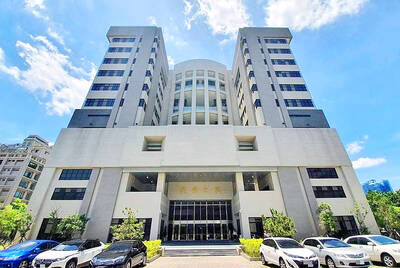
The Shilin District Prosecutors’ Office yesterday indicted two Taiwanese and issued a wanted notice for Pete Liu (劉作虎), founder of Shenzhen-based smartphone manufacturer OnePlus Technology Co (萬普拉斯科技), for allegedly contravening the Act Governing Relations Between the People of the Taiwan Area and the Mainland Area (臺灣地區與大陸地區人民關係條例) by poaching 70 engineers in Taiwan. Liu allegedly traveled to Taiwan at the end of 2014 and met with a Taiwanese man surnamed Lin (林) to discuss establishing a mobile software research and development (R&D) team in Taiwan, prosecutors said. Without approval from the government, Lin, following Liu’s instructions, recruited more than 70 software


 RSS
RSS