


Taipei Mayor Ko Wen-je (柯文哲) yesterday accused US author Ethan Gutmann of defamation in a criminal complaint, after Gutmann called him a “liar” on Tuesday.
Gutmann, an investigative writer focusing on human rights, in 2014 published The Slaughter: Mass Killings, Organ Harvesting, and China’s Secret Solution to Its Dissident Problem, in which he describes the systematic harvesting of organs from Falun Gong followers in China.
The book cited an interview with Ko.
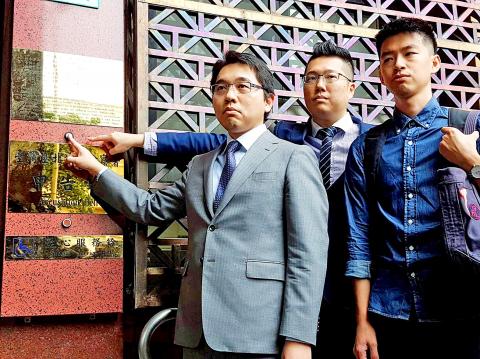
Photo: Hsieh Chun-lin, Taipei Times
At a news conference in Taipei on Tuesday, Gutmann said that Ko acted as a “middleman” for Taiwanese who went to China for organ transplants and that by teaching Chinese doctors the extracorporeal membrane oxygenation (ECMO) technique crucial for transplants, he offered a “pervasive incentive.”
When asked whether Ko is a “liar,” Gutmann replied “yes.”
It was not immediately clear to what the question was referring.
After a legal attestation letter was sent on Wednesday, Ko did not receive an apology from Gutmann within 24 hours, Ko campaign spokesperson Lin Kun-feng (林昆鋒) said yesterday, adding that lawyer Lu Cheng-yi (陸正義) would file a complaint with the Taipei District Prosecutors’ Office and sue the author for harming Ko’s reputation.
“Evidence should have been presented to back up the ‘liar’ accusation against Mayor Ko,” Lu said, adding that the comments were intended to smear Ko’s character and that the representing law firm was collecting evidence for further legal action.
Ko, as a politician, has always tolerated criticism on issues of public concern and does not file lawsuits lightly, but being called a liar poses a serious risk to his reputation and integrity, so he would not remain passive this time, Lu said.
“Mr Gutmann is an experienced independent journalist and a Nobel Peace Prize nominee, so Mayor Ko does not understand why Mr Gutmann, who has put years of hard work into investigative journalism, would call him a liar without evidence at an international news conference,” he added.
In an exclusive interview with the Chinese-language Liberty Times (sister newspaper of the Taipei Times) published yesterday, Gutmann said he was shocked earlier this year when a person — whom he could not name — sent him a photograph of Ko attending an ECMO conference in China in 2008.
Several participants in the conference were allegedly involved in organ harvesting, Gutmann said, adding that it felt like “a slap in the face.”
“ECMO is a life-saving device in democratic countries with a transparent medical system, but it is a huge problem in China,” he said.
The technique saves lives in Taiwan, the US, Japan and elsewhere, but in China, it also kills people, as it enables organ transplants, some of which go to foreign medical tourists, Gutmann said.
“You [Ko] may go into China with the best of intentions, you may want to save lives,” Gutmann said. “But when you realize your own work is being perverted … that is the time you leave China, you get away from it and wash your hands.”
“The best and sincere way to wash your hands is to talk about what you’ve seen and why you’ve left,” he added.
Gutmann said his dream is that his book would be circulated in China as samizdat, a Russian expression for copying and passing along banned literature.
Asked to comment on the issue at the Legislative Yuan yesterday, Minister of Health and Welfare Chen Shih-chung (陳時中) said: “I believe in evidence and I think there has been some speculation on the issue, but they should be supported by solid evidence, because after all, the issue touches on ethical problems.”
Questioning a person’s ethics is a serious matter and “you should not make improper inferences from speculation, but let the evidence speak for itself,” Chen said.
Chen was also asked to elaborate on remarks he made on Wednesday, when he said that hospitals would be required to complete an organ transplant registry for patients who have received organs in other countries.
The main purpose was to keep the information transparent and to make it clear where the organs are from, Chen said.
The policy would not retroactively be applied to past cases and no criminal investigations would be launched, but hospitals must fulfil the requirement before the end of the year, he said.
All hospitals in Taiwan should be capable of fully registering such information and if they fail to do so, it might give rise to human rights concerns, he said.
The ministry plans to withhold National Health Insurance funding for drugs in cases with incomplete registration to force hospitals to comply, he added.

Taiwanese can file complaints with the Tourism Administration to report travel agencies if their activities caused termination of a person’s citizenship, Mainland Affairs Council Minister Chiu Chui-cheng (邱垂正) said yesterday, after a podcaster highlighted a case in which a person’s citizenship was canceled for receiving a single-use Chinese passport to enter Russia. The council is aware of incidents in which people who signed up through Chinese travel agencies for tours of Russia were told they could obtain Russian visas and fast-track border clearance, Chiu told reporters on the sidelines of an event in Taipei. However, the travel agencies actually applied

Japanese footwear brand Onitsuka Tiger today issued a public apology and said it has suspended an employee amid allegations that the staff member discriminated against a Vietnamese customer at its Taipei 101 store. Posting on the social media platform Threads yesterday, a user said that an employee at the store said that “those shoes are very expensive” when her friend, who is a migrant worker from Vietnam, asked for assistance. The employee then ignored her until she asked again, to which she replied: "We don't have a size 37." The post had amassed nearly 26,000 likes and 916 comments as of this

New measures aimed at making Taiwan more attractive to foreign professionals came into effect this month, the National Development Council said yesterday. Among the changes, international students at Taiwanese universities would be able to work in Taiwan without a work permit in the two years after they graduate, explainer materials provided by the council said. In addition, foreign nationals who graduated from one of the world’s top 200 universities within the past five years can also apply for a two-year open work permit. Previously, those graduates would have needed to apply for a work permit using point-based criteria or have a Taiwanese company
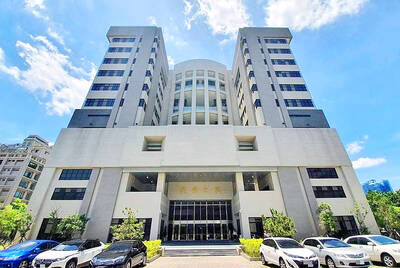
The Shilin District Prosecutors’ Office yesterday indicted two Taiwanese and issued a wanted notice for Pete Liu (劉作虎), founder of Shenzhen-based smartphone manufacturer OnePlus Technology Co (萬普拉斯科技), for allegedly contravening the Act Governing Relations Between the People of the Taiwan Area and the Mainland Area (臺灣地區與大陸地區人民關係條例) by poaching 70 engineers in Taiwan. Liu allegedly traveled to Taiwan at the end of 2014 and met with a Taiwanese man surnamed Lin (林) to discuss establishing a mobile software research and development (R&D) team in Taiwan, prosecutors said. Without approval from the government, Lin, following Liu’s instructions, recruited more than 70 software


 RSS
RSS