


The government would continue to place great importance on relations with the nation’s remaining diplomatic allies, despite growing calls to ditch them after four allies in just two years succumbed to Beijing’s promises of financial aid and severed ties with Taipei, Minister of Foreign Affairs Joseph Wu (吳釗燮) said yesterday.
Wu made the remarks at National Chengchi University, his alma mater. It was his first public appearance since he announced on Thursday evening Burkina Faso’s decision to break ties with Taiwan, becoming the fourth diplomatic ally the nation has lost since President Tsai Ing-wen (蔡英文) took office in May 2016.
“Judging from the situation at this year’s World Health Assembly [WHA], there are a lot of things we could not have done without our diplomatic allies,” Wu said, in response to a student’s question about whether he agreed that Taiwan’s diplomatic allies are unimportant because they are “tiny, poor and money-seeking.”
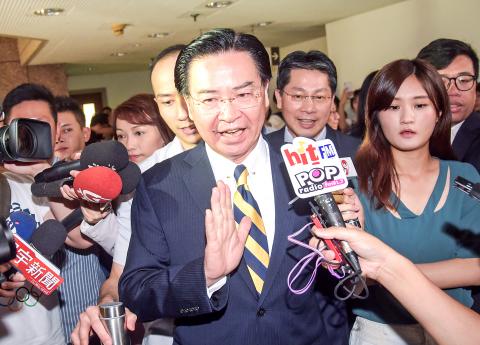
Photo: Huang Yao-cheng, Taipei Times
Some of the nation’s allies submitted proposals calling for Taiwan to participate at the WHA as an observer and engaged in two-on-two debates at the annual conference to advocate for its WHA bid, Wu said.
He also dismissed criticism that the nation’s provision of aid programs to its diplomatic allies are unnecessary and a waste of money.
Taiwan’s official development assistance only accounts for 0.013 percent of the nation’s GDP, compared with Organisation for Economic Co-operation and Development members, which have a target of 0.7 percent, Wu said.
“These kinds of opinions would make the government’s effort to increase that ratio extremely difficult, because it would be stifled once such assistance is labeled as ‘checkbook diplomacy,’” Wu said, adding that Taiwan’s development owes much to assistance offered by other wealthier nations in the past.
Turning to Beijing’s growing efforts to limit Taipei’s international space, Wu said the key to mitigating the problem lies in carving out a niche.
“The world is a big place and we can find a space anywhere,” Wu said, adding that the ministry’s goal is to cultivate relationships with more democratic and like-minded nations to offset pressure from Beijing.
The Chinese representation issue was also discussed after two students, one of them a Chinese citizen, asked Wu how he plans to push his government’s Taiwan-centric diplomatic policy when it was the Republic of China, rather than Taiwan, with which the nation’s remaining diplomatic allies established ties.
“Whether it is Taiwan’s diplomatic or non-diplomatic allies, what they recognize is the government popularly elected by the nation’s 23 million people. I think there is no mistake about that,” Wu said.
Sharing his optimism about closer relations across the Taiwan Strait, Wu said that, as more Chinese begin to understand and appreciate Taiwan, the Chinese government’s military and diplomatic aggression would eventually draw the ire of its people.
“I believe that one day, the people of China will become the masters of their own nation, just like their Taiwanese counterparts have done,” he added.
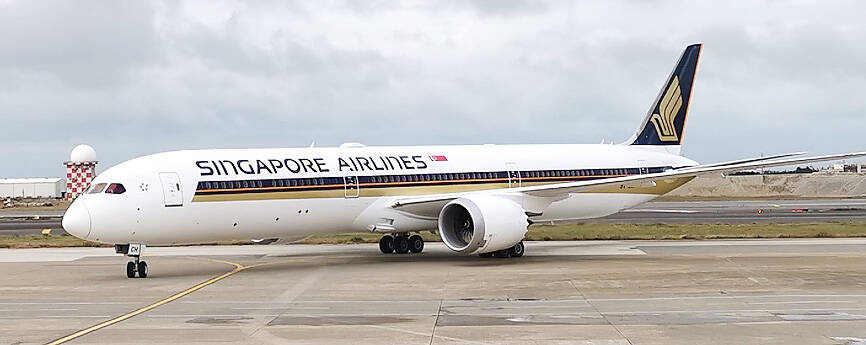
INCREASED CAPACITY: The flights on Mondays, Wednesdays, Fridays and Sundays would leave Singapore in the morning and Taipei in the afternoon Singapore Airlines is adding four supplementary flights to Taipei per week until May to meet increased tourist and business travel demand, the carrier said on Friday. The addition would raise the number of weekly flights it operates to Taipei to 18, Singapore Airlines Taiwan general manager Timothy Ouyang (歐陽漢源) said. The airline has recorded a steady rise in tourist and business travel to and from Taipei, and aims to provide more flexible travel arrangements for passengers, said Ouyang, who assumed the post in July last year. From now until Saturday next week, four additional flights would depart from Singapore on Monday, Wednesday, Friday
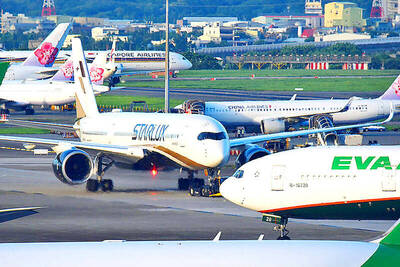
Taiwan’s three major international carriers are increasing booking fees, with EVA Airways having already increased the charge to US$28 per flight segment from US$25, while China Airlines (CAL) and Starlux Airlines are set to follow suit. Booking fees are charged by airlines through a global distribution system (GDS) and passed on to passengers. Carriers that apply the fees include CAL, EVA, Starlux and Tigerair Taiwan. A GDS is a computerized network operated by a company that connects airlines with travel agents and ticketing platforms, allowing reservations to be made and processed in real time. Major players include Amadeus, Sabre and Travelport. EVA Air began
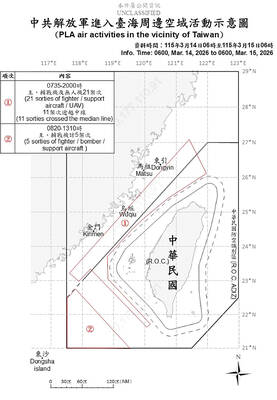
The Ministry of National Defense yesterday reported the return of large-scale Chinese air force activities after their unexplained absence for more than two weeks, which had prompted speculation regarding Beijing’s motives. China usually sends fighter jets, drones and other military aircraft around the nation on a daily basis. Interruptions to such routine are generally caused by bad weather. The Ministry of National Defense said it had detected 26 Chinese military aircraft in the Taiwan Strait over the previous 24 hours. It last reported that many aircraft on Feb. 25, when it spotted 30 aircraft, saying Beijing was carrying out another “joint combat
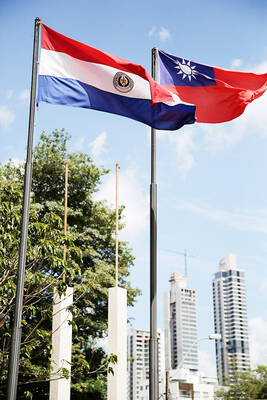
When Paraguayan opposition lawmaker Leidy Galeano returned from an all-expenses-paid tour of six Chinese cities late last year, she was convinced Paraguay risked missing out on major economic gains by sticking with longtime ally Taipei over Beijing — a message that participants on the trip heard repeatedly from Chinese officials. “Everything I saw there, I wanted for my country,” said Galeano, a member of the newly-formed Yo Creo party whose senior figures have spoken favorably about China. This trip and others like it — which people familiar with the visits said were at the invitation of the Chinese consulate in Sao Paulo


 RSS
RSS