


Democratic Progressive Party (DPP) Legislator Lin Shu-fen (林淑芬) on Wednesday confronted Deputy Minister of Economic Affairs Wang Mei-hua (王美花) and DPP colleagues Kuan Bi-ling (管碧玲) and Chiu Yi-ying (邱議瑩) over a draft amendment to the Mining Act (礦業法) that would allow companies to indefinitely continue their operations at quarries.
The altercation broke out during a legislative committee review of Article 31 of the act, which stipulates that the Bureau of Mines should not reject requests to extend mining permits in a quarry if the requests are filed by companies that already have permits to operate in that quarry.
Lin proposed amending the rule to require companies that obtained mining permits before the promulgation of the Environmental Impact Assessment Act (環境影響評估法) to pass an environmental review before their mining rights could be extended.
The Mining Act was ratified in 1930, while the Environmental Impact Assessment Act came into effect in 1993.
Wang said she did not understand Lin’s proposal, as existing rules already require mining companies to conduct safety reviews, as well as take environmental and soil and water conservation measures before applying for an extension of their permits.
Lin then accused Wang of “siding with mining companies.”
“Based on your logic, environmental impact assessments and reviews of mining sites could be skipped, since you believe mining companies would exercise self-governance,” Lin said.
She added that only three of the nation’s 202 quarries have been approved by the Ministry of the Interior, and the Cabinet’s proposal would require only new quarries to be reviewed.
“Yet, existing quarries are exactly where our mountains and forests are being gutted,” Lin said.
The purpose of reviewing mining areas would be to ensure that mining companies have obtained landowners’ consent and avoided environmentally vulnerable zones, Lin said, asking: “What is there to be afraid of?”
“I urge all officials here today to look past [Lin’s] fierce remarks,” Kuan said.
Lin said her criticism was directed at Wang, who “sounded exactly the same as Asia Cement Corp.”
She and Wang then engaged in a loud altercation, prompting DPP Legislator Su Chih-fen (蘇治芬) to call a 10-minute break.
“The amendment is meant to bring about reform, not protection,” Lin said, triggering a response from Chiu, who said everyone at the meeting was pushing for reforms.
Chiu accused Lin of “siding with environmentalists to insult DPP lawmakers.”
Lin later on Facebook asked Chiu to explain what she meant by the comment and whether she was referring to her collaborations with Citizen of the Earth, Taiwan, which on Monday accused 44 lawmakers of accepting donations from concrete mixing companies.
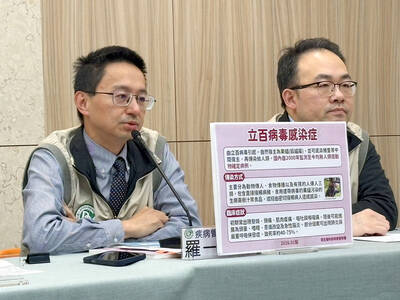
Nipah virus infection is to be officially listed as a category 5 notifiable infectious disease in Taiwan in March, while clinical treatment guidelines are being formulated, the Centers for Disease Control (CDC) said yesterday. With Nipah infections being reported in other countries and considering its relatively high fatality rate, the centers on Jan. 16 announced that it would be listed as a notifiable infectious disease to bolster the nation’s systematic early warning system and increase public awareness, the CDC said. Bangladesh reported four fatal cases last year in separate districts, with three linked to raw date palm sap consumption, CDC Epidemic Intelligence

Two Taiwanese prosecutors were questioned by Chinese security personnel at their hotel during a trip to China’s Henan Province this month, the Mainland Affairs Council (MAC) said yesterday. The officers had personal information on the prosecutors, including “when they were assigned to their posts, their work locations and job titles,” MAC Deputy Minister and spokesman Liang Wen-chieh (梁文傑) said. On top of asking about their agencies and positions, the officers also questioned the prosecutors about the Cross-Strait Joint Crime-Fighting and Judicial Mutual Assistance Agreement, a pact that serves as the framework for Taiwan-China cooperation on combating crime and providing judicial assistance, Liang
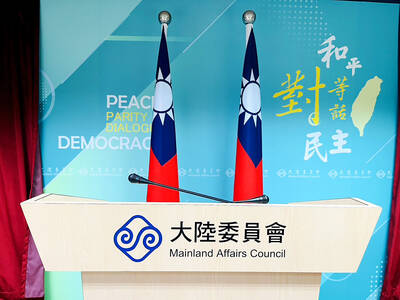
Reports of Taiwanese going missing, being detained or interrogated, or having their personal liberties restricted in China increased about fourfold annually last year, the Mainland Affairs Council (MAC) said yesterday. Last year, 221 Taiwanese who traveled to China were reported missing, were detained and interrogated, or otherwise had their personal freedom restricted, up from 55 the previous year, the council said. Reopening group tours to China would be risky, as it would leave travelers with no way to seek help through official channels after Beijing shut down dialogue between the associations tasked with handling cross-strait tourism, the MAC said. Taipei’s Taiwan Strait Tourism

SHIFT: Taiwan is evolving from a transit stop into a tourist destination, with more international travelers willing to spend on tours, dining and cultural activities Taiwan rose three places in the World Tourism Barometer to 36th globally in 2024, with international tourism revenue of US$10.028 billion, the Tourism Administration said on Monday. The UN Tourism Organization publication said that its focus has switched from whether a country has returned to pre-COVID-19 levels of tourism to the amount spent by a tourist during an overseas trip. The nation last year welcomed 8.57 million international tourists, about 9 percent more than in 2024, with most tourists coming from Japan, South Korea, and Hong Kong and Macau, all of which accounted for at least 1 million tourists each. During the first


 RSS
RSS