


Democratic Progressive Party (DPP) legislative caucus whip Ker Chien-ming (柯建銘) yesterday said that the Cabinet’s proposed amendment to the Labor Standards Act (勞動基本法) would undergo “subtle adjustments” next week.
Ker made the announcement following a meeting of the DPP caucus during which Minister of Labor Lin Mei-chu (林美珠) briefed DPP lawmakers on the adjustments.
The adjustments were proposed after Premier William Lai (賴清德) met with DPP lawmakers twice this week to hear their opinions and considered the public’s attitude toward the amendment, he said, adding that the adjustments will focus on several “regulatory measures” and would “tighten the rules” in the draft amendment.
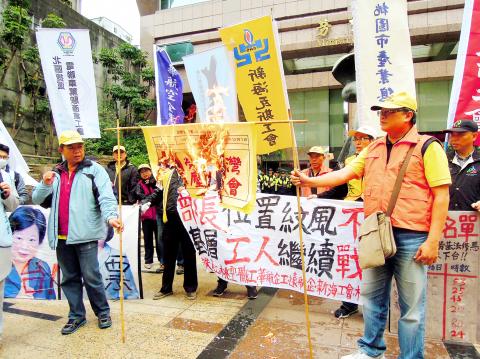
Photo: CNA
Draft regulations that would allow employers to legally make employees work up to 12 days in a row before granting them two days off and that would reduce the minimum rest time between shifts from 11 to 8 hours will not be implemented at employers’ discretion, but after only local authorities meet with sector associations and determine which sectors have “special needs” that warrant such work schedules, Ker said.
Local authorities are to publish a list specifying sectors that qualify, which will then be double-checked by the labor ministry, Ker said.
That means requests to implement more flexible labor rules will not be reviewed on a case-by-case basis, but by sector, he said, adding that granting workers one day off every seven days and at least 11 hours of rest between shifts would remain the norm.
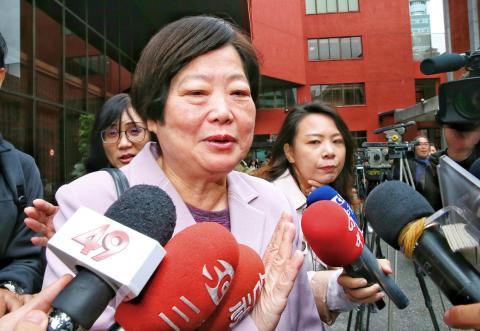
Photo: Chang Chia-ming, Taipei Times
Local governments are to announce which sectors are eligible for flexible schedules and individual employers in those sectors will then be allowed to start negotiations with unions or employeeswhose consent they first need to obtain, Ker said.
Employers are to specify under what circumstances and for how long they plan to implement flexible schedules, which are to be regularly reviewed by authorities and will be subject to change, he said.
Special circumstances under which the schedules could apply would include peak seasons, performance tours, large events and companies that are under pressure to fulfill orders within a limited time frame, Ker quoted Lin as saying.
One of the regulatory measures stipulates that, should any employers arbitrarily implement flexible schedules, employees could file complaints with local authorities, Ker said.
Asked if the caucus would clear the draft amendment through committee reviews next week, Ker said: “That is our hope.”
Separately yesterday, Lai said that the underlying principles of the draft amendment would remain unchanged, but called for the legal language to be drafted more precisely so that the public may understand the amendment better.
The draft amendment has gone through sufficient discussion and gained universal support among DPP members, he said, adding that it would grant employers and employees alike more flexibility, provided that labor rights are protected.
The premier on Thursday night on a political talk show rejected criticism that the amendment would “set labor rights back 100 years,” saying that the majority of workers will still have 12 hours of rest each day.
Total daily working hours will be capped at 12, he said, adding that it is “impossible” for a person to work for 16 hours and only rest for eight hours a day.
“In the worst-case scenario, workers will have at least 12 hours of rest,” Lai said, while conceding that some professions, such as nursing, might require special rules.
The biggest problem with the current “one fixed day off, one flexible rest day” policy is that it lacks flexibility, forcing 19 percent of workers to forgo opportunities to earn overtime pay and exposing them to increased competition from part-time workers and automated production lines, Lai said.

The military has spotted two Chinese warships operating in waters near Penghu County in the Taiwan Strait and sent its own naval and air forces to monitor the vessels, the Ministry of National Defense (MND) said. Beijing sends warships and warplanes into the waters and skies around Taiwan on an almost daily basis, drawing condemnation from Taipei. While the ministry offers daily updates on the locations of Chinese military aircraft, it only rarely gives details of where Chinese warships are operating, generally only when it detects aircraft carriers, as happened last week. A Chinese destroyer and a frigate entered waters to the southwest
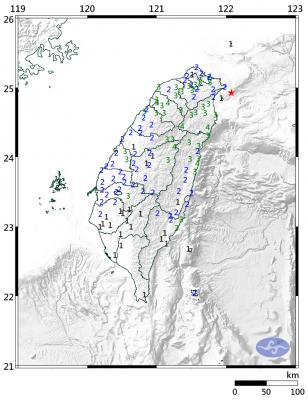
A magnitude 6.1 earthquake struck off the coast of Yilan County at 8:39pm tonight, the Central Weather Administration (CWA) said, with no immediate reports of damage or injuries. The epicenter was 38.7km east-northeast of Yilan County Hall at a focal depth of 98.3km, the CWA’s Seismological Center said. The quake’s maximum intensity, which gauges the actual physical effect of a seismic event, was a level 4 on Taiwan’s 7-tier intensity scale, the center said. That intensity level was recorded in Yilan County’s Nanao Township (南澳), Hsinchu County’s Guansi Township (關西), Nantou County’s Hehuanshan (合歡山) and Hualien County’s Yanliao (鹽寮). An intensity of 3 was

Japanese Prime Minister Sanae Takaichi’s comment last year on Tokyo’s potential reaction to a Taiwan-China conflict has forced Beijing to rewrite its invasion plans, a retired Japanese general said. Takaichi told the Diet on Nov. 7 last year that a Chinese naval blockade or military attack on Taiwan could constitute a “survival-threatening situation” for Japan, potentially allowing Tokyo to exercise its right to collective self-defense. Former Japan Ground Self-Defense Force general Kiyofumi Ogawa said in a recent speech that the remark has been interpreted as meaning Japan could intervene in the early stages of a Taiwan Strait conflict, undermining China’s previous assumptions
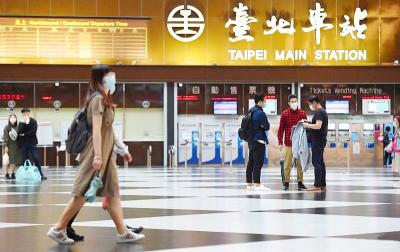
Taiwan Railways Corp (TRC) today announced that Shin Kong Mitsukoshi has been selected as the preferred bidder to operate the Taipei Railway Station shopping mall, replacing the current operator, Breeze Development Co Ltd. Among eight qualified firms that delivered presentations and were evaluated by a review committee, Shin Kong Mitsukoshi was ranked first, while Breeze was named the runner-up, the rail company said in a statement. Contract negotiations are to proceed in accordance with regulations, it said, adding that if negotiations with the top bidder fail, it could invite the second-ranked applicant to enter talks. Breeze in a statement today expressed doubts over


 RSS
RSS