


Demands by the National Women’s League that the government halt all investigations into its assets and affiliated organizations are its “unilateral opinions and wishes” that have already been rejected or are unlikely to be agreed to, an Ill-gotten Party Assets Settlement Committee member said yesterday.
The push-back by the league has also “crossed the committee’s red line,” the source said.
On Monday last week, the league filed a list of demands following a joint statement that outlined an agreement reached during negotiations between the committee, the Ministry of the Interior and the league. That statement — dubbed the ministry’s “three principles” — was supposed to provide a roadmap to resolve the league’s alleged mishandling of taxpayer-funded money given to the league between 1955 and 1989.
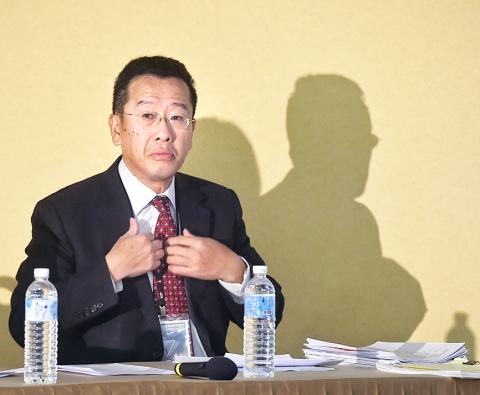
Photo: Fang Pin-chao, Taipei Times
The statement said the league was to “donate” NT$31.2 billion (US$1.03 billion) of its assets to the government; “disband” by merging with a subsidiary, the Social Welfare Foundation; and allow public oversight of the Social Welfare Foundation and its two other subsidiaries, the Foundation for the Hearing Impaired and Hua Hsing Children’s Home.
Oversight would take the form of the government appointing one-third of the group’s board of directors and one-third would be public representatives, the statement said.
However, the league asked the government to refrain from taking further action against the charitable fund for veterans to the tune of NT$349.81 billion in today’s currency that it allegedly expropriated.
It asked for the right to nominate one-third of the board directors that are to represent the public, in addition to the one-third that it is already entitled to appoint.
It also asked the assets committee to refrain from “taking any further action whatsoever against organizations founded by the National Women’s League or any of its financial holdings.”
On Sunday, committee chairman Wellington Koo (顧立雄) said that public opinion is a factor in the continuing negotiations between the league and the government.
“One cannot accuse all negotiations with the blanket charges of opacity, compromise or failure; meaningful talks that solve the problem at hand should be seen as positive developments,” he said.
“From this committee’s perspective, if the league profess to believe certain organizations are its affiliates, then the committee is duty-bound to investigate them,” he said.
The committee member, who was involved in the three-party negotiations, said that the terms outlined in the league’s follow-up statement “were unilateral demands and opinions of the National Women’s League, and its demand for the committee to drop investigations on its affiliates had stepped on the committee’s ‘red line.’”
The league’s demand to nominate the public’s representatives on its subsidiaries’ boards had been raised during the three-party talks and been rejected by the committee.
The committee had agreed to the ministry’s “three principles” and nothing more, the official said.
None of league’s other demands were mentioned during the “three-party talks,” the official added.
“Carrying out the terms of the agreement that were arrived at during the negotiations will probably result in disputes over the fine print,” the official said.
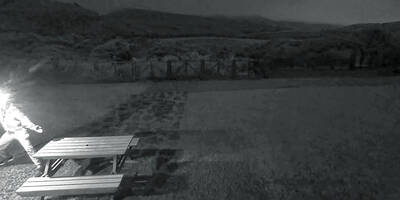
Yangmingshan National Park authorities yesterday urged visitors to respect public spaces and obey the law after a couple was caught on a camera livestream having sex at the park’s Qingtiangang (擎天崗) earlier in the day. The Shilin Police Precinct in Taipei said it has identified a suspect and his vehicle registration number, and would summon him for questioning. The case would be handled in accordance with public indecency charges, it added. The couple entered the park at about 11pm on Thursday and began fooling around by 1am yesterday, the police said, adding that the two were unaware of the park’s all-day live
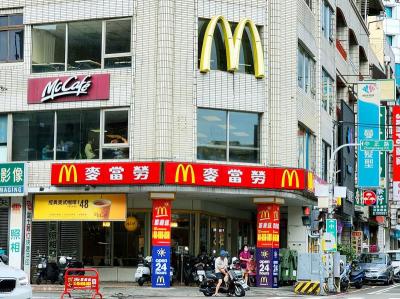
Fast food chain McDonald's is to raise prices by up to NT$5 on some products at its restaurants across Taiwan, starting on Wednesday next week, the company announced today. The prices of all extra value meals and sharing boxes are to increase by NT$5, while breakfast combos and creamy corn soup would go up by NT$3, the company said in a statement. The price of the main items of those meals, if ordered individually, would remain the same. Meanwhile, the price of a medium-sized lemon iced tea and hot cappuccino would rise by NT$3, extra dipping sauces for chicken nuggets would go up
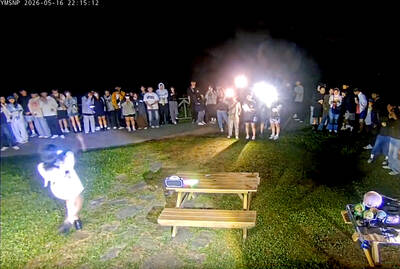
Yangmingshan National Park’s Qingtiangang (擎天崗) nature area has gone viral after a park livestream camera observed a couple in the throes of intimate congress, which was broadcast live on YouTube, drawing large late-night crowds and sparking a backlash over noise, bright lights and disruption to wildlife habitat. The area’s livestream footage appeared to show a couple engaging in sexual activity on a picnic table in the park on Friday last week, with the uncensored footage streamed publicly online. The footage quickly spread across social media, prompting a tide of visitors to travel to the site to “check in” and recreate the

Minister of Digital Affairs Lin Yi-ching (林宜敬) yesterday cited regulatory issues and national security concerns as an expert said that Taiwan is among the few Asian regions without Starlink. Lin made the remarks on Facebook after funP Innovation Group chief executive officer Nathan Chiu (邱繼弘) on Friday said Taiwan and four other countries in Asia — China, North Korea, Afghanistan and Syria — have no access to Starlink. Starlink has become available in 166 countries worldwide, including Ukraine, Malaysia, the Philippines and Vietnam, in the six years since it became commercial, he said. While China and North Korea block Starlink, Syria is not


 RSS
RSS