


Lawmakers are prohibited from carrying “dangerous items,” including air horns, water balloons and flour, into meetings, the Legislative Yuan said yesterday.
Legislative Yuan Secretary-General Lin Chih-chia (林志嘉) made the announcement before Legislative Speaker Su Jia-chyuan (蘇嘉全) issued the directive to the four caucuses.
Chinese Nationalist Party (KMT) lawmakers last week thwarted Premier Lin Chuan’s (林全) presentation on the Forward-looking Infrastructure Development Program and related budget reviews with the aforementioned items.
Police stationed in the legislative compound will bar legislators carrying any of the prohibited items from entering meeting venues, Lin Chih-chia said, adding that the rule was introduced after seeking doctors’ advice.
A “demonstrative” conference room is to be established by the end of September with delineated areas for reporters and assistants, Lin Chih-chia said in response to last week’s turmoil, which saw reporters cornering brawling lawmakers and legislative assistants trespassing onto podiums and rostrums.
More conference rooms are to be transformed in the same fashion if the policy proves effective for maintaining order, Lin Chih-chia added.
The rule drew criticism from KMT caucus secretary-general Lin Wei-chou (林為洲), who said that Su should specify the term “dangerous items.”
“Is blowing whistles dangerous?” he said, referring to one of the KMT caucus’ obstruction tactics.
“Democratic Progressive Party Legislator Wu Ping-jui (吳秉叡) last week tossed a chair at KMT lawmakers, so if the rule stands, chairs should also be banned,” he added.
Order in the legislature relies upon coordination between the caucuses, Lin Wei-chou said, adding that the KMT would adjust the strength of its boycott of budget proposals for the program according to its needs.
In related news, the prolonged chaos has drawn the attention of the BBC, which on Tuesday released a video in which it set electronic dance music to footage of fighting legislators.
The video, titled “Taiwan’s parliament resumes brawl,” elicited a substantial response on YouTube.
“Embarrassing. What a bunch of clowns,” a user said.
“I am Taiwanese and I feel so ashamed,” another said.
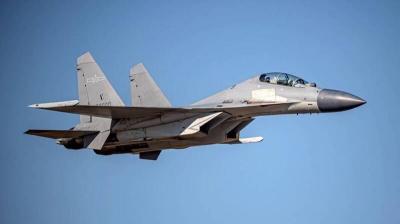
Eight Chinese naval vessels and 24 military aircraft were detected crossing the median line of the Taiwan Strait between 6am yesterday and 6am today, the Ministry of National Defense said this morning. The aircraft entered Taiwan’s northern, central, southwestern and eastern air defense identification zones, the ministry said. The armed forces responded with mission aircraft, naval vessels and shore-based missile systems to closely monitor the situation, it added. Eight naval vessels, one official ship and 36 aircraft sorties were spotted in total, the ministry said.
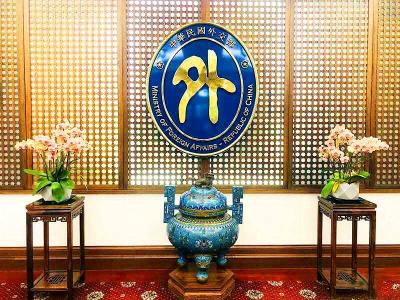
The Ministry of Foreign Affairs (MOFA) today said that if South Korea does not reply appropriately to its request to correct Taiwan’s name on its e-Arrival card system before March 31, it would take corresponding measures to alter how South Korea is labeled on the online Taiwan Arrival Card system. South Korea’s e-Arrival card system lists Taiwan as “China (Taiwan)” in the “point of departure” and “next destination” fields. The ministry said that it changed the nationality for South Koreans on Taiwan’s Alien Resident Certificates from “Korea” to “South Korea” on March 1, in a gesture of goodwill and based on the

Taiwanese officials were shown the first of 66 F-16V fighter jets purchased by Taiwan from the United States, the Ministry of National Defense said yesterday, adding the aircraft has completed an initial flight test and is expected to be delivered later this year. A delegation led by Deputy Minister of National Defense Hsu Szu-chien (徐斯儉) visited Lockheed Martin’s F-16 C/D Block 70 (also known as F-16V) assembly line in South Carolina on March 16 to view the aircraft. The jet will undergo a final acceptance flight in the US before being delivered to Taiwan, the
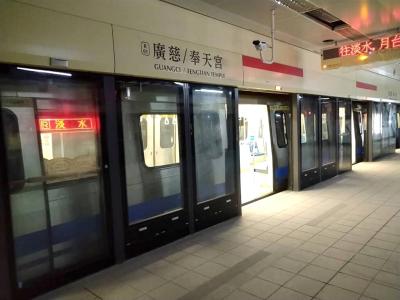
The New Taipei Metro's Sanyin Line and the eastern extension of the Taipei Metro's Tamsui-Xinyi Line (Red Line) are scheduled to begin operations in June, the National Development Council said today. The Red Line, which terminates at Xiangshan Station, would be connected by the 1.4km extension to a new eastern terminal, Guangci/Fengtian Temple Station, while the Sanyin Line would link New Taipei City's Tucheng and Yingge stations via Sanxia District (三峽). The council gave the updates at a council meeting reviewing progress on public construction projects for this year. Taiwan's annual public infrastructure budget would remain at NT$800 billion (US$25.08 billion), with NT$97.3


 RSS
RSS