

More than 70 percent of Taiwanese reject China’s insistence that “the two sides of the Taiwan Strait belong to one China” as a political prerequisite for the development of cross-strait relations, a poll released by the Mainland Affairs Council (MAC) showed.
The poll showed that 73.4 percent of respondents do not recognize Beijing’s adherence to the “one China” principle as a political precondition and consider it an effort to treat Taiwan as a local government.
Meanwhile, 83.9 percent thought that China’s ongoing efforts to limit Taiwan’s international space have undermined the rights and interests of Taiwanese, and 80.5 percent said that China should recognize the existence of the “Republic of China,” according to the poll.
It also showed that 89.4 percent of respondents support the government’s proposal that the two sides should respect each other and settle disagreements through dialogue, while 80.9 percent are in favor of maintaining a peaceful and stable “status quo.”
When asked about the speed of development of cross-strait exchanges, 31.3 percent said it was just right, while 6.7 percent believe it is too fast and 45 percent too slow, the poll showed.
At the same time, 85.9 percent said they support the government’s view that China should respect the nation’s democratic system and public opinion in fostering cross-strait relations, while 86.2 percent said that Taiwan and China should promote positive interactions and exchanges that seek to optimize benefits for both sides.
Regarding China’s detention of Taiwanese human rights advocate Lee Ming-che (李明哲), 68.1 percent said that China’s failure to provide evidence, inform the government of developments and allow family visitations have undermined the human rights of Taiwanese.
Lee went missing after entering China via Macao on March 19 and was later confirmed to have been detained by the Chinese authorities on charges of “subversion of state power.”
The survey, conducted from Friday last week to Tuesday by National Chengchi University’s Election Study Center and commissioned by the MAC, collected 1,076 valid questionnaires by telephone and has a margin of error of 2.99 percentage points.

A Hualien pomelo farmer refused to sell to China after the country announced it would permit more Taiwanese pomelo imports, prompting widespread support from Taiwanese consumers, who rallied to buy his fruit. China’s Taiwan Affairs Office last month said that China’s General Administration of Customs registered an additional 79 Taiwanese pomelo orchards and packing facilities in Hualien County, allowing more Taiwanese producers to export pomelos to China. “I am a Hualien fruit farmer and I refuse to sell to China,” Liu Tzu-hao (劉子豪) from Ruisui Township (瑞穗) said in an online post. Liu is a well-known farmer in the community and has served
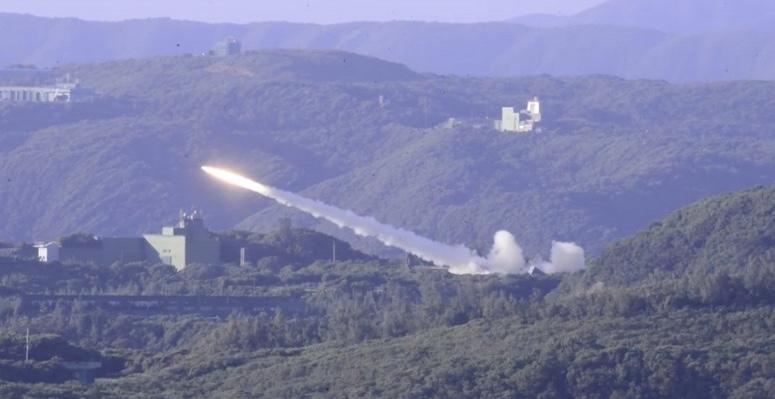
A Chinese military drone was spotted conducting reconnaissance off Taitung County as President William Lai (賴清德) visited Pingtung County this morning to inspect a drill of the armed forces’ precision-strike capabilities, prompting the military to closely monitor its actions. Today was the final day of a three-day military exercise at Jioupeng Base (九鵬基地) to test the joint combat capabilities of the armed forces and coast guard. The exercise began on Wednesday simulating air defense interception and yesterday tested long-range strike capabilities and new air defense weapons. This morning, the military conducted a final exercise involving air defense, anti-ship and drone operations. Military sources said

OCT. 31: The antiviral drugs Tamiflu and Eraflu have been distributed to about 4,000 medical facilities nationwide for people in seven groups who develop flu-like symptoms As the domestic influenza epidemic enters its peak season and continues to escalate, the Centers for Disease Control (CDC) yesterday announced that publicly funded influenza antiviral drugs for seven eligible groups have been extended to Oct. 31, allowing those who develop flu-like symptoms to receive the medication without undergoing a rapid influenza test. The CDC has extended the expanded use of flu antiviral drugs to seven groups: healthcare and influenza-prevention personnel; residents and staff at nursing homes, long-term care facilities and similar institutions; kindergarten and daycare workers and home-based caregivers; students from kindergarten through high school, vocational high school and the

Taiwanese Tsai Chin-shu (蔡金樹), who had been imprisoned in China for engaging in activity that “endangers national security,” said on Facebook on Friday that he has returned to Taiwan. Tsai, chairman of the Southern Taiwan Union of Cross-strait Relations Associations, had traveled frequently between Taiwan and China for years, and at one time ran a trading company in China’s Pingtan. In July 2018, he traveled to Quanzhou, Fujian Province, to attend a cross-strait food trade fair and stayed at a hotel in Xiamen. He checked out the following day and then disappeared. His family had made repeated appeals to the authorities


 RSS
RSS