


Saying her administration has sidestepped the issue, pro-independence groups yesterday urged President Tsai Ing-wen (蔡英文) to proclaim the nation’s independence and sovereignty.
Tsai should use the first anniversary of her inauguration to announce that Taiwan is an independent country to express the nation’s sovereignty, former representative to Japan Lo Fu-chen (羅福全) said.
“Tsai’s refusal to accept the ‘1992 consensus’ last year has solidified the fact that Taiwan is not part of China, but a formal affirmation of Taiwan’s independence in Tsai’s capacity as president is needed,” Lo said.

Photo: Chu Pei-hsiung, Taipei Times
The government should also enact an “anti-annexation” act to counter Beijing’s increasingly aggressive infiltration of Taiwan, he added.
China cannot resort to military means to annex Taiwan in the current international environment, but it has penetrated Taiwan with its espionage, media and business influence, he said.
Although Taiwan is tied to the defense networks of the US, Japan and South Korea, it has to come up with domestic legislation to stem Beijing’s extra-military attempts to annex Taiwan, Lo said.
Taiwan will never become disentangled from China if it continues to identify itself as the Republic of China, “Chinese Taipei” or “China Taipei,” World United Formosans for Independence chairman Chen Nan-tien (陳南天) said, adding that the nation must formally rename itself “Taiwan” and seek international participation under that title.
“It is time to campaign for name rectification and international participation — in particular, formal UN membership — under the name ‘Taiwan,’” Chen said.
“The nation for the first time now has more than 75 percent of its people saying that Taiwan should be independent from China,” he said. “Tsai should seize such a good opportunity, and if she fails, her administration would be faced with bad [election] outcomes.”
Amid growing public dissatisfaction, Tsai should consider reshuffling the Cabinet as the ministers are apparently incapable of executing her policies, he said.
Although Tsai has pledged to maintain the “status quo” in cross-strait relations, the Ministry of Health and Welfare did not issue a clear response when China, citing UN General Assembly Resolution 2758, claimed that Taiwan was part of China and should be excluded from an upcoming World Health Assembly meeting, demonstrating that the Cabinet is incapable of upholding Tsai’s political ideals, Chen said.
Tsai’s administration, despite having reiterated its willingness to communicate with the public, has provoked conflicts across social boundaries, as it has obscured, and in some cases flip-flopped on, policy direction and execution, National Dong Hua University professor Shih Cheng-feng (施正鋒) said.
The government has been inconsistent on its stance on same-sex marriage and unable to simplify its labor policy and has also created conflicts over pension reform, Shih said.
In addition, Tsai has closely controlled Democratic Progressive Party lawmakers to smooth the way for policies to become law, completely ignoring the principle of the separation of executive and legislative powers, he said.
Worst of all for the nation’s democracy, Tsai has also sought to influence the media by developing a rapport with media tycoons, Shih said.
The so-called “1992 consensus” is a term that former Mainland Affairs Council chairman Su Chi (蘇起) has said he made up in 2000.
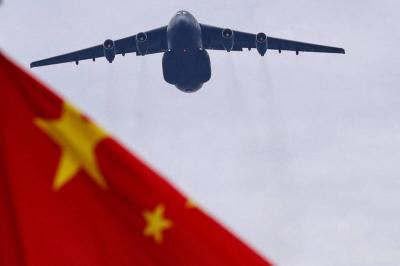
Beijing could eventually see a full amphibious invasion of Taiwan as the only "prudent" way to bring about unification, the US Department of Defense said in a newly released annual report to Congress. The Pentagon's "Annual Report to Congress: Military and Security Developments Involving the People's Republic of China 2025," was in many ways similar to last year’s report but reorganized the analysis of the options China has to take over Taiwan. Generally, according to the report, Chinese leaders view the People's Liberation Army's (PLA) capabilities for a Taiwan campaign as improving, but they remain uncertain about its readiness to successfully seize
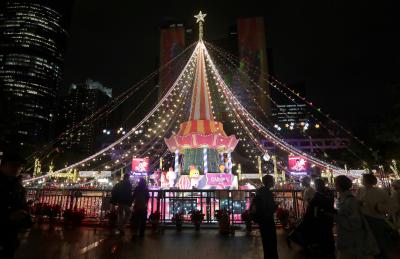
Taiwan is getting a day off on Christmas for the first time in 25 years. The change comes after opposition parties passed a law earlier this year to add or restore five public holidays, including Constitution Day, which falls on today, Dec. 25. The day marks the 1947 adoption of the constitution of the Republic of China, as the government in Taipei is formally known. Back then the Chinese Nationalist Party (KMT) governed China from Nanjing. When the KMT, now an opposition party in Taiwan, passed the legislation on holidays, it said that they would help “commemorate the history of national development.” That

Taiwan has overtaken South Korea this year in per capita income for the first time in 23 years, IMF data showed. Per capita income is a nation’s GDP divided by the total population, used to compare average wealth levels across countries. Taiwan also beat Japan this year on per capita income, after surpassing it for the first time last year, US magazine Newsweek reported yesterday. Across Asia, Taiwan ranked fourth for per capita income at US$37,827 this year due to sustained economic growth, the report said. In the top three spots were Singapore, Macau and Hong Kong, it said. South

Snow fell on Yushan (Jade Mountain, 玉山) yesterday morning as a continental cold air mass sent temperatures below freezing on Taiwan’s tallest peak, the Central Weather Administration (CWA) said. Snowflakes were seen on Yushan’s north peak from 6:28am to 6:38am, but they did not fully cover the ground and no accumulation was recorded, the CWA said. As of 7:42am, the lowest temperature recorded across Taiwan was minus-5.5°C at Yushan’s Fengkou observatory and minus-4.7°C at the Yushan observatory, CWA data showed. On Hehuanshan (合歡山) in Nantou County, a low of 1.3°C was recorded at 6:39pm, when ice pellets fell at Songsyue Lodge (松雪樓), a


 RSS
RSS