


Minister of Health and Welfare Chen Shih-chung (陳時中) on Monday said that it was not up to him whether to lift a ban on imports of US pork containing ractopamine, but added that he was responsible for ensuring that food is safe for consumers.
Taipei again came under pressure from Washington on the issue of pork in a report on foreign trade barriers issued by the Office of the US Trade Representative on Friday last week insisting that Taiwan respect maximum residue limits established for ractopamine — a leanness-enhancing feed additive prohibited in Taiwan — in pork.
Chen had earlier told the media that he would not oppose lifting the ban on US pork as long as safety could be ensured.

Photo: Chien Jung-fong, Taipei Times
“If it is not safe, the ban cannot be lifted because of political considerations,” he said.
In an interview with the Central News Agency on Monday, he reiterated his “safety first” policy, saying that he would not allow any factors to affect his judgement about food safety, which he claimed is “the most important job of the Ministry of Health and Welfare.”
Asked if the ministry could ensure the safety of US pork, but the general public did not accept it, would he agree to the lifting of the ban, Chen said that he could understand the public’s concern about safety, adding that “safety is my only consideration” on the issue.
The government on Saturday said that food safety and the rights of farmers would be major considerations when taking part in international trade deals.
The pork issue is seen as one of the most contentious between Taipei and Washington on the trade front, and could affect Taiwan’s ability to participate in international trade deals involving the US.
The report urged Taiwan to fully open its market to US beef and pork imports based on science, World Organisation for Animal Health guidelines and the US’ negligible risk status.
Taiwan has been reluctant to allow imports of US beef and pork that contain traces of ractopamine because of potential health hazards. It relented on beef in 2012 after maximum residue limits for ractopamine in beef and pork were passed by a narrow margin by a UN food standards body.
However, the nation continues to ban ractopamine in pork because of ongoing safety concerns about the drug and strong opposition from local hog farmers.
Presidential Office spokesman Alex Huang (黃重諺) on Saturday last week said that the government would conduct risk assessments based on scientific evidence and international regulations.
In addition to mulling the idea of allowing imports of US pork, the government has also broached the idea of lifting import bans on Japanese food products from prefectures adjacent to the 2011 Fukushima Dai-ichi nuclear power plant disaster.
Asked if the ministry had begun evaluating or setting safety standards on imports of such Japanese food products or US pork, Chen said: “No. Everything remains as it is at this moment.”

Taiwanese can file complaints with the Tourism Administration to report travel agencies if their activities caused termination of a person’s citizenship, Mainland Affairs Council Minister Chiu Chui-cheng (邱垂正) said yesterday, after a podcaster highlighted a case in which a person’s citizenship was canceled for receiving a single-use Chinese passport to enter Russia. The council is aware of incidents in which people who signed up through Chinese travel agencies for tours of Russia were told they could obtain Russian visas and fast-track border clearance, Chiu told reporters on the sidelines of an event in Taipei. However, the travel agencies actually applied
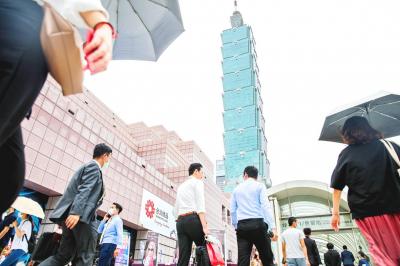
Japanese footwear brand Onitsuka Tiger today issued a public apology and said it has suspended an employee amid allegations that the staff member discriminated against a Vietnamese customer at its Taipei 101 store. Posting on the social media platform Threads yesterday, a user said that an employee at the store said that “those shoes are very expensive” when her friend, who is a migrant worker from Vietnam, asked for assistance. The employee then ignored her until she asked again, to which she replied: "We don't have a size 37." The post had amassed nearly 26,000 likes and 916 comments as of this

New measures aimed at making Taiwan more attractive to foreign professionals came into effect this month, the National Development Council said yesterday. Among the changes, international students at Taiwanese universities would be able to work in Taiwan without a work permit in the two years after they graduate, explainer materials provided by the council said. In addition, foreign nationals who graduated from one of the world’s top 200 universities within the past five years can also apply for a two-year open work permit. Previously, those graduates would have needed to apply for a work permit using point-based criteria or have a Taiwanese company
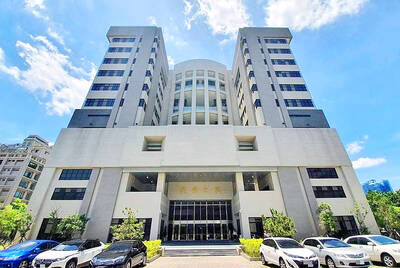
The Shilin District Prosecutors’ Office yesterday indicted two Taiwanese and issued a wanted notice for Pete Liu (劉作虎), founder of Shenzhen-based smartphone manufacturer OnePlus Technology Co (萬普拉斯科技), for allegedly contravening the Act Governing Relations Between the People of the Taiwan Area and the Mainland Area (臺灣地區與大陸地區人民關係條例) by poaching 70 engineers in Taiwan. Liu allegedly traveled to Taiwan at the end of 2014 and met with a Taiwanese man surnamed Lin (林) to discuss establishing a mobile software research and development (R&D) team in Taiwan, prosecutors said. Without approval from the government, Lin, following Liu’s instructions, recruited more than 70 software


 RSS
RSS