


The Ministry of Education yesterday said that it plans to budget more than NT$200 million (US$6.4 million) this year to subsidize “customized” courses offered by vocational institutions to students from India and Southeast Asian countries, in an effort to promote the government’s “new southbound policy.”
The ministry cited schools that have been promoting exchanges with institutions in the regions over the past few years, calling on vocational colleges that are designing courses aimed at bringing their recruitment programs in line with the policy to model their programs after such examples.
Among the institutions cited by the ministry was Wufeng University, which has been offering mechanical engineering courses to Indian students.
Wufeng University president Su Ming-hung (蘇銘宏) said it teamed up with Far Eastern Machinery Co in 2013 to offer a program that accommodates the company’s needs.
As part of seven-year contracts with Far Eastern, Indian students spend their first year at the university learning Mandarin and basic concepts, followed by an internship at the company during their second through fourth years, Su said.
Students hired by the company after graduation receive monthly salaries of NT$37,619 or more — roughly equivalent to four times the average monthly wage in India — in the final three years of their contracts, in accordance with the minimum wage requirement for foreign workers, he said.
Of an initial group of 33 students who enrolled in the program, about one-third received job offers from Far Eastern, while the rest looked elsewhere for employment, Su said.
The ministry and the university have jointly invested NT$1.2 million to establish an incubator near a Far Eastern branch office in the industrial zone of Pune, India, to recruit high-school graduates, college students and employees of Taiwanese businesses who would like to receive more specialized training at the university, he said.
The university has requested a list of Taiwanese firms operating in the area from the Ministry of Foreign Affairs, to which it can supply the talent it cultivates, Su said, adding that the school hopes to diversify its curricula for Indian students by working with more companies.
Another example provided by the ministry was National Taipei University of Nursing and Health Sciences, which since 2015 has provided on-the-job training to 156 midwives, nurses and long-term caregivers from Indonesia, Singapore and Cambodia.
Training programs last from two weeks to two months, depending on their objectives, providing students with medical skills lacking in their home nations, National Taipei University of Nursing and Health Sciences official Lin Li-ju (林莉如) said.
While Taiwan’s healthcare system is considered more advanced, local students have benefited from intership programs in Southeast Asian countries, Lin said, citing as an example a program at a facility that treats diabetes patients in Kota Pontianak, Indonesia, in which students learn to treat wounds caused by diabetes with traditional therapies.
“Even though such therapies have not gained recognition in Western medicine, they really work,” Lin said, adding that on a trip to the facility, a group of students from the University of Tokyo were visiting to learn the therapies.
“I think this model for collaboration would be a good reference for Taiwanese medical universities, as it would help to broaden their horizons and allow them to learn from other nations,” she said.
The ministry also highlighted China University of Science and Technology, which has been training civilian aircraft technicians for Singapore Polytechnic since 2012.
China University of Science and Technology official Su Sheng-chu (蘇盛竹) said it was the first institution authorized by the Civil Aeronautics Administration to offer a training program in the field.
Taiwan has an advantage over its neighbors in terms of civilian aircraft maintenance, Su Sheng-chu said, adding that in recent years the number of Singapore Polytechnic students in the program has surpassed that of Chinese institutions.
China University of Science and Technology has begun talks with Thai and Philippine institutions interested in boosting their aircraft maintenance capabilities in the hopes of expanding the program, he added.

Kenting National Park service technician Yang Jien-fon (楊政峰) won a silver award in World Grand Prix Photography Awards Spring Season for his photograph of two male rat snakes intertwined in combat. Yang’s colleagues at Kenting National Park said he is a master of nature photography who has been held back by his job in civil service. The awards accept entries in all four seasons across six categories: architectural and urban photography, black-and-white and fine art photography, commercial and fashion photography, documentary and people photography, nature and experimental photography, and mobile photography. Awards are ranked according to scores and divided into platinum, gold and

More than half of the bamboo vipers captured in Tainan in the past few years were found in the city’s Sinhua District (新化), while other districts had smaller catches or none at all. Every year, Tainan captures about 6,000 snakes which have made their way into people’s homes. Of the six major venomous snakes in Taiwan, the cobra, the many-banded krait, the brown-spotted pit viper and the bamboo viper are the most frequently captured. The high concentration of bamboo vipers captured in Sinhua District is puzzling. Tainan Agriculture Bureau Forestry and Nature Conservation Division head Chu Chien-ming (朱健明) earlier this week said that the
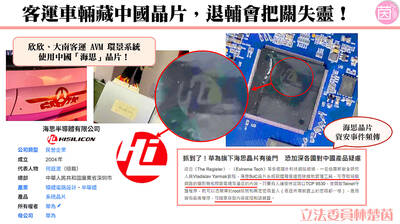
BREACH OF CONTRACT: The bus operators would seek compensation and have demanded that the manufacturer replace the chips with ones that meet regulations Two bus operators found to be using buses with China-made chips are to demand that the original manufacturers replace the systems and provide compensation for breach of contract, the Veterans Affairs Council said yesterday. Democratic Progressive Party Legislator Michelle Lin (林楚茵) yesterday said that Da Nan Bus Co and Shin-Shin Bus Co Ltd have fielded a total of 82 buses that are using Chinese chips. The bus models were made by Tron-E, while the systems provider was CYE Electronics, Lin said. Lin alleged that the buses were using chips manufactured by Huawei subsidiary HiSilicon Co, which presents a national security risk if the

The National Immigration Agency has banned two Chinese from returning to Taiwan, after they published social media content it described as disrespectful to national sovereignty. The agency imposed a two-month ban on a Chinese man surnamed Liang (梁) and a permanent ban on a woman surnamed Yang (楊), an influencer with 23 million followers, in October last year and last week respectively. Minister of the Interior Liu Shyh-fang (劉世芳) yesterday said on the sidelines of a legislative meeting that Chinese visitors to Taiwan are required to comply with the rules and regulations governing their entry permits. The government has handled the ban and


 RSS
RSS