


An aerobatic performance troop that was suspended for four years is to perform for the public at a Taichung Chingchuankang Airport base on Saturday next week, the Ministry of National Defense said yesterday.
The Thunder Tiger Aerobatics Team is to showcase diving stunts at the Chingchuankang Aviation Festival.
Six rolling jet trainers are to ascend in a close formation before diving with each aircraft flying in different directions, ministry spokesman Major General Chen Chung-chi (陳中吉) said.
The stunt has not been executed since 2012.
The team is to deploy its entire fleet — seven AT-3 trainer jets — for the first time since 2014, when Lieutenant Colonel Chuang Pei-yuan (莊倍源) died after his aircraft collided with another and crashed during a training session, Chen said.
A three-jet tumbling stunt that Chuang was performing during the accident will not be executed, the ministry said.
The festival is the fourth open base event this year, and the nation’s most advanced jets, such as the F-16, the Mirage 2000 and the Indigenous Defense Fighter jet, are to take part in the aerial demonstration, Chen said.
Visitors will also be able to get a closer look at several aircraft, including the Lockheed P-3 Orion marine patrol aircraft, the S-2T marine patrol aircraft, Teng Yun unmanned aerial vehicles and helicopters such as the AH-64 Apache, Sikorsky S-70C and the AH-1W Super Cobra.
Ground combat vehicles to be displayed include the Thunderbolt-2000 multiple rocket launcher, the Avenger missile launcher, CM33 Clouded Leopard armored vehicles and nuclear, biological, chemical reconnaissance vehicles.
The air force marching band and Aboriginal dancers are to perform and a fair is to be held on the base, the ministry said.
Taiwanese who present a photo ID at the entrance will be admitted free of charge.
Spouses of Taiwanese who do not have an Republic of China ID card should present documents to prove their legal status in Taiwan and be accompanied by their Taiwanese partner with a photo ID.
Foreign caregivers who are invited by those they care for should bring their passports and other relevant documents.

Actor Darren Wang (王大陸) was sentenced to six months in prison, commutable to a fine, by the New Taipei District Court today for contravening the Personal Data Protection Act (個人資料保護法) in a case linked to an alleged draft-dodging scheme. Wang allegedly paid NT$3.6 million (US$114,380) to an illegal group to help him evade mandatory military service through falsified medical documents, prosecutors said. He transferred the funds to Chen Chih-ming (陳志明), the alleged mastermind of a draft-evasion ring, although he lost contact with him as he was already in detention on fraud charges, they said. Chen is accused of helping a

UNREASONABLE SURVEILLANCE: A camera targeted on an road by a neighbor captured a man’s habitual unsignaled turn into home, netting him dozens of tickets The Taichung High Administrative Court has canceled all 45 tickets given to a man for failing to use a turn signal while driving, as it considered long-term surveillance of his privacy more problematic than the traffic violations. The man, surnamed Tseng (曾), lives in Changhua County and was reported 45 times within a month for failing to signal while driving when he turned into the alley where his residence is. The reports were filed by his neighbor, who set up security cameras that constantly monitored not only the alley but also the door and yard of Tseng’s house. The surveillance occurred from July

SECURITY: Starlink owner Elon Musk has taken pro-Beijing positions, and allowing pro-China companies to control Taiwan’s critical infrastructure is risky, a legislator said Starlink was reluctant to offer services in Taiwan because of the nation’s extremely high penetration rates in 4G and 5G services, the Ministry of Digital Affairs said yesterday. The ministry made the comments at a meeting of the legislature’s Transportation Committee, which reviewed amendments to Article 36 of the Telecommunications Management Act (電信管理法). Article 36 bans foreigners from holding more than 49 percent of shares in public telecommunications networks, while shares foreigners directly and indirectly hold are also capped at 60 percent of the total, unless specified otherwise by law. The amendments, sponsored by Chinese Nationalist Party (KMT) Legislator Ko
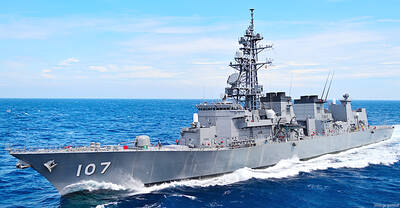
A Japan Self-Defense Forces vessel entered the Taiwan Strait yesterday, Japanese media reported. After passing through the Taiwan Strait, the Ikazuchi was to proceed to the South China Sea to take part in a joint military exercise with the US and the Philippines, the reports said. Japan Self-Defense Force vessels were first reported to have passed through the strait in September, 2024, with two further transits taking place in February and June last year, the Asahi Shimbun reported. Yesterday’s transit also marked the first time since Japanese Prime Minister Sanae Takaichi took office that a Japanese warship has been sent through the Taiwan


 RSS
RSS