


A review of amendments to the Labor Standards Act (勞動基準法) was restarted yesterday, as members of the Legislative Yuan’s Social Welfare and Environmental Hygiene Committee completed a question-and-answer session with government officials regarding the proposed changes.
The amendments are aimed at bolstering earlier reforms by implementing a universal 40-hour workweek, which drew criticism for not guaranteeing additional weekly days off to compensate for the elimination of seven national holidays.
The committee is to attempt to review and consolidate seven different versions of the amendments this week, following a cross-caucus agreement to return the Democratic Progressive Party’s (DPP) official version to the committee after it was controversially sent directly to cross-caucus negotiations last month.
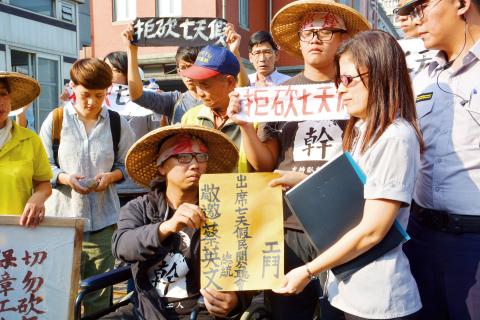
Photo: CNA
In addition to the DPP caucus’ and the Executive Yuan’s versions, the other legislative caucuses have also proposed their own versions, as have DPP Legislators Lin Shu-fen (林淑芬) and Chung Kung-chao (鍾孔炤).
Whether the measures to institute a weekly “flexible rest day” in addition to an existing “mandatory day off” would guarantee sufficient additional rest time and pay was a key point of contention throughout yesterday’s question-and-answer session, which saw legislators across party lines cross-examine Minister of Labor Kuo Fong-yu (郭芳煜).
“I think that the main difference after the amendments would only be an increase in overtime rates for the ‘flexible rest day,’” DPP Legislator Liu Chien-kuo (劉建國) said, calling for the ministry to release estimates on how much the amendments would do to reduce average working hours.
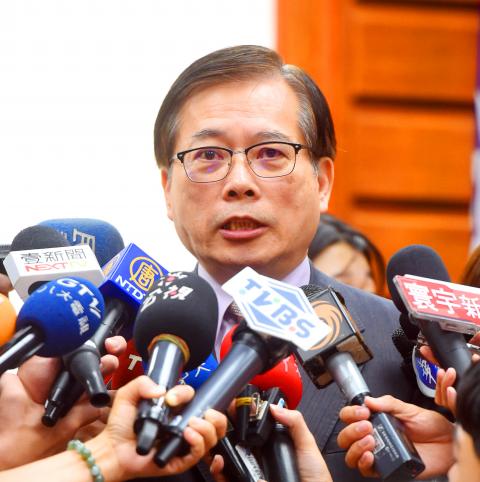
Photo: Chien Jung-fong, Taipei Times
“There is no way the amendments can guarantee a five-day workweek, because employees can still legally work overtime [on their rest day],” Chinese Nationalist Party (KMT) Legislator Alicia Wang (王育敏) said, adding that rates for working on a “flexible rest day” are the same with regular work day overtime rates.
New Power Party Legislator Hung Tzu-yung (洪慈庸) said it is questionable whether employees would receive overtime pay, given the failure of many employers to follow existing overtime regulations.
Kuo said that new labor inspection personnel, combined with the new “complementary measures,” should be sufficient to effect meaningful change, adding that average monthly working hours have fallen from 175 before previous reforms to 168 in the first half of this year.
A public hearing on the proposed changes is to be held tomorrow, followed by a line-by-line review on Thursday, when the amendments are expected to pass committee review.
“The committee would not necessarily reach a conclusion, in which case we would hold further cross-caucus negotiations or address the matter in a legislative session,” said DPP caucus whip Ker Chien-ming (柯建銘), who attended yesterday’s committee meeting, reaffirming that the DPP caucus intends to pass amendments by the end of this year.
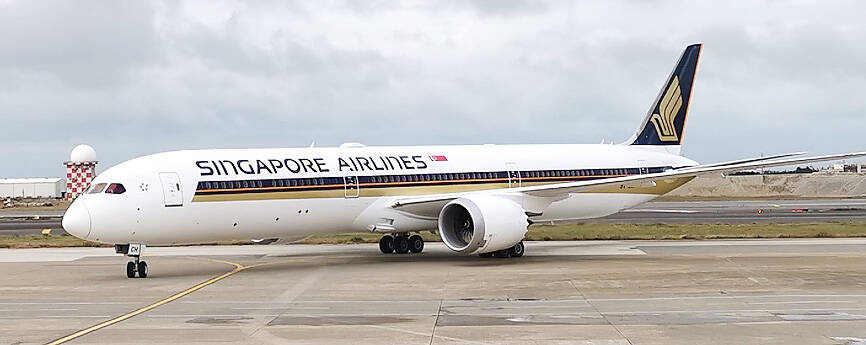
INCREASED CAPACITY: The flights on Mondays, Wednesdays, Fridays and Sundays would leave Singapore in the morning and Taipei in the afternoon Singapore Airlines is adding four supplementary flights to Taipei per week until May to meet increased tourist and business travel demand, the carrier said on Friday. The addition would raise the number of weekly flights it operates to Taipei to 18, Singapore Airlines Taiwan general manager Timothy Ouyang (歐陽漢源) said. The airline has recorded a steady rise in tourist and business travel to and from Taipei, and aims to provide more flexible travel arrangements for passengers, said Ouyang, who assumed the post in July last year. From now until Saturday next week, four additional flights would depart from Singapore on Monday, Wednesday, Friday
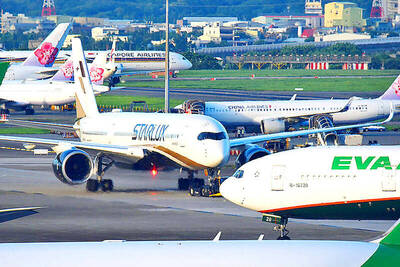
Taiwan’s three major international carriers are increasing booking fees, with EVA Airways having already increased the charge to US$28 per flight segment from US$25, while China Airlines (CAL) and Starlux Airlines are set to follow suit. Booking fees are charged by airlines through a global distribution system (GDS) and passed on to passengers. Carriers that apply the fees include CAL, EVA, Starlux and Tigerair Taiwan. A GDS is a computerized network operated by a company that connects airlines with travel agents and ticketing platforms, allowing reservations to be made and processed in real time. Major players include Amadeus, Sabre and Travelport. EVA Air began

WATCH FOR HITCHHIKERS: The CDC warned those returning home from Japan to be alert for any contagious diseases that might have come back with them People who have returned from Japan following the World Baseball Classic (WBC) games during the weekend are recommended to watch for symptoms of infectious gastroenteritis, flu and measles for two weeks, the Centers for Disease Control (CDC) said. Flu viruses remain the most common respiratory pathogen in Taiwan in the past four weeks and the influenza B virus accounted for 55.7 percent of the tested cases, exceeding the percentage of influenza A (H3N2) infections and becoming the local dominant strain, CDC Epidemic Intelligence Center Deputy Director Lee Chia-lin (李佳琳) said at a news conference on Tuesday. There were 82,187 hospital visits for
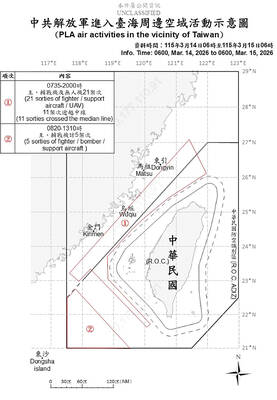
The Ministry of National Defense yesterday reported the return of large-scale Chinese air force activities after their unexplained absence for more than two weeks, which had prompted speculation regarding Beijing’s motives. China usually sends fighter jets, drones and other military aircraft around the nation on a daily basis. Interruptions to such routine are generally caused by bad weather. The Ministry of National Defense said it had detected 26 Chinese military aircraft in the Taiwan Strait over the previous 24 hours. It last reported that many aircraft on Feb. 25, when it spotted 30 aircraft, saying Beijing was carrying out another “joint combat


 RSS
RSS