


As Penghu County prepares to vote on whether to allow casinos, the prospect of new mega-resorts is dividing communities and politicians.
While gambling is illegal in most of Taiwan, apart from state-
approved lotteries, outlying islands are permitted to develop casinos with a number of caveats, including that local residents agree.
That ruling was made in 2009, lifting the previous blanket gambling ban that covered all of Taiwan.
Since then the process of going ahead with casino development has stalled due to local objections and a government divided over legal gambling.
However, with the economy stagnating, advocates say now is the time to finally give the green light.
Others argue the costs still outweigh the benefits, fearing the arrival of gambling resorts would ruin some of the nation’s most stunning natural highlights.
On Penghu, which has a population of 100,000, and is known for its pristine beaches and turtle sanctuaries, residents are to vote tomorrow on whether to allow a casino to be developed.
It is the second time they have voted, after rejecting the idea seven years ago.
Supporters say it would bring extra jobs for young people and overhaul infrastructure.
They want to see Macau and Singapore-style “integrated resorts,” offering restaurants, malls, theme parks and shows, as well as gaming.
“Without casinos, no foreign investor will come to Penghu,” said Chuang Kuang-hui (莊光輝), which initiated the new referendum.
Local businesswoman Felicia Chen is also backing the “yes” camp, which says that casinos would help the economy during the low season from November to April.
“Where there are crowds, there is money to boost tax revenues, which can be used for social welfare for local people,” she said.
However, opponents say rubbish and wastewater generated from a huge increase in tourist numbers would pollute the air and sea.
They also question whether there will be real economic benefits, with gaming revenues in Asia shrinking, particularly in Macau, due to China’s crackdown on corruption and slowing economic growth.
“Given the regional gaming downturns, it could even be a drag on the local economy,” said Penghu-born Sheng I-che (冼義哲), chairman of the pro-environment Trees Party.
Even if there is a “yes” vote tomorrow, the path to building a casino is unlikely to be smooth.
Matsu opted to approve a casino in a referendum in 2012, but it has never been built as legislative approval is still pending.
Democratic Progressive Party (DPP) politicians, who are against gambling, have opposed a legislative act dealing with gaming licensing and regulations that would enable the casino to proceed.
Even some members of the Chinese Nationalist Party (KMT), which was in power when the original blanket ban was lifted, have reservations.
However, observers say in the face of continued economic problems, residents expect the government to adhere to their wishes if they vote “yes.”
“If Penghu passes the referendum, it can join hands with Matsu to negotiate with the central government and demand voters’ wishes be respected,” National Taiwan University of Science and Technology gaming industry expert Liu Day-yang (劉代洋) said. “The DPP has to carefully reconsider its position to revive the economy.”
Investors have already shown interest in Penghu.
US real-estate developer Cordish Companies, behind the US’ Seminole Hard Rock Hotel and Casinos chain, submitted a proposal earlier this year for a resort, including a convention center, entertainment district and water park.
Some analysts said Penghu casinos could be a good bet if they do not rely on Chinese tourists, and instead focus on drawing local tourists, as well as Japanese and South Korean visitors.
This would make them less susceptible to “external shocks,” said William Bryson, a lawyer with gaming and hospitality consulting firm Global Market Advisors.
They would certainly be “less subject to the deleterious effects that China’s anti-corruption and anti-
conspicuous consumption crackdowns have had on Macau and Singapore,” Bryson added.
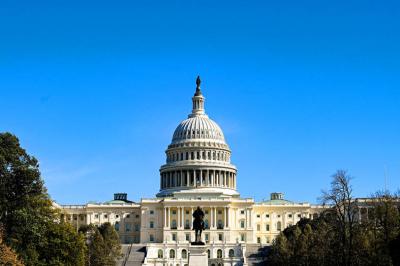
The US House of Representatives yesterday passed the PROTECT Taiwan Act, which stipulates that Washington would exclude China from participating in major global financial organizations if its actions directly threaten Taiwan’s security. The bill, proposed by Republican US Representative Frank Lucas, passed with 395 votes in favor and two against. It stipulates that if China’s actions pose any threat to Taiwan’s security, economic or social systems, the US would, “to the maximum extent practicable,” exclude China from international financial institutions, including the G20, the Bank for International Settlements and the Financial Stability Board. The bill makes it clear that China

Taiwan’s Li Yu-hsiang performs in the men’s singles figure skating short program at the Milano-Cortina Winter Olympics, in Milan, Italy, on Tuesday. Li finished 24th with a score of 72.41 to advance to Saturday’s free skate portion of the event. He is the first Taiwanese to qualify for the free skate of men’s singles figure skating at the Olympics since David Liu in 1992.
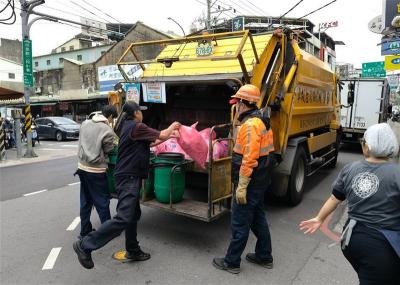
Garbage and recycling schedules are to vary from Saturday through Sunday next week over the Lunar New Year holiday period. The following collection information is from the governments of the six special municipalities. Taipei Regular service: Sunday to Monday next week. No service: Tuesday to Thursday next week. Extra service: Friday next week. Regular service resumes: Saturday next week. New Taipei City Extra service: Sunday. Adjusted collection time: Monday next week — garbage collection is to begin in the morning and end at 6pm. No service: Tuesday to Thursday next week. Regular service resumes: Friday next week. Note: Garbage can be dropped off at 70
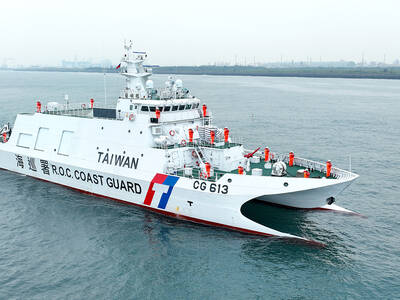
The Coast Guard Administration (CGA) yesterday held a ceremony marking the delivery of its 11th Anping-class offshore patrol vessel Lanyu (蘭嶼艦), saying it would boost Taiwan’s ability to respond to Beijing’s “gray zone” tactics. Ocean Affairs Council Deputy Minister Chang Chung-Lung (張忠龍) presided over the CGA event in the Port of Kaoshiung. Representatives of the National Security Council also attended the event. Designed for long-range and protracted patrol operations at sea, the Lanyu is a 65.4m-long and 14.8m-wide ship with a top speed of 44 knots (81.5kph) and a cruising range of 2,000 nautical miles (3704km). The vessel is equipped with a


 RSS
RSS