


The National Day ceremony yesterday was marked by scattered protests, with both pro-independence and pro-unification advocates condemning the Democratic Progressive Party (DPP) administration’s observation of the day.
“Taiwan is Taiwan,” shouted Taiwan Solidarity Union (TSU) members protesting outside the ceremony site, calling for the rejection of the “Republic of China’s” National Day.
National Day has nothing to do with Taiwan because it marks the anniversary of the Wuchang Uprising, which culminated in the founding of the Republic of China, TSU Department of Youth Affairs director Chang Chao-lin (張兆林) said, adding that the day should only be celebrated by the Chinese Nationalist Party (KMT), which traces its roots to the uprising, rather than by Taiwan as a whole.
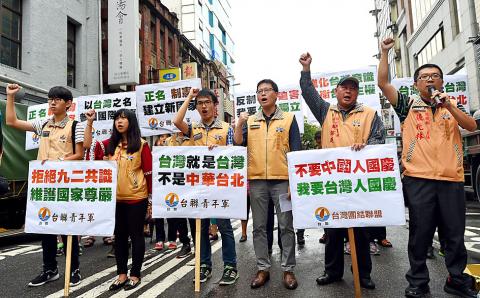
Photo: Chien Jung-fong, Taipei Times
The TSU members also handed out stickers stating that “Taiwan is Taiwan,” and advocating that “Taiwan” and not “Chinese Taipei” should be used to refer to the nation in international competitions.
Separately, the Northbird Singing Revolution band, the Free Taiwan Party, the Alliance of Referendum for Taiwan, the Indigenous Youth Front and other pro-independence groups gathered in front of nearby Jingfumen (景福門) to play Taiwanese folk music that criticized the Republic of China for being a “foreign regime” which has oppressed the nation’s diverse cultures and calling for the DPP administration to break with past KMT precedent.
Imposed National Day celebrations have been part of the KMT’s past throttling of the nation’s original cultures, the Northbird Signing Revolution band said, calling for the DPP government to stop holding events that exalt Chinese culture.
Meanwhile, a member of the the pro-unification Concentric Patriotism Association interrupted Legislative Speaker Su Jia-chyuan (蘇嘉全) when he began his official remarks.
The man shouted out that because President Tsai Ing-wen (蔡英文) is not willing to recognize the Republic of China, she should not serve as president or have audience members bow to a portrait of founding father Sun Yat-sen (孫逸仙).
While many in the audience demanded that police officers escort the man away, his nearby supporters soon joined in a chant of “Long live the Republic of China.”
“What kind of National Day are independence advocates participating in?” another Concentric Patriotism Association member shouted, while a third shouted: “Independence advocate parasites should go to hell,” before police officers eventually escorted them away after attempts to ask them to be quiet failed.
Additional reporting by Abraham Gerber and CNA
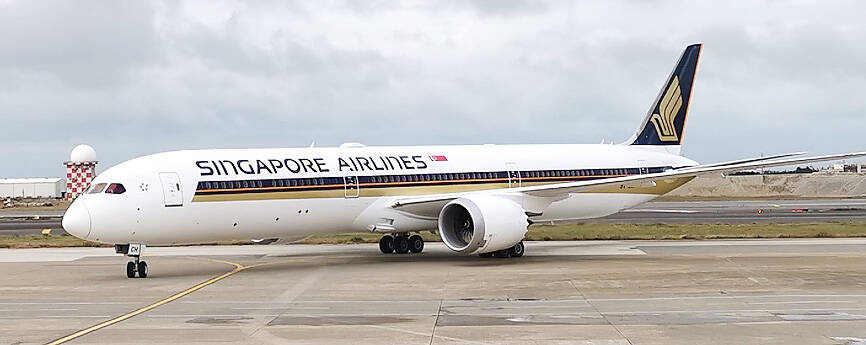
INCREASED CAPACITY: The flights on Mondays, Wednesdays, Fridays and Sundays would leave Singapore in the morning and Taipei in the afternoon Singapore Airlines is adding four supplementary flights to Taipei per week until May to meet increased tourist and business travel demand, the carrier said on Friday. The addition would raise the number of weekly flights it operates to Taipei to 18, Singapore Airlines Taiwan general manager Timothy Ouyang (歐陽漢源) said. The airline has recorded a steady rise in tourist and business travel to and from Taipei, and aims to provide more flexible travel arrangements for passengers, said Ouyang, who assumed the post in July last year. From now until Saturday next week, four additional flights would depart from Singapore on Monday, Wednesday, Friday
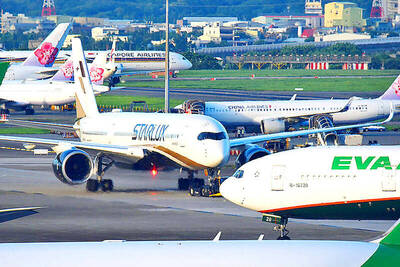
Taiwan’s three major international carriers are increasing booking fees, with EVA Airways having already increased the charge to US$28 per flight segment from US$25, while China Airlines (CAL) and Starlux Airlines are set to follow suit. Booking fees are charged by airlines through a global distribution system (GDS) and passed on to passengers. Carriers that apply the fees include CAL, EVA, Starlux and Tigerair Taiwan. A GDS is a computerized network operated by a company that connects airlines with travel agents and ticketing platforms, allowing reservations to be made and processed in real time. Major players include Amadeus, Sabre and Travelport. EVA Air began
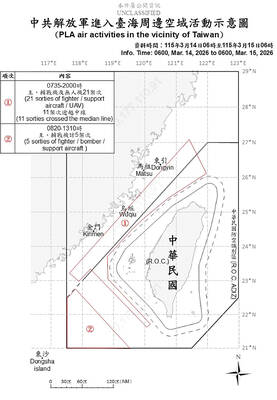
The Ministry of National Defense yesterday reported the return of large-scale Chinese air force activities after their unexplained absence for more than two weeks, which had prompted speculation regarding Beijing’s motives. China usually sends fighter jets, drones and other military aircraft around the nation on a daily basis. Interruptions to such routine are generally caused by bad weather. The Ministry of National Defense said it had detected 26 Chinese military aircraft in the Taiwan Strait over the previous 24 hours. It last reported that many aircraft on Feb. 25, when it spotted 30 aircraft, saying Beijing was carrying out another “joint combat
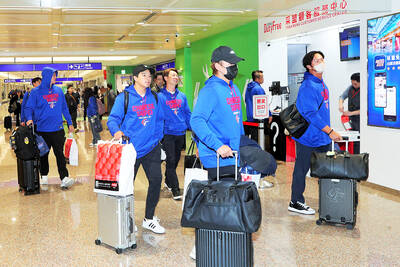
WATCH FOR HITCHHIKERS: The CDC warned those returning home from Japan to be alert for any contagious diseases that might have come back with them People who have returned from Japan following the World Baseball Classic (WBC) games during the weekend are recommended to watch for symptoms of infectious gastroenteritis, flu and measles for two weeks, the Centers for Disease Control (CDC) said. Flu viruses remain the most common respiratory pathogen in Taiwan in the past four weeks and the influenza B virus accounted for 55.7 percent of the tested cases, exceeding the percentage of influenza A (H3N2) infections and becoming the local dominant strain, CDC Epidemic Intelligence Center Deputy Director Lee Chia-lin (李佳琳) said at a news conference on Tuesday. There were 82,187 hospital visits for


 RSS
RSS