


Medical groups urged the Ministry of Health and Welfare to include a new hepatitis C drug in the National Health Insurance (NHI) program by having patients pay for part of the drug’s costs instead of granting total coverage, citing heavy financial burdens on the program.
Following Minister of Health and Welfare Lin Tzou-yien’s (林奏延) announcement to include the drug in the NHI program, NHI Administration Director Lee Po-chang (李柏璋) said the drug is too expensive, adding that the ministry should consider having patients shoulder at least half the cost.
Even with agreements by pharmaceutical companies Abbvie, Bristol-Myers Squibb and Gilead Sciences to charge no more than NT$250,000 (US$7,992) per individual treatment, with 550,000 people diagnosed with hepatitis C, the cost of providing drugs to them would reach about NT$100 billion, Lee said.
If the NHI program is to cover the costs, then the medication’s inclusion should at least be carried incrementally, Lee said.
The NHI program’s finances for this year are in the red due to increasing expenses and falling income from a reduced health and welfare surcharge on tobacco products, Taiwan Community Hospital Association Secretary-General Hsieh Wu-chi (謝武吉) said, adding that including the drug would only increase the burden on the program.
Hsieh said he is not against the drug being covered by the NHI system, but he also suggested having users pay at least half of the drug’s cost, as there is an extremely high rate of wasted medication in Taiwan.
The government might want to consider granting subsidies to low-income patients, Hsieh said.
Taiwan Association for the Study of the Liver director Chien Rong-nan (簡榮南) said the new drug is not only cheaper than other drugs, but also shortens treatment time to about 24 weeks or less, adding that tests on laboratory mice showed that recovery rates increased from between 70 and 80 percent to 90 percent.
Traditional treatments involve weekly injections and additional antiviral drugs, Chien said, adding that the treatment takes 48 weeks and costs from NT$250,000 to NT$300,000.
Chien said that in the long term, the new drug would help the NHI program save money.
Liver Disease Prevention and Treatment Research Foundation chairperson Yang Pei-ming (楊培銘) said the drug would increase patients’ willingness to accept treatment, adding that he estimates willingness might rise from 15 percent to 50 percent.
In the short term, the increase would squeeze NHI finances, Yang said, adding that the program could consider prioritizing patients who have shown no response to traditional treatments.
Administration Deputy Director Lee Cheng-hua (李丞華) said the medication would be included in the NHI program next year, adding that the agency would next month take the drug’s inclusion into account when deciding next year’s budget next month.
The administration said it is considering the possibility of applying to the Executive Yuan for additional funds or hiking its public expense budget to compensate for the drug’s cost.
Lee Po-chang said the administration would hold a public hearing before it makes a final decision.

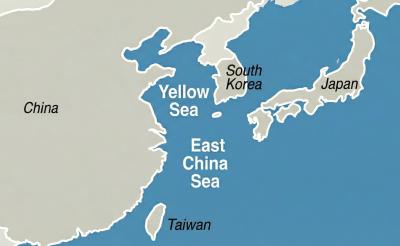
China has reserved offshore airspace in the Yellow Sea and East China Sea from March 27 to May 6, issuing alerts usually used to warn of military exercises, although no such exercises have been announced, the Wall Street Journal (WSJ) reported yesterday. Reserving such a large area for 40 days without explanation is an “unusual step,” as military exercises normally only last a few days, the paper said. These alerts, known as Notice to Air Missions (Notams), “are intended to inform pilots and aviation authorities of temporary airspace hazards or restrictions,” the article said. The airspace reserved in the alert is
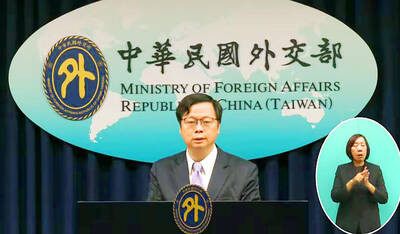
NAMING SPAT: The foreign ministry called on Denmark to propose an acceptable solution to the erroneous nationality used for Taiwanese on residence permits Taiwan has revoked some privileges for Danish diplomatic staff over a Danish permit that lists “Taiwan” as “China,” Eric Huang (黃鈞耀), head of the Ministry of Foreign Affairs’ Department of European Affairs, told a news conference in Taipei yesterday. Reporters asked Huang whether the Danish government had responded to the ministry’s request that it correct the nationality on Danish residence permits of Taiwanese, which has been listed as “China” since 2024. Taiwan’s representative office in Denmark continues to communicate with the Danish government, and the ministry has revoked some privileges previously granted to Danish representatives in Taiwan and would continue to review

More than 6,000 Taiwanese students have participated in exchange programs in China over the past two years, despite the Mainland Affairs Council’s (MAC) “orange light” travel advisory, government records showed. The MAC’s publicly available registry showed that Taiwanese college and university students who went on exchange programs across the Strait numbered 3,592 and 2,966 people respectively. The National Immigration Agency data revealed that 2,296 and 2,551 Chinese students visited Taiwan for study in the same two years. A review of the Web sites of publicly-run universities and colleges showed that Taiwanese higher education institutions continued to recruit students for Chinese educational programs without
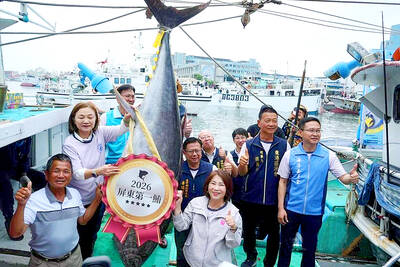
The first bluefin tuna of the season, brought to shore in Pingtung County and weighing 190kg, was yesterday auctioned for NT$10,600 (US$333.5) per kilogram, setting a record high for the local market. The auction was held at the fish market in Donggang Fishing Harbor, where the Siaoliouciou Island-registered fishing vessel Fu Yu Ching No. 2 delivered the “Pingtung First Tuna” it had caught for bidding. Bidding was intense, and the tuna was ultimately jointly purchased by a local restaurant and a local company for NT$10,600 per kilogram — NT$300 ,more than last year — for a total of NT$2.014 million. The 67-year-old skipper


 RSS
RSS