

Legislators and members of the public criticized prosecutors for dropping the charges against 12 military officials in a case which raised fears of a return to Martial Law era authoritarianism and abuse of people’s rights, while the Ministry of National Defense said it respected the judiciary’s decision.
Democratic Progressive Party (DPP) Legislator Wang Ting-yu (王定宇) said yesterday that he very much regretted that prosecutors did not bring charges against the 12 military officials for their roles in a search in February at a civilian’s home for documents relating to White Terror era prosecution cases, as they did so at a residence belonging to a man in New Taipei City without obtaining a search warrant.
On Monday, the Taipei District Prosecutors’ Office announced that the man, surnamed Wei (魏), had agreed to the search by military police officers and had signed a “consent” form, and that video evidence indicated that Wei had behaved in a natural way and did not seem to be coerced or put under any pressure.
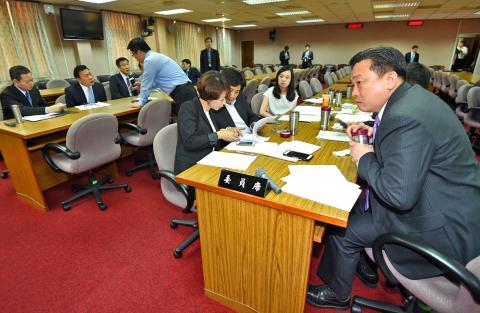
Photo: Liao Chen-huei, Taipei Times
However, the statement did reprimand the military police and the Military Security Brigade for allocating excessive resources to the search at a civilian’s house and for a number of transgressions of the proper procedures.
“We have military police officers entering a civilian’s house to look for some stuff, but they did so without a search warrant. In a democratic nation, this cannot be tolerated. As for the statement by prosecutors, they are not even trying to uphold the rights of ordinary citizens,” Wang said.
Wang said he would continue to press for further investigation of the case as he does not want to see it swept under the carpet.
The legislature’s Foreign Affairs and National Defense Committee has approved a resolution to set up an ad hoc task force to access materials and documents pertaining to the case, he said.
Other members of the committee also expressed their concern and indignation over the charges being dropped.
New Power Party Legislator Freddy Lim (林昶佐) said he respected the judiciary’s decision, “but the outcome does not mean there was nothing wrong with human rights education in the military. The controversy arose from the gross abuse of the rights of citizens, and the claim by military officials that the man in question willingly gave his consent for the search.”
DPP Legislator Lu Sun-ling (呂孫綾) said the case has caused people to have anxiety about a return of White Terror era authoritarianism.
“We want to see the ministry stamp out these kind of activities, it must not be allowed to happen again,” Lu said.
The ministry released a statement on Monday saying it respected the decision not to bring charges and that it had requested the military agencies involved to review and rectify their handling of such cases, since some aspects of the case have been questioned.
Wei said he was dismayed by the prosecutors’ decision and disagreed with the assessment that he voluntarily agreed to have his house searched by the military police.
“I was scared to death at the time. Can I refuse to sign the consent form? I did not think it was possible,” Wei said. “I am just an ordinary person from the countryside, who does not know much about legal matters. How could I express my opinion at the time? What could I do?”
“Even when the police come to undertake an investigation it is a big deal for most people. In this case, the military police officers accused me of violating the law on national security. Anyone in my position would be nervous and highly stressed. How could I refuse their request at the time?” he said.

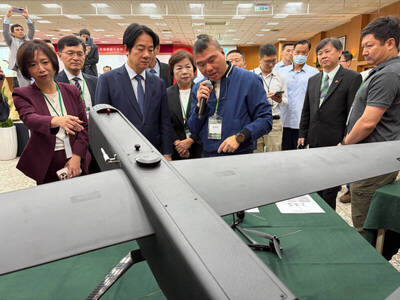
Two executives of drone supplier Jiin Ming Industry Co (錦明實業) have been detained and held incommunicado over the company's alleged use of prohibited China-made chips and camera lenses in drones supplied under recent military contracts, the Taoyuan District Prosecutors' Office said today. In a statement, prosecutors said they raided the offices of Jiin Ming — headquartered in Taoyuan — as well as those of its subsidiaries and its suppliers on Thursday last week. The raids followed a report that the company had breached its procurement contracts by putting the prohibited components into drones delivered to the military. During the raids, prosecutors summoned
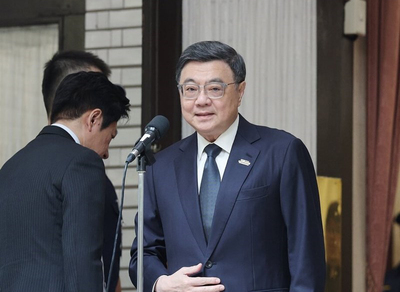
The government would continue monitoring online rumors that a pneumonic plague outbreak has spread from Russia into China and could enhance existing quarantine measures, Premier Cho Jung-tai (卓榮泰) said today. During a legislative meeting, Democratic Progressive Party Legislator Wang Ting-yu (王定宇) said rumors were circulating that the disease had spread across several Chinese provinces. He asked Cho whether the government was prepared to prevent the disease from spreading to Taiwan, given the frequent exchanges between Taiwan and China, and how concerned the government was about the alleged outbreak. The Ministry of Health and Welfare implemented border quarantine measures after briefing the Executive Yuan

South Korean boy band BigBang drew 120,000 fans to three concerts at Taipei Dome from Friday through yesterday, as the band thanked them for their support over their 20-year career. The Taipei Dome concerts were part of BigBang's "2026-2027 World Tour XX: Cosmos." Friday's concert was BigBang's first performance in Taiwan in 11 years. During the encore, group leader G-Dragon (GD) shouted "I love you" in Chinese and said he was especially happy to perform in Taiwan with bandmates Taeyang and Daesung. "Taipei, I'm very grateful to you all," GD said in Chinese, asking fans to wait for the band's return. Daesung thanked
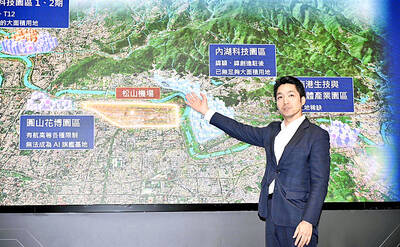
DETAILED PLAN NEEDED: Relocating the airport would affect not just travelers, but also undermine national defense and emergency medical services, a legislator said Taipei Mayor Chiang Wan-an (蔣萬安) yesterday proposed relocating Taipei International Airport (Songshan airport) and turning the site into an artificial intelligence (AI) park, drawing opposition from politicians across party lines. Chiang’s plan would turn the 300 hectares into an AI park featuring tech clusters, residential communities and green space. The industrial cluster would host 200 domestic enterprises, generate NT$12 trillion (US$376.47 billion) in output, and accommodate 65,000 jobs and 35,000 residents, he said. Cabinet spokeswoman Michelle Lee (李慧芝) said the Executive Yuan was surprised by the announcement, as the Taipei City Government did not discuss the proposal with the central government before making


 RSS
RSS