


Revelations that the military police, along with a military “counter intelligence agency,” have been criticized for operating with a Martial Law-era mentality after the detention and search of a civilian’s house to seize documents.
The scandal over the treatment of a man surnamed Wei (魏) who offered three historical documents for sale online last month has brought to public attention a shadowy military agency — the Military Security Brigade, which was set up as a special body by the Ministry of National Defense Political Warfare Bureau’s Security Division.
The Military Security Brigade is a counter intelligence organization that conducts surveillance, wire tapping, intelligence gathering and other clandestine operations against suspected dissidents and communist spies, and upholds internal security against leaks of state secrets and to investigate criminal activities by military personnel.
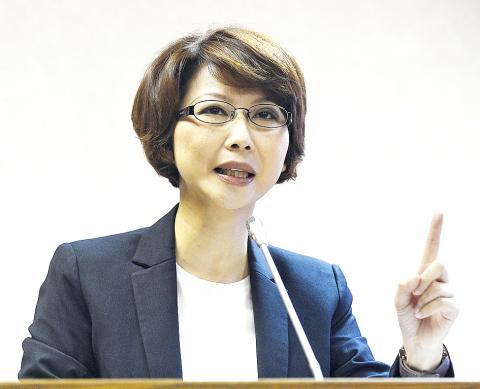
Photo: Chen Chih-chu, Taipei Times
The brigade was formerly part of the military’s Counterintelligence Corps and before the overall restructuring in 1992, it was run by the Taiwan Garrison Command, which was responsible for the arbitrary arrest, torture, imprisonment without trial and executions of tens of thousands of Taiwanese during the Martial Law era from 1949 to 1987.
It was often compared to the Stasi secret police of the former East Germany and also described as Taiwan’s Nazi SS unit during the Martial Law era, because the officers of Taiwan Garrison Command swore loyalty only to Chiang Kai-shek (蔣介石) and then his son, former president Chiang Ching-kuo (蔣經國), as they committed atrocities with impunity.
The Military Security Brigade still operates, remaining among the nation’s four intelligence-gathering secret services, the others being the National Security Bureau, the Military Intelligence Bureau and the ministry’s Office of Telecommunications Development.
Military Security Brigade Chief Colonel Wang Shih-wei (汪世偉) was summoned for questioning by prosecutors in the ongoing investigation into the case, while Security Division head Major General Chao Tai-chuan (趙代川) was removed from his post on Tuesday.
At the legislature’s Foreign Affairs and National Defense Committee meeting yesterday, Democratic Progressive Party (DPP) Legislator Chen Ting-fei (陳亭妃) accused the Military Security Brigade of orchestrated the operation, as they had officers accompanying military police personnel to meet Wei and were stationed outside Wei’s house to carry out surveillance throughout the day.
DPP Legislator Wang Ting-yu (王定宇) said he has obtained information that indicated Chao, as head of the Security Division, was the leading figure in the illegal search, coordinating with officers from Military Security Brigade.
Wang accused Chao of telling military police that search warrants were not necessary, and that Chao, along with officers of Military Security Brigade, approved the decision to carry out the operation on Feb. 19 to meet Wei and afterward lied to top military officials to try to cover up the misconduct.

NATIONAL SECURITY: Authorities are working to confirm the identities of the military personnel involved and investigating possible illegal conduct and regulatory violations Authorities are probing possible national security implications after Kinmen police and immigration officers on Sunday found a Chinese woman allegedly posing as a tourist while engaging in prostitution involving more than 10 military personnel. The woman, surnamed Chen (陳), has since been deported, authorities said, adding that investigators are still working to confirm the identities of those implicated, as the records only listed code names and aliases. The case stemmed from a report received by the Kinmen District Prosecutors’ Office on Friday last week from the Jinhu Precinct of the Kinmen County Police Bureau. On Sunday, police, along with the National Immigration

GLOBALGIVING: ‘ Caving to external pressure is not acceptable for an organization that has cultivated justice reform and human rights for 30 years,’ one NGO said A slew of non-government organizations (NGOs) have withdrawn from the GlobalGiving fundraising platform after it announced it would use “Chinese Taipei” instead of “Taiwan” from next month. The Taiwan Good Rice Association wrote on Facebook on Friday that it was informed on April 28 via a teleconference call of the change, which was made because the platform wanted to operate in China. Taiwan Good Rice is to terminate all cooperative relationships with GlobalGiving in response to the platform’s “unilateral and non-negotiable” decision to remove references to Taiwan, the NGO said. “Taiwan is in the official name of Taiwan Good Rice Association and the

HEAVY WEATHER: Typhoon Jangmi is due to crash straight into the Ryukyus as airlines look to shift flights to larger aircraft or cancel flights to Okinawa entirely Taiwan’s international air carriers announced flight adjustments over the weekend as Typhoon Jangmi is forecast to hit the Ryukyu Islands today and tomorrow. The Central Weather Administration (CWA) upgraded Jangmi from a tropical storm to a typhoon at 8am yesterday, with the eye located 580km south of Naha city. It was moving north at 19kph. Today, China Airlines’ CI-120, CI-121, CI-122 and CI-123 flights between Taoyuan and Naha, Okinawa, have been canceled as well as CI-132 and CI-133 between Kaohsiung and Naha. EVA Air’s BR-112, BR-113, BR-186 and BR-185 flights between Taoyuan and Naha are also canceled. Low-cost carrier Tigerair Taiwan canceled IT-230,

Chinese Nationalist Party (KMT) Chairwoman Cheng Li-wun (鄭麗文) yesterday briefed her party’s Central Standing Committee regarding her scheduled visit to the US between Monday next week and June 16, saying that her purpose would be to persuade the US that the Republic of China (ROC) Constitution was a “one China” constitution that would foster stable and peaceful cross-strait relations. The ROC Constitution is the most important defense for all Taiwanese citizens, as it upholds our democracy and has contributed to our robust economy, which aligns with international and US interests, she said. “We would not be troublemakers and drag the US under,”


 RSS
RSS