


The governments of Taiwan and the Philippines should cut out labor brokers and take direct responsibility for the placement and protection of migrant workers, a Philippine labor activist said in Taipei yesterday.
“The brokers’ fee system should be junked because it’s useless — brokers will not help us if we run into problems,” Gilda Banugan, the chairperson of the Taiwanese branch of Migrante International, a Philippine political party which advocates for migrant worker rights, told the Taipei Times.
Brokers often put pressure on domestic workers to stick with their employers, even when they face physical abuse or sexual harassment, taking advantage of the fact that many workers do not speak Mandarin and do not know where else to turn, Banugan said.
“Agencies are supposed to be the ones who process our problems and complaints if we run into trouble, but you ask for help, they threaten to send you back to the Philippines — so we’re not safe,” she said.
It is also common for brokers to charge illegal fees and make “bait-and-switch” changes in the employers offered after workers arrive in Taiwan.
While Philippine law mandates that brokers should not charge more than one month worth of a worker’s salary in fees, government officials in Taiwan have proven unwilling to enforce the restriction by prosecuting labor brokers, she said.
It is common for brokers to charge migrant workers up to NT$100,000 in fees and interest over the course of a three-year contract.
Wages for migrants employed as domestic workers are set at NT$17,000 per month by the Ministry of Labor, with employers obligated to provide their workers with room and board.
However, workers who have been abused by their assigned employers are charged more than NT$9,000 a month for room and board if they leave their employer’s residence to live in broker-provided dormitories, with no guarantee that they will find a new position, she said.
Migrant workers should be included in the Labor Standards Act (勞動基準法) and the governments of the two nations should take direct responsibility for arranging and managing migrant worker placements.
Banugan was interviewed after a Migrante-sponsored dance rally was held on Sunday outside the Won Won Building on Zhongshan N Road near Saint Christopher’s Catholic Church.
The location of this year’s rally — held to back demands to improve the working conditions of migrant workers — reflected a stronger Philippine influence.
Last year’s rally was held at Taipei Main Station to make it convenient for Indonesian workers, while this year’s event was held in the “Little Manila” area to help Migrante stump for votes in May 9 Philippine general elections, Banugan said.

Yangmingshan National Park authorities yesterday urged visitors to respect public spaces and obey the law after a couple was caught on a camera livestream having sex at the park’s Qingtiangang (擎天崗) earlier in the day. The Shilin Police Precinct in Taipei said it has identified a suspect and his vehicle registration number, and would summon him for questioning. The case would be handled in accordance with public indecency charges, it added. The couple entered the park at about 11pm on Thursday and began fooling around by 1am yesterday, the police said, adding that the two were unaware of the park’s all-day live

Yangmingshan National Park’s Qingtiangang (擎天崗) nature area has gone viral after a park livestream camera observed a couple in the throes of intimate congress, which was broadcast live on YouTube, drawing large late-night crowds and sparking a backlash over noise, bright lights and disruption to wildlife habitat. The area’s livestream footage appeared to show a couple engaging in sexual activity on a picnic table in the park on Friday last week, with the uncensored footage streamed publicly online. The footage quickly spread across social media, prompting a tide of visitors to travel to the site to “check in” and recreate the
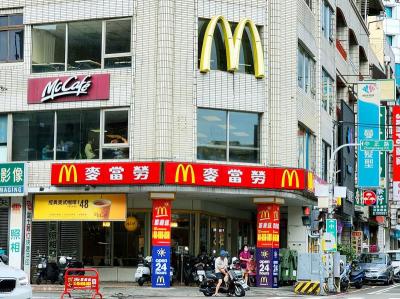
Fast food chain McDonald's is to raise prices by up to NT$5 on some products at its restaurants across Taiwan, starting on Wednesday next week, the company announced today. The prices of all extra value meals and sharing boxes are to increase by NT$5, while breakfast combos and creamy corn soup would go up by NT$3, the company said in a statement. The price of the main items of those meals, if ordered individually, would remain the same. Meanwhile, the price of a medium-sized lemon iced tea and hot cappuccino would rise by NT$3, extra dipping sauces for chicken nuggets would go up

Minister of Digital Affairs Lin Yi-ching (林宜敬) yesterday cited regulatory issues and national security concerns as an expert said that Taiwan is among the few Asian regions without Starlink. Lin made the remarks on Facebook after funP Innovation Group chief executive officer Nathan Chiu (邱繼弘) on Friday said Taiwan and four other countries in Asia — China, North Korea, Afghanistan and Syria — have no access to Starlink. Starlink has become available in 166 countries worldwide, including Ukraine, Malaysia, the Philippines and Vietnam, in the six years since it became commercial, he said. While China and North Korea block Starlink, Syria is not


 RSS
RSS