


Chinese Nationalist Party (KMT) presidential candidate Hung Hsiu-chu’s (洪秀柱) campaign office yesterday said “serving beef” to voters remained its top priority and that it still aimed to take the top spot in the campaign, despite the party’s latest poll placing Hung at the bottom.
“Opinion polls are for reference only and putting forward new, appealing policies will continue to be our primary objective,” Hung’s campaign office spokesperson Hsu Chiao-hsin (徐巧芯) said.
Only one person could be elected president on Jan. 16 next year, and Hung’s campaign team has their hearts set on taking the top prize, Hsu said.

Photo: Cheng Hung-ta, Taipei Times
Hsu made the remarks one day after KMT headquarters released an internal survey on the three primary presidential candidates, which showed Democratic Progressive Party (DPP) presidential candidate Tsai Ing-wen (蔡英文) continuing to lead Hung and People First Party (PFP) Chairman James Soong (宋楚瑜).
Hung received the support of 18 percent of respondents, while Soong received 19 percent, a narrowing of the gap between them ,which previous polls had put at about 5 percent.
Compared with an earlier opinion poll released by the Cross-Strait Policy Association on Aug. 10, both Tsai’s and Soong’s support ratings have dropped, from 42.9 percent and 23.3 percent respectively.
Voter support for Hung experienced a slight increase, from 16.8 percent to 18 percent.
The Wednesday poll results have been interpreted among the higher echelons of the KMT as an indicator of the end to what they called a temporary surge in the momentum of Soong’s campaign, which he received due to the initial excitement generated by his bid.
According to a report published by the Liberty Times (the Taipei Times’ sister paper) on Wednesday, some KMT heavyweights believe that if Hung’s support level can climb to 30 percent, the party still stands a chance of marginalizing Soong and catching up with Tsai.
The report also quoted a KMT member who spoke on condition of anonymity as saying that the KMT would continue its “cold tactics” toward Soong and concentrate its firepower solely on Tsai.
Dismissing jibes that the internal poll served as an “official recognition” of Hung as the weakest presidential contender in next year’s race, KMT spokesman Yang Wei-chung (楊偉中) said that while Hung was in last place in the poll, her support rate has bounced back from the 13 percent garnered in a previous survey.
“Talk of an official recognition does not matter. At least we are honest with ourselves in the campaign,” Yang said.
Asked to comment on Hung’s mildly improved support rating, KMT Chairman Eric Chu (朱立倫) said continued endeavor was still needed as the campaign was at in rather early stages.
“Effort and cooperation are what matter the most in election campaigns,” Chu said.
PFP Deputy Secretary-General Liu Wen-hsiung (劉文雄) shrugged off the KMT’s results, saying that the party is “expert” at conducting opinion polls.
“I guess congratulations are in order for the KMT, but shouldn’t they have put Hung in first place?” Liu said, insinuating the possibility of poll manipulation.

Yangmingshan National Park authorities yesterday urged visitors to respect public spaces and obey the law after a couple was caught on a camera livestream having sex at the park’s Qingtiangang (擎天崗) earlier in the day. The Shilin Police Precinct in Taipei said it has identified a suspect and his vehicle registration number, and would summon him for questioning. The case would be handled in accordance with public indecency charges, it added. The couple entered the park at about 11pm on Thursday and began fooling around by 1am yesterday, the police said, adding that the two were unaware of the park’s all-day live

A former soldier and an active-duty army officer were yesterday indicted for allegedly selling classified military training materials to a Chinese intelligence operative for a total of NT$79,440. The Taipei District Prosecutors’ Office indicted Chen Tai-yin (陳泰尹) and Lee Chun-ta (李俊達) for contravening the National Security Act (國家安全法) and the Anti-Corruption Act (貪污治罪條例). Chen left the military in September 2013 after serving alongside then-staff sergeant Lee, now an army lieutenant, at the 21st Artillery Command of the army’s Sixth Corps from 2011 to 2013, according to the indictment. Chen met a Chinese intelligence operative identified as “Wang” (王) through a friend in November

Minister of Digital Affairs Lin Yi-ching (林宜敬) yesterday cited regulatory issues and national security concerns as an expert said that Taiwan is among the few Asian regions without Starlink. Lin made the remarks on Facebook after funP Innovation Group chief executive officer Nathan Chiu (邱繼弘) on Friday said Taiwan and four other countries in Asia — China, North Korea, Afghanistan and Syria — have no access to Starlink. Starlink has become available in 166 countries worldwide, including Ukraine, Malaysia, the Philippines and Vietnam, in the six years since it became commercial, he said. While China and North Korea block Starlink, Syria is not
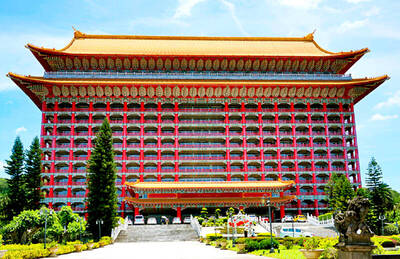
The Grand Hotel Taipei has rejected media reports claiming that the hotel had prevented CBS from broadcasting coverage of the Beijing summit between U.S. President Donald Trump and Chinese President Xi Jinping (習近平) on its premises. Media reports alleging that the hotel owner, dissatisfied with CBS’s coverage, prohibited the network from broadcasting political content on the hotel premises, are not true, the hotel said in a statement issued last night. The reports were “inconsistent with how the hotel actually handled the matter,” it said. The hotel said it received a refund request from a


 RSS
RSS